Launch to last cast

Seven steps from “I’m fishing Saturday” to a routed plan on the water. Amber notes along the way are for tournament week.

Do these in order. Each one uses what the last one gave you: the week picks your day, the report tells you which layers matter, the layers tell you which spots matter, and the spots are what the plan routes. Fifteen minutes the night before is enough.

1
Any time

Pick your lake

Open the app and choose your water from the switcher at the top of the map. A covered lake brings the whole stack with it — survey-grade depth, the structure on the bottom, the agency brush piles, and a fresh guide report every day.
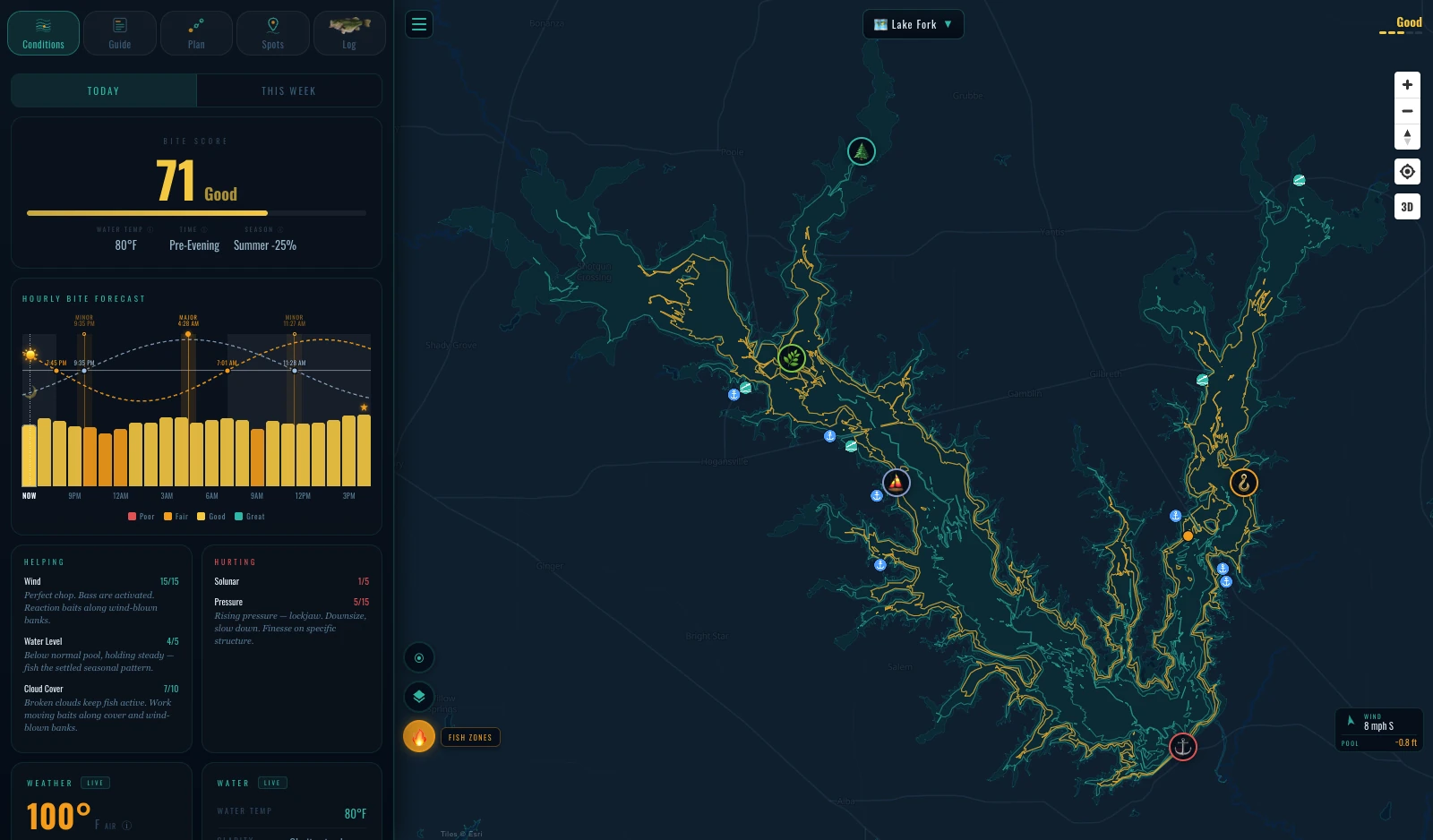
The app open on your lake, switcher at the top — Lake Fork, Texas
2
Early in the week

Pick your window before you pick your day

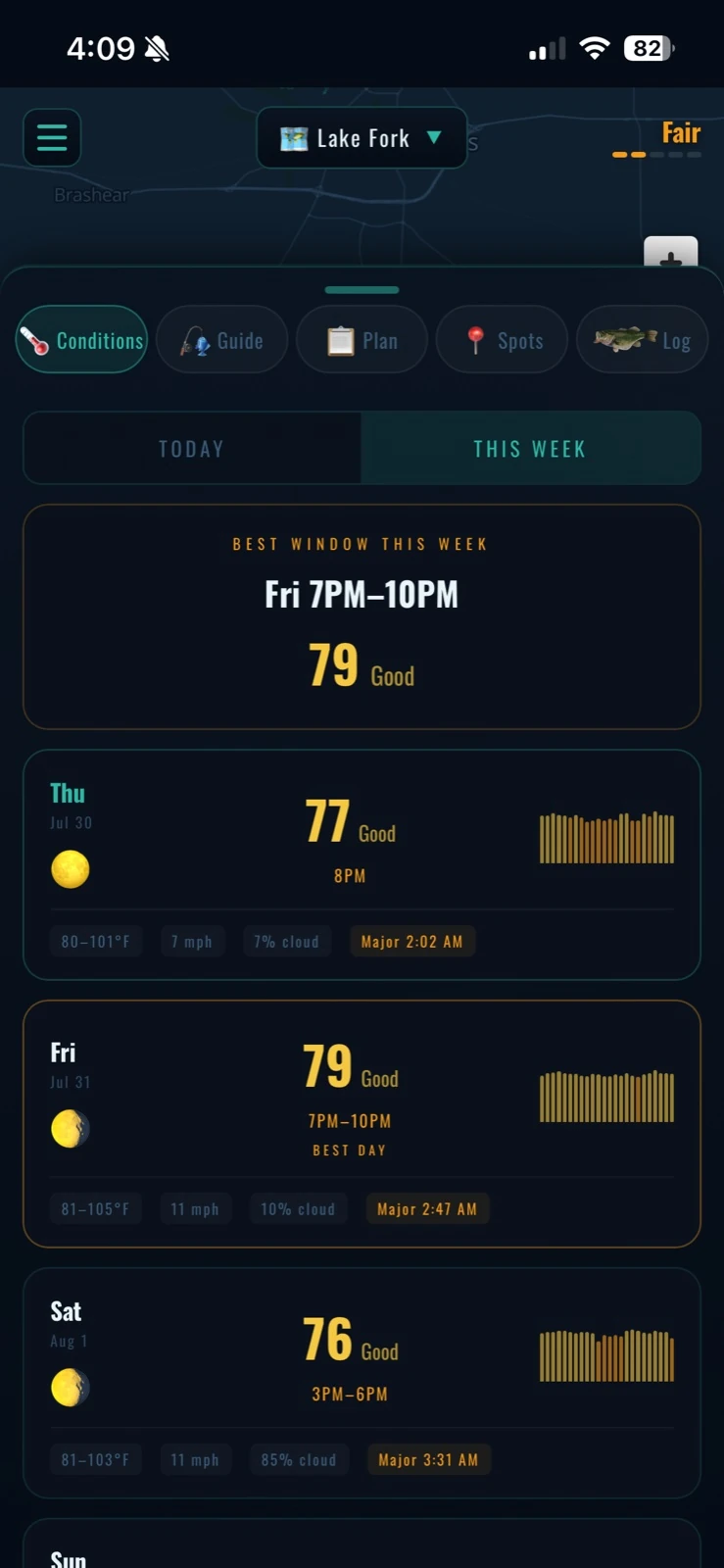
This Week scores every day ahead and flags the best window in each one. It is the most useful screen in the app and the easiest to walk past: knowing Friday 7 to 10 is the window while Wednesday is still ahead of you is what lets you take the right morning off.
Tournament weekRead the window against blast-off and check-in. When the best window falls outside your hours, the job changes from fishing the window to being in the right place the moment it opens.
The week scored ahead, each day's best window flagged — Lake Fork, Texas
3
The night before

Read the guide report

A fresh guide report for your lake, written this morning: where the bite is, what is working, and a game plan broken into hour blocks. Read the pattern and the depth band first — those two decide which layers matter to you tonight.
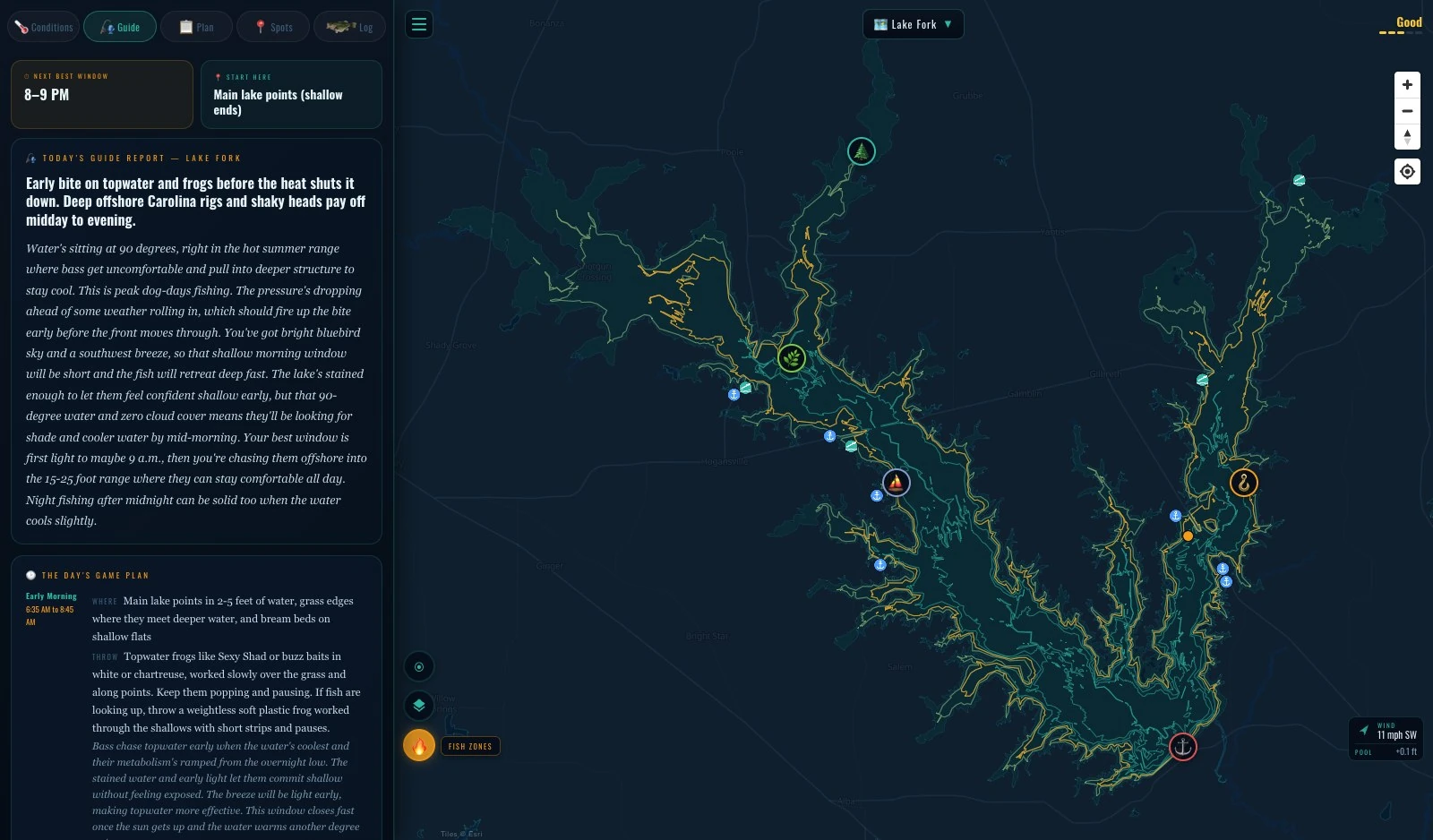
Tournament weekPull the report every practice morning, not just on tournament day. A pattern moves across a week, and reading it three mornings running tells you which way it is going — which is what you cannot get from a single look the night before.
Today's report and hour-by-hour game plan — Lake Fork, Texas
4
The night before · the long one

Learn the bottom

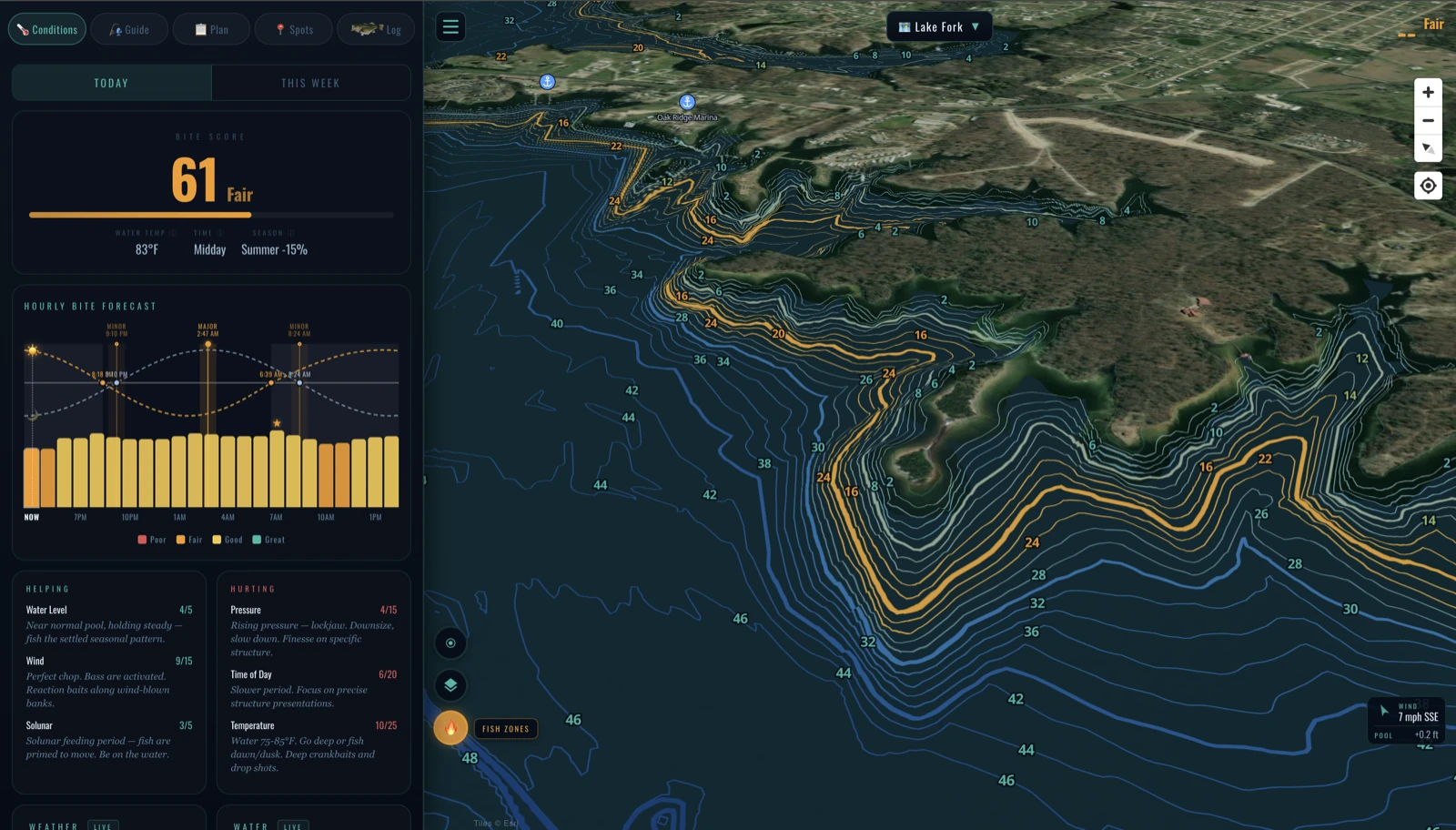
Open the layer menu and turn them on in this order, because each answers a different question. Depth and 3D: how the lake lays. Submerged structure: the roadbeds, foundations and timber still down there. The drawdown photo: that same ground as a photograph, taken while the water was off it. Pre-dam topo: the valley the whole lake sits in.
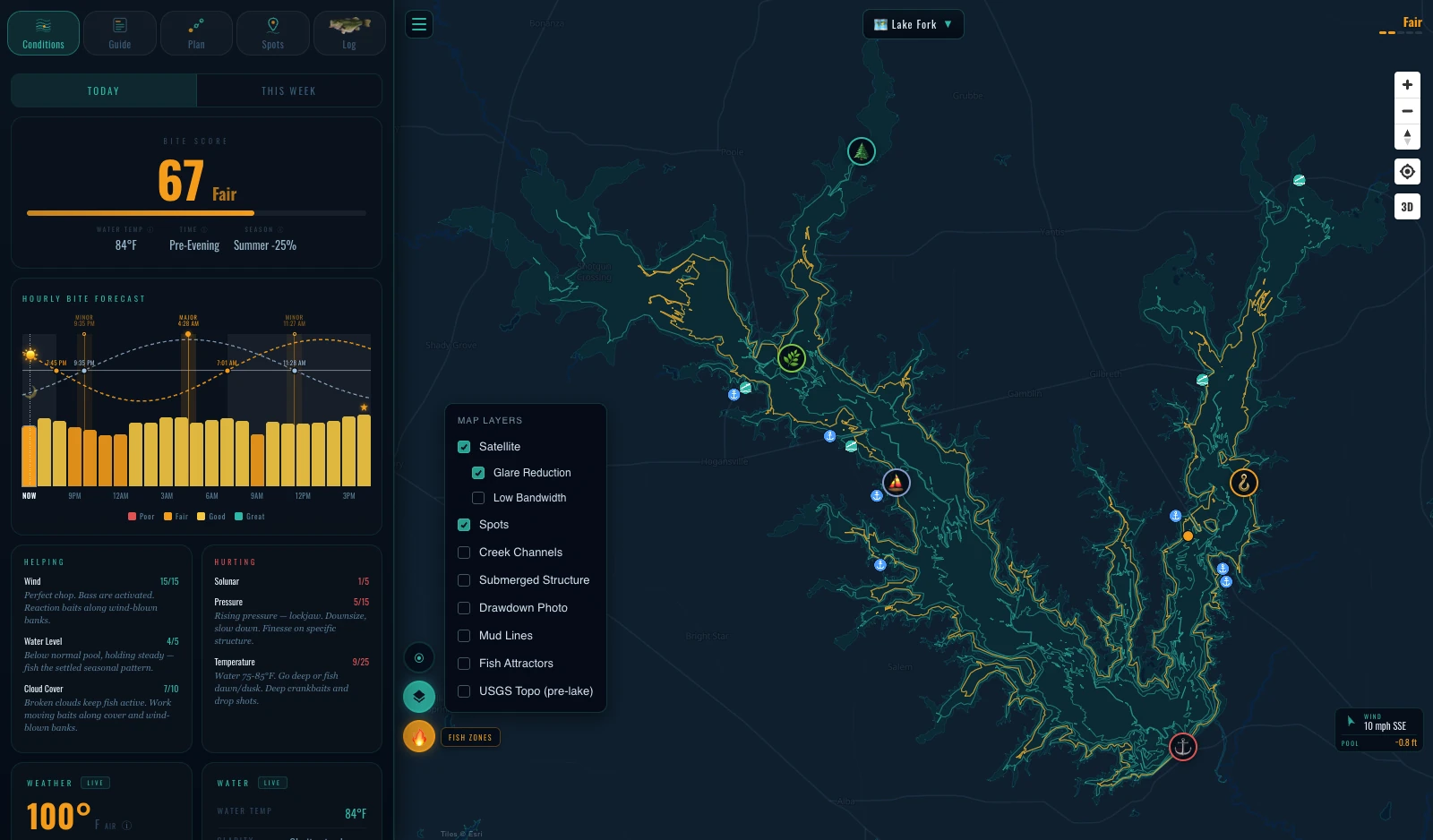
The layer menu — every overlay, one switch each
Survey-grade depth in 3D — Lake Fork, Texas
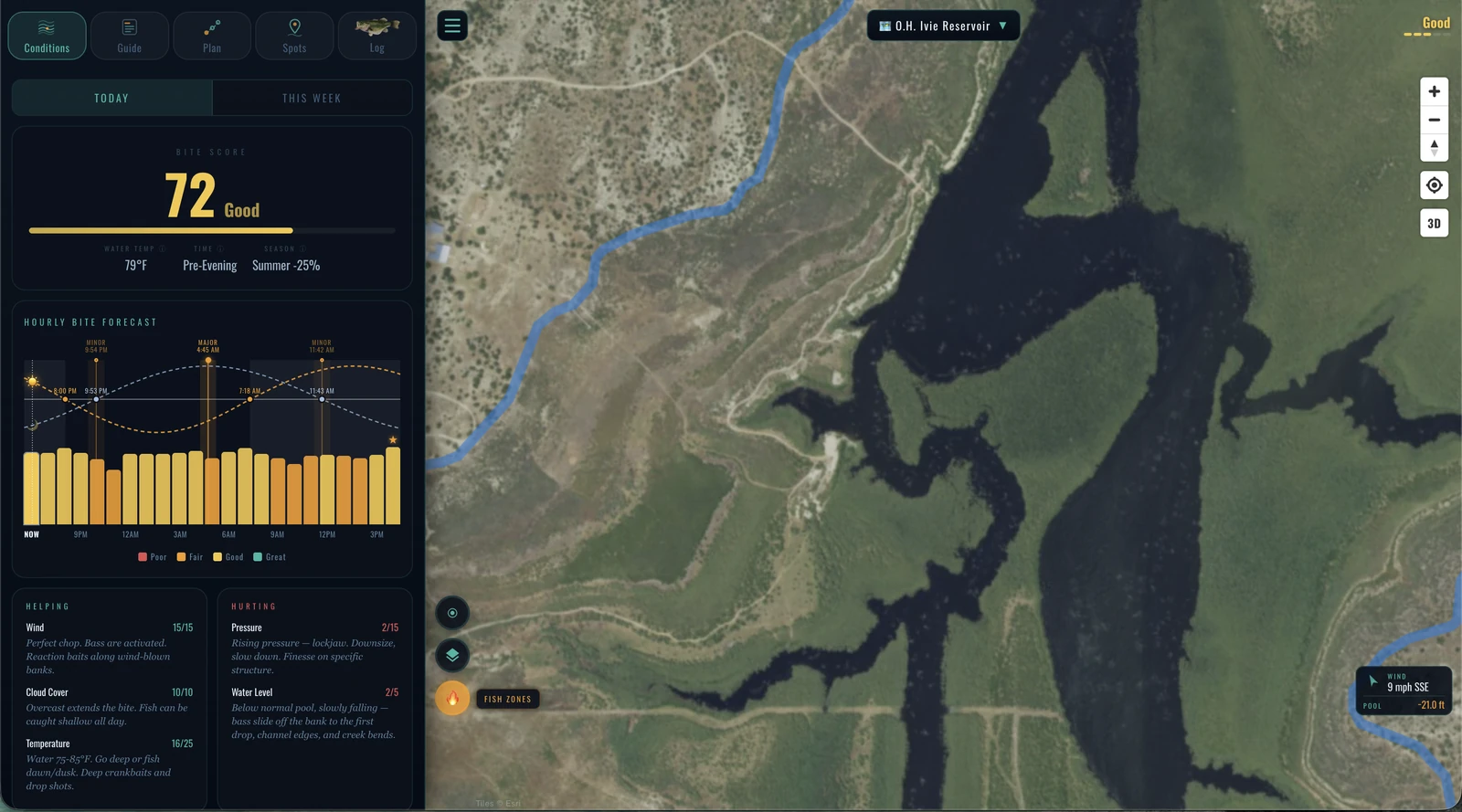
The lakebed photographed dry — O.H. Ivie Reservoir, Texas
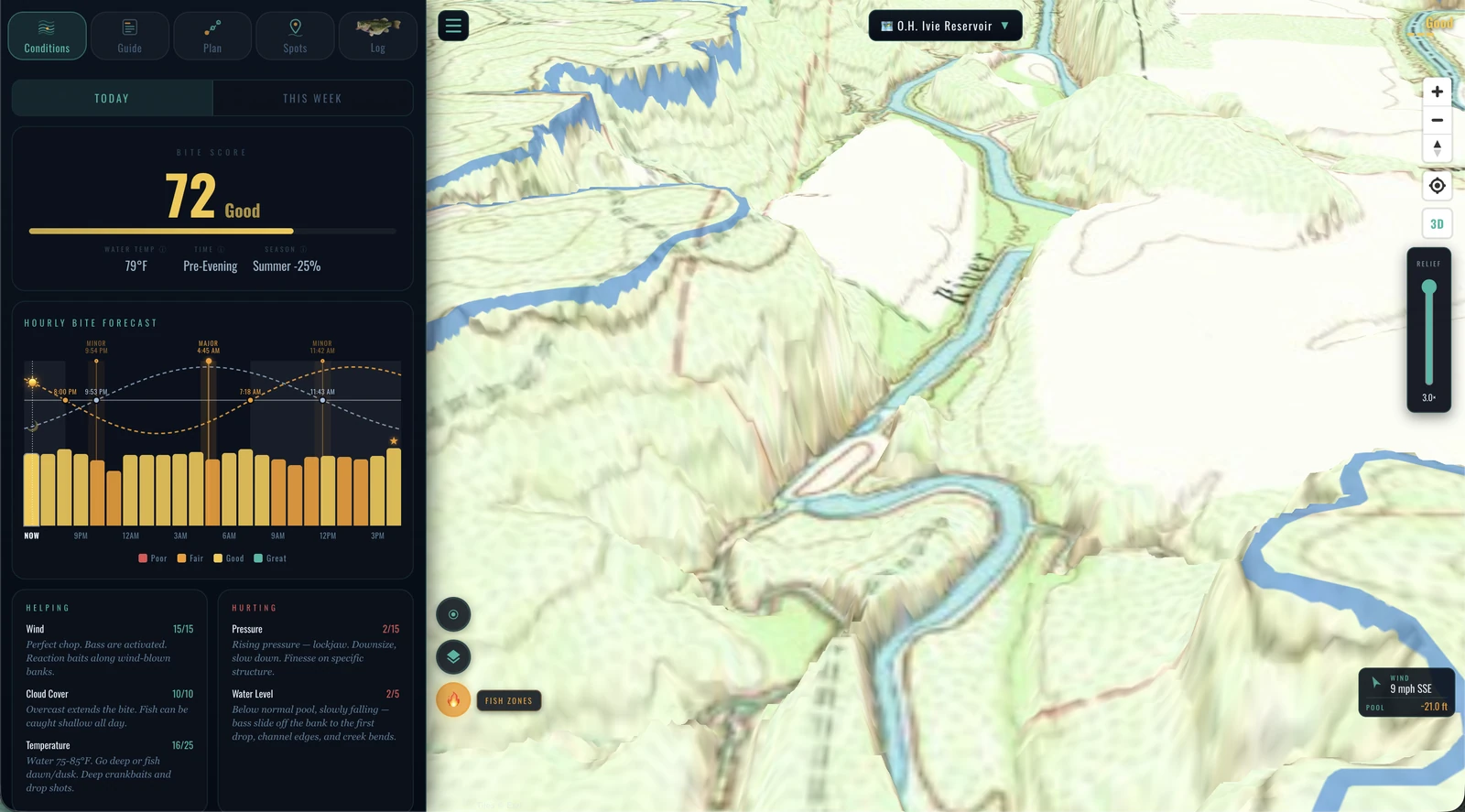
The land before the dam — O.H. Ivie Reservoir, Texas
5
The night before

Check the water you will actually see

Mud lines show where the color change sets up. Pool level tells you whether fish are pulling off the bank. Simulated pool shows what the shoreline does at a different level — and that matters for brush piles too, because an attractor is only worth a stop at the depth it will be sitting at on the day you fish it.
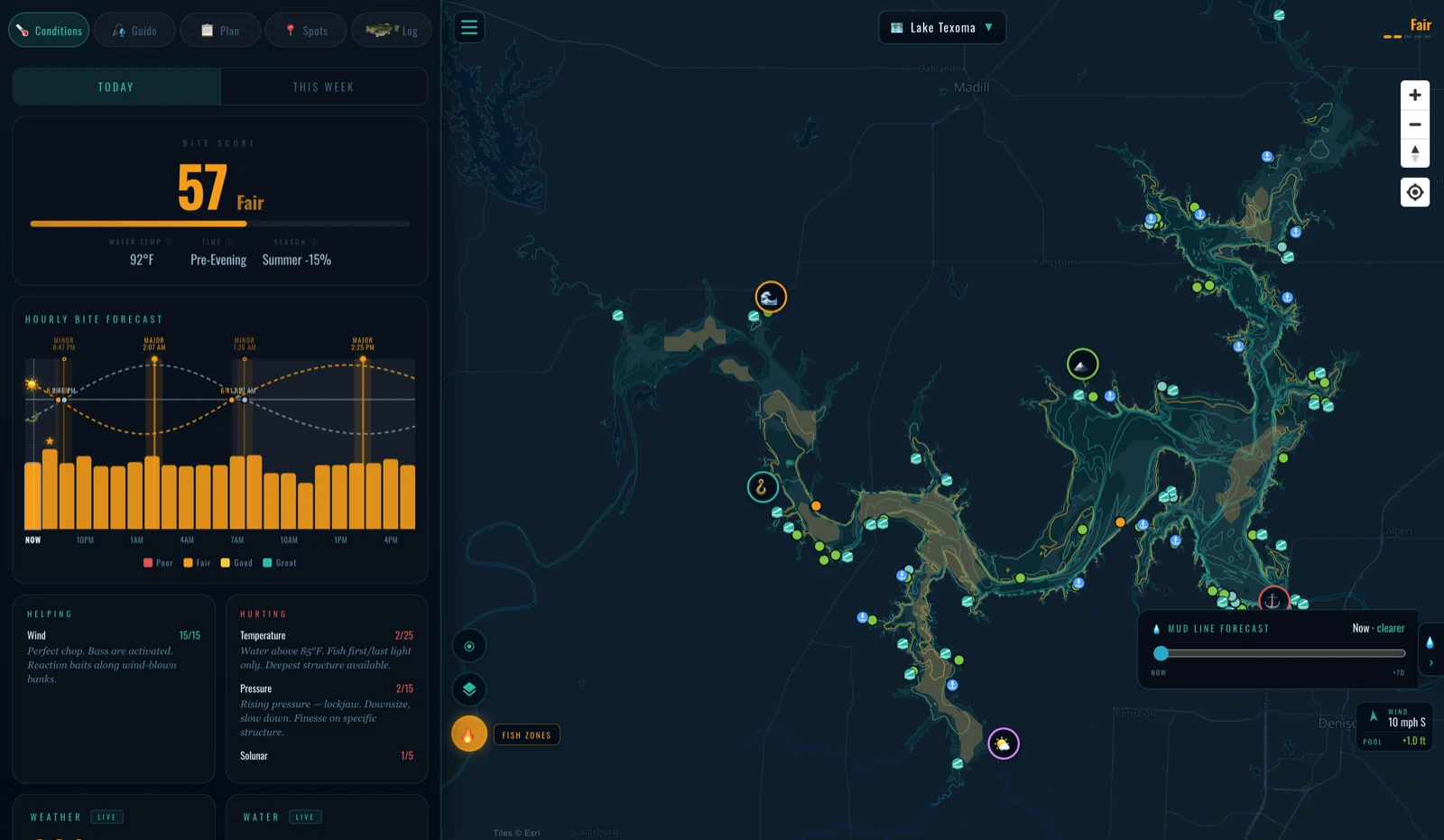
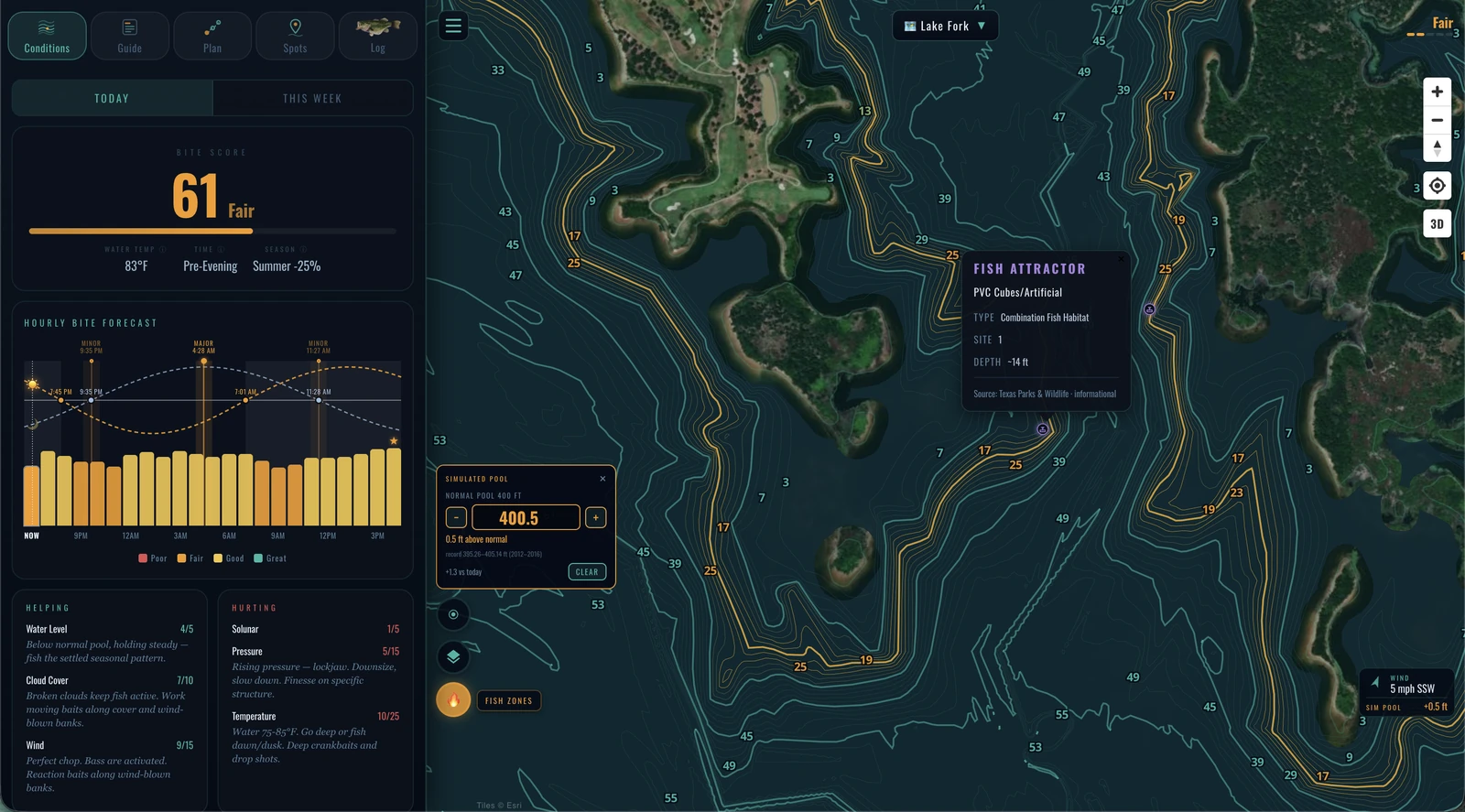
Tournament weekSet simulated pool to the level forecast for tournament day and read the map again at that level. Practice water and competition water are not the same water when the lake is moving.
Mud lines and the clarity forecast — Lake Texoma, Texas/Oklahoma
Simulated pool, half a foot over normal — Lake Fork, Texas
6
The night before

Build the route

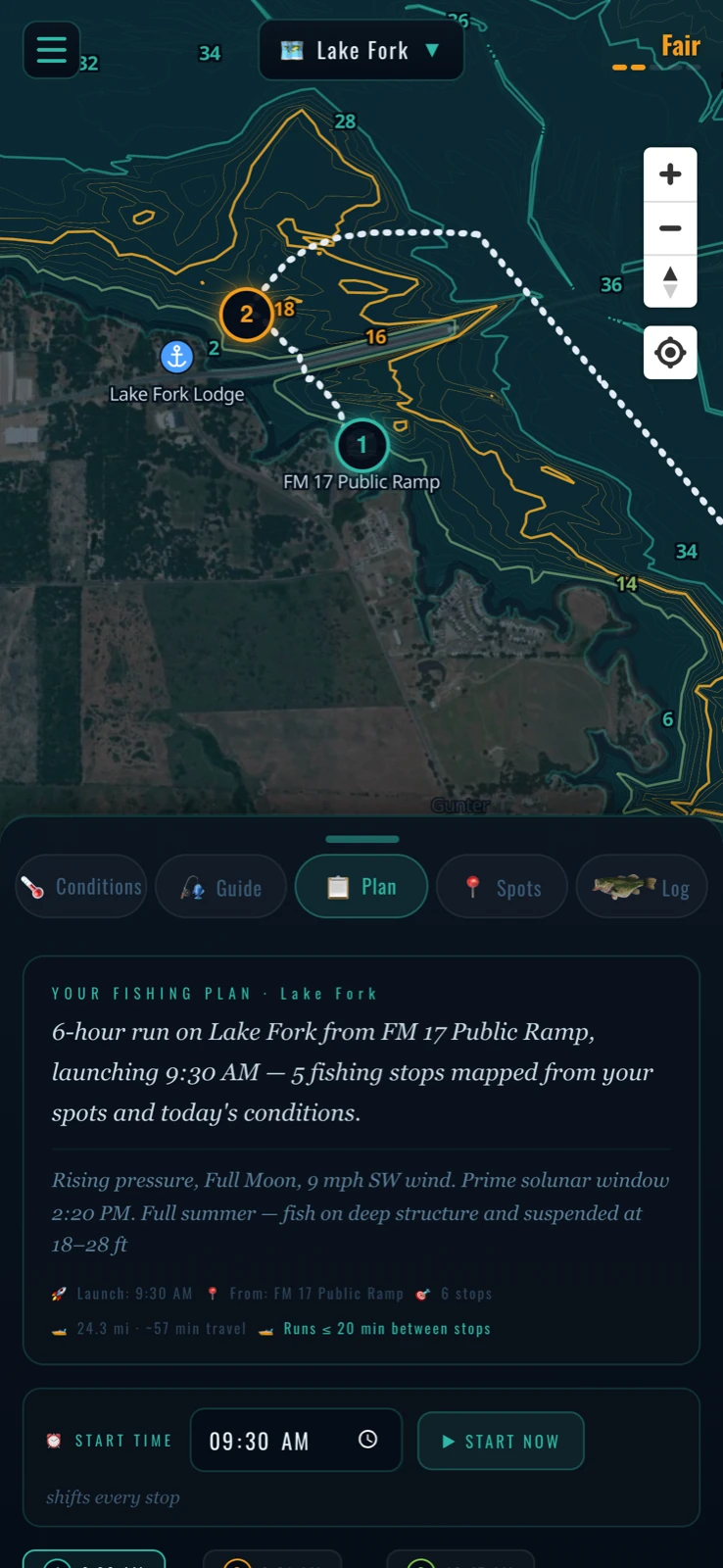
Pick a launch ramp and how long you have got. The plan comes back timed and routed: which spots, in what order, when to leave each one, and how long the run takes. Launch to last cast, before you have hitched the trailer.
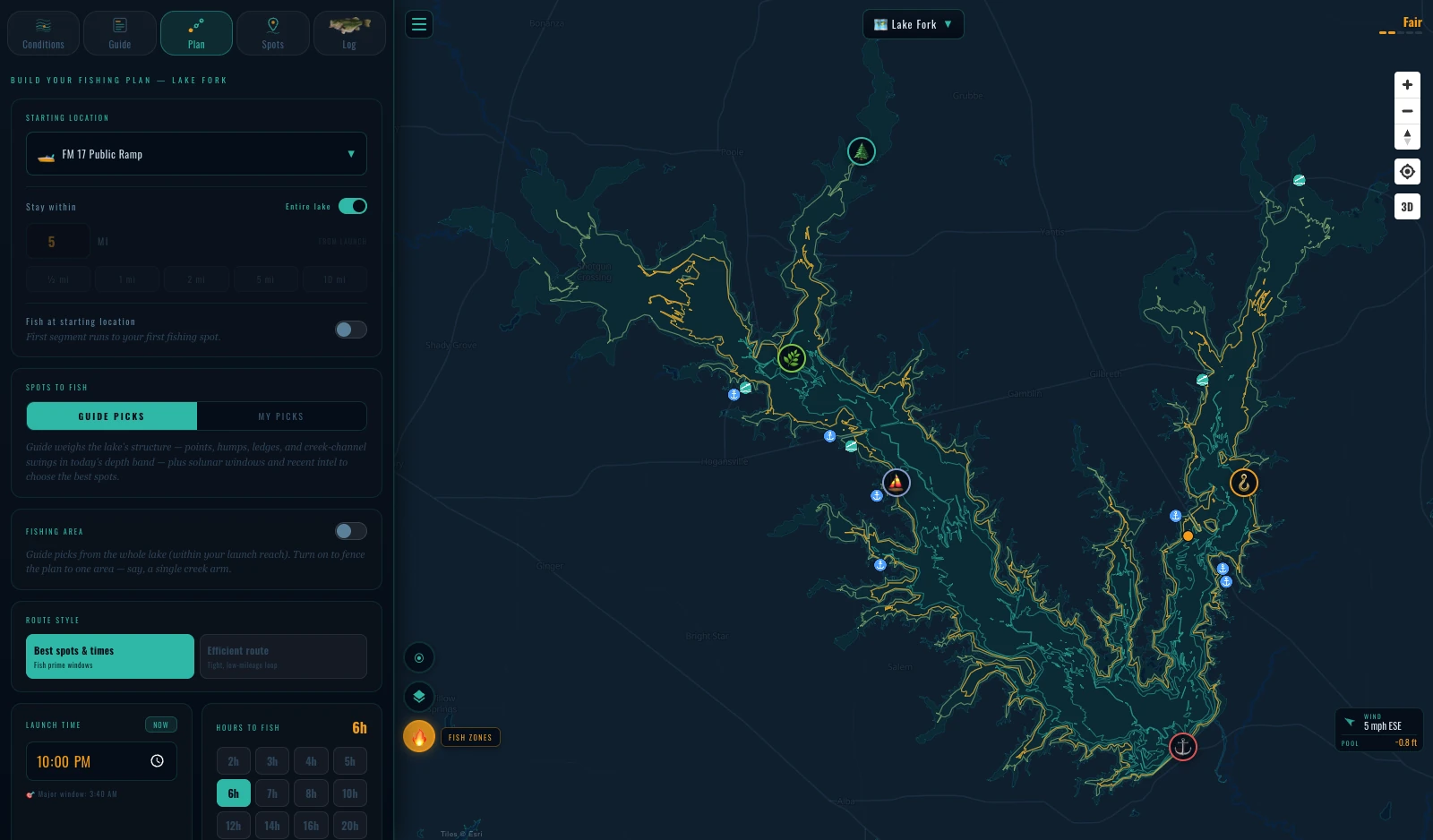
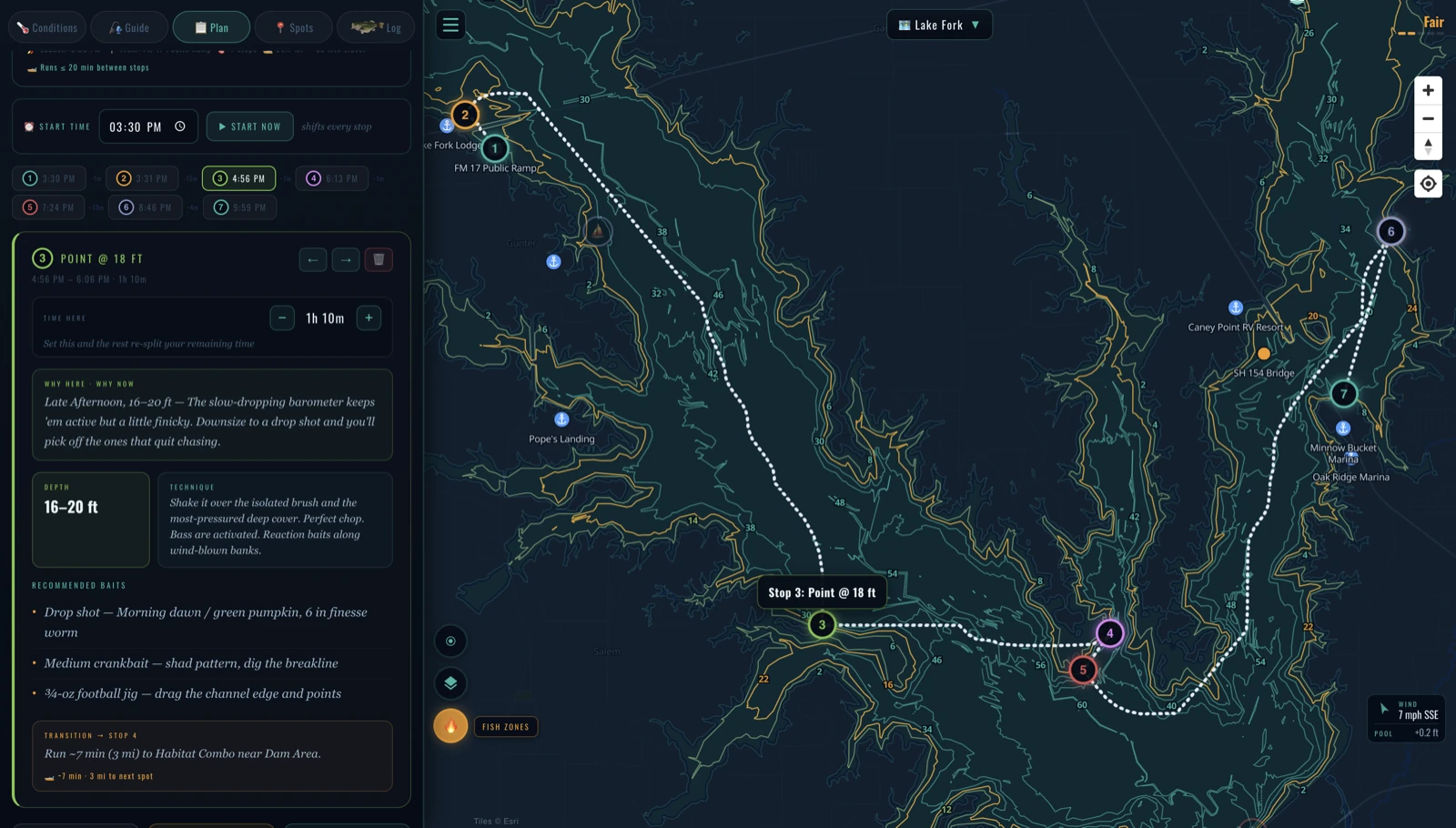
Tournament weekBuild three: your primary, a wind contingency, and a dirty-water contingency. The spots that show up in all three are the ones worth spending practice time on.
Setting up the day — launch, hours, and where spots come from
The finished plan, timed and routed — Lake Fork, Texas
7
On the water

Fish it, and log what happens

Run the plan from your phone, with your boat on the contours and every depth corrected to today's pool. Then log the fish — bait, spot, what it hit. Each entry is stamped with the conditions it happened in, which is what turns a good day into something you can find again next year.
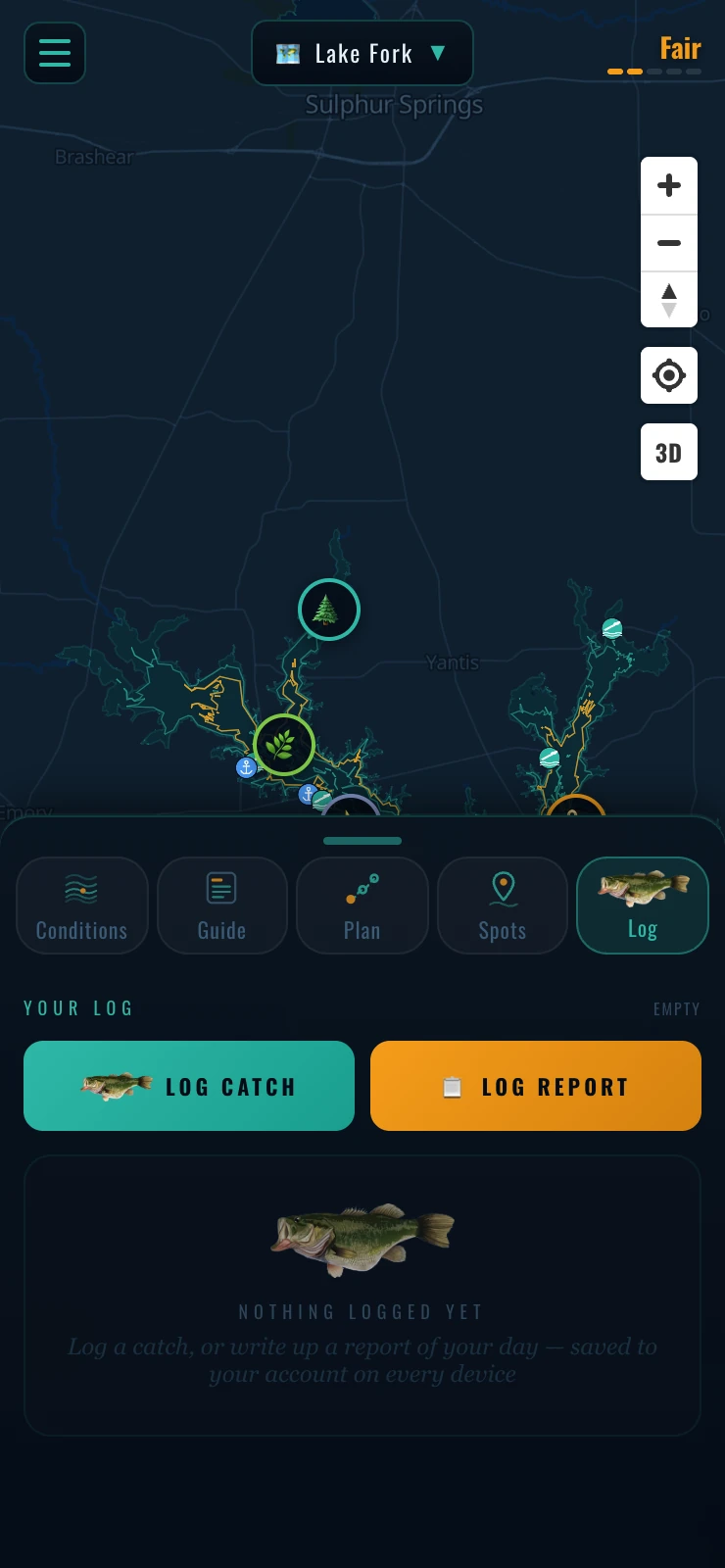
Tournament weekLog practice fish with the same discipline as competition fish. Three practice days logged is a pattern; three practice days remembered is an argument in the truck.
The Log tab, before anything is in it — log a catch, or write up the day
Your plan in your hand — Lake Fork, Texas

If you only have ten minutes

Read the report, turn on submerged structure, and build a plan. That is steps 3, 4 and 6 — it will put you on real structure with a route between it. The rest makes the day sharper; those three make it work.

OPEN BASSHAWK

Find more fish. Free account · works on your phone at the lake