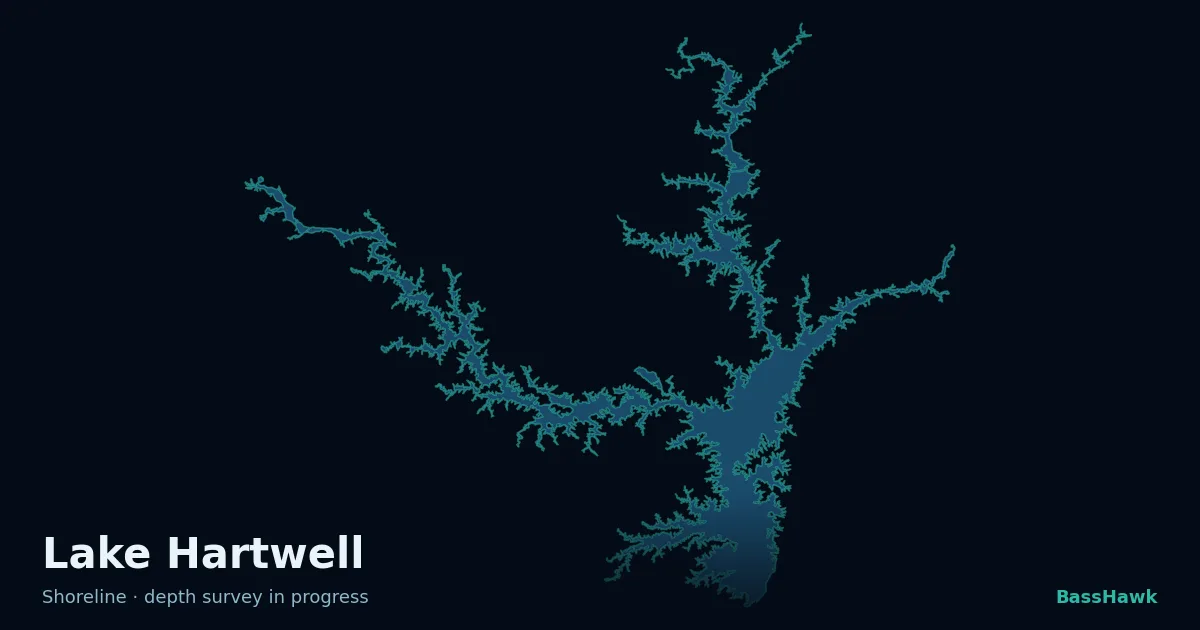
Deep brush and points early, then grind finesse on the offshore ledges all day. Water's hot, so work fast at first light and plan on a slow, deep game once the sun climbs.
Water's at 92 degrees, which means the bass have pulled way offshore to escape the heat and find more comfortable zones. The lake's down over three feet, so a lot of shallow brush is sitting high and dry or too thin to hold fish. The clear water means bass are seeing everything, so they're tight to structure and not roaming far from cover. You've got bluebird sun today with no wind to speak of, which pushes the bite into narrow windows at first and last light, then forces everything deep midday. The pressure's dropping before some weather rolls in, so the fish should be more willing than usual, but the heat is still the main story. Plan on covering a lot of water early, then settling into a methodical deep-brush grind once that sun gets up.
The day's game plan
Where to fish
- Main-Lake Points with Deep-Water Access — 10 to 40 feet, transition from 6 to 8 feet shallow to 25+ feet on the outside edge · Hard bottom with brush or standing timber, preferably with a steep breakline to deep water
Points that drop sharply are the primary staging and holding structure in summer. The shallow side holds early morning fish, and the deep edge holds all-day structure. The proximity to deep water gives bass escape routes during the heat of the day. - Offshore Brush Piles on Ditches — 25 to 40 feet, preferably 30 to 35 feet · Thick brush or fallen timber stacked in open water near main-lake channels and ditches, often with a hard bottom or rock nearby
These are the primary summer daytime refuge for bass seeking shade and stable water temperature. They're marked on electronics and respond well to drop-shot and bottom-dragging presentations. Fish these methodically from mid-morning onward. - Creek Mouths and Secondary Points Near Spawning Flats — 8 to 20 feet, with shallow flats (2 to 6 feet) at the back · Channel transitions, shallow hard-bottom flats, docks, laydowns, and bream-bed pockets
These are the evening and dusk gathering zones where bass stage before moving to feed on shallow bream beds. The cooler water in creek channels and the proximity to shallow feeding grounds make this prime territory for topwater and shallow presentations from 5 PM onward. - Shallow Bream-Bed Pockets in Creeks — 4 to 12 feet, typically in the back third of creek arms · Shallow sandy or hard-bottom pockets with visible bream activity, overhanging shade, docks, and shallow wood
Largemouth hunt actively over bream beds, especially at dusk and into the night. Topwater, buzzbaits, and frogs draw aggressive strikes. These pockets cool faster than the main lake and offer shade, making them active feeding zones at last light.
What to throw
- Weightless Zoom Super Fluke — 4.5 to 5 inches · White, smoke, or natural shad · n/a (Early morning and late evening, first two hours of light and last two hours before dark)
Rig on a 5/0 offset hook and work it with a steady darting rhythm just over the brush at first light. Cast long, retrieve at a moderate pace, and let the bait's natural action do the work. - Drop-Shot Rig with Fluke-Style Bait — 4 inches · Watermelon, smoke, or green pumpkin · 1/4 oz sinker, 12-18 inches below the bait (Mid-morning through midday, especially on offshore brush in 20 to 40 feet)
Shake the bait vertically over marked brush or drag it slowly across the bottom structure. Make multiple passes over each piece of cover, spending time on high-percentage spots. - Carolina Rig with Worm — 3 to 4 inches · Green pumpkin or watermelon · 3/4 oz sinker (Midday through late afternoon, covering offshore bottom structure)
Drag it slowly across the bottom on main-lake points and ditches in 25 to 40 feet. Maintain contact with structure and work methodically through each zone. Keep the drag deliberate and unhurried. - Walking Topwater (Skimmer-style) — 3.5 to 4.5 inches · White or black · n/a (Dusk through full dark, especially over shallow pockets and bream beds)
Work it side to side with sharp, rhythmic rod twitches. Walk the bait deliberately, creating a splash and commotion that mimics injured baitfish. Work shallow cover and pockets at dusk and into the night. - Damiki Rig — 2 to 2.5 inches (small shad minnow) · Natural shad or pearl · 1/16 to 1/8 oz jighead (Midday when fish are tight to deep brush and timber, especially on humps and ditches)
Hover the bait 6 to 12 inches above marked structure using your electronics. Twitch it gently and allow it to suspend, creating a lifelike presentation. Work one area thoroughly before moving.
How to work it
- Vertical Jigging on Electronics — All day, but especially midday when fish are pinned to cover. Most effective once the surface bite shuts down around 9 AM. · Main-lake points, humps, and brush piles in 20 to 40 feet
Mark offshore brush and humps with your sonar, position over the mark, and work a drop-shot or Damiki rig vertically. Make short twitches and pauses, maintaining contact with the structure. - Slow Bottom Dragging — Midday through late afternoon when fish are inactive and reluctant to chase. This triggers bites from bass holding tight to cover. · Deep ditches, channel bends, and the outer edges of points in 25 to 40 feet
Drag a Carolina rig or shaky head across the bottom with deliberate, unhurried movements. Feel the structure through the rod and keep the sinker in contact with the bottom. - First-Light Shallow Casting — First two hours after sunrise, before 8:30 AM. This is the most productive window of the day in summer heat. · Secondary points, brush piles, and standing timber near creek mouths
Make long casts to visible brush, points, and structure in 10 to 25 feet with a weightless or light-headed bait. Retrieve steadily, allowing the bait to glide and dart naturally. - Reaction Topwater at Dusk — Last two hours before dark and into early night, especially around dusk when solunar minor aligns with the bite window. · Shallow pockets, docks, creek mouths, and visible bream-bed areas in 4 to 15 feet
Work a walking bait or frog aggressively over shallow cover, creating maximum splash and vibration. Don't wait for a pause; work it continuously and keep the rod moving.
Pro tips
- Pressure is dropping, which means the fish should feed more willingly than normal. However, the 92-degree water is the overriding factor. Don't waste energy on shallow water or slow presentations early. Front-load your day with the early morning window, make that bite count, and be mentally ready to move deep and slow by 9 AM. The dropping pressure won't overcome the heat; it just means there will be slightly more windows within the deep-structure grind.
- With the lake down over three feet, a lot of traditional shallow brush is now either exposed or too thin to hold quality fish. Adjust your point selections to areas that still have substantial depth transition. Avoid points that shallow out to 4 feet or less at the inside; focus instead on points with a main-lake-side breakline that steepens from 10 to 25+ feet. That steep transition is where the all-day fish live.
- The waning crescent moon is very dim tonight (day 29), and the solunar minor at 7:37 PM will align with dusk. If the evening bite is strong, consider staying out past sunset and working shallow topwater into early night. The dim moon means less light penetration, giving you a longer window of opportunity than you'd normally expect in August. This can be your best extended bite of the day.
If conditions change
If the pressure drops further or a front approaches with wind, expect the bite to become slightly more active through the midday hours, but the heat will still be the limiting factor. Lean harder on the drop-shot and Damiki presentations at mid-morning and extend that phase into early afternoon. If clouds roll in, the shallow bite can extend later into the morning, so don't retreat to deep water as quickly; work the 15 to 25-foot offshore brush longer. If the wind picks up from the west or northwest and brings cooler air, the bite will improve noticeably across all periods, and you can be more aggressive with walking baits and reaction presentations throughout the day. If the water clarity drops from heavy rain or run-off, switch to darker colors (junebug, black, dark green pumpkin) and use slightly larger baits with more vibration; a chartreuse-tipped drop-shot or a small spinnerbait will help fish find the bait faster in stained water.
Find more fish. This is a real report from that day's conditions — open the app for today's · free account