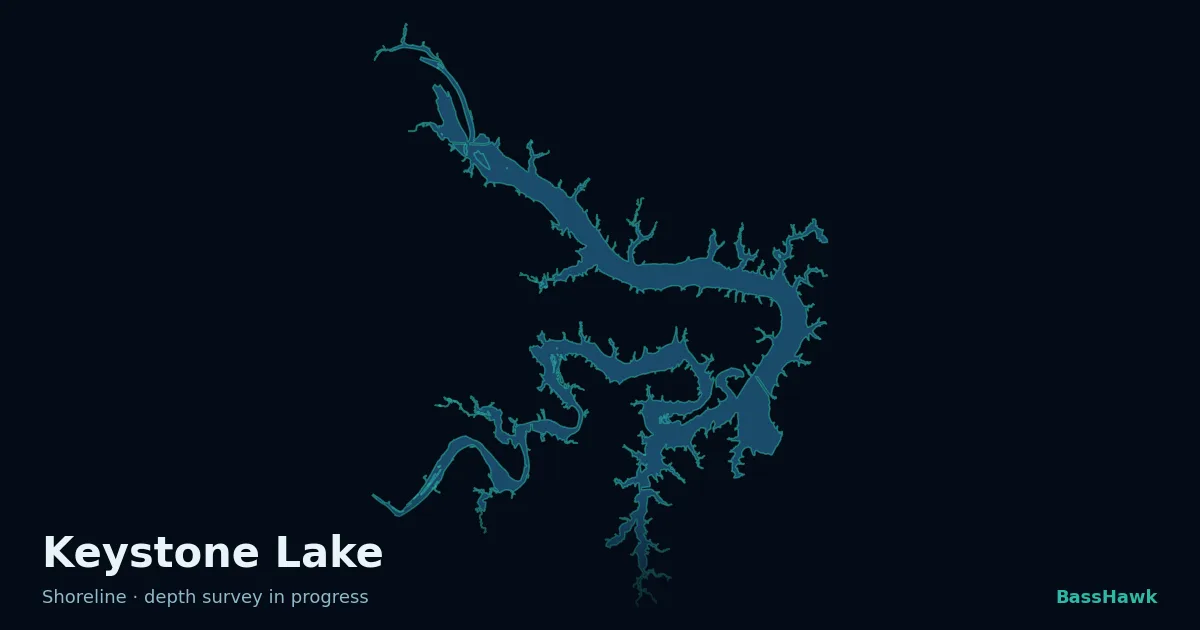
Scorcher summer day with falling pressure and muddy water, fire up the spinnerbaits and jigs on riprap and brush before the heat locks them down.
You're looking at peak summer stress water. It's 95 degrees out there and the water's sitting in the mid-90s too, so the largemouth are going to be tight to cover and short-tempered. The pressure's dropping ahead of some weather rolling in, which means they're going to feed harder than usual over the next several hours before things get worse. The water's stained to muddy, so the bass can't see far, which actually works for you because reaction baits that thump and displace water will pull strikes even from fish that aren't looking to eat. Your window is early and hard. Once the sun gets high and the heat peaks, they're burrowing into brush and shade and you're going to fight for every bite. Wind is light from the southeast, which will warm the water even more and make the shallow stuff unbearable. Go dark and deep as the day heats up.
The day's game plan
Where to fish
- Riprap Banks on Main Lake Points — 3 to 12 feet initially, dropping to 15 to 22 feet as the day heats up · Rock and riprap with deeper water access, primary and secondary points with brush piles nearby.
Riprap holds heat and creates habitat, but more importantly the rock edges concentrate bass because they offer quick escape routes to deep water. In muddy water the contrast between rock and water is high so the bass find the structure by sight and feel. Main lake points funneling water create natural gathering spots. Falling pressure makes these bass feed aggressively early in the day. - Brush Piles and Standing Timber on Channel Ledges — 15 to 22 feet, some near the 8 to 12 foot transition zone · Submerged brush, downed trees, and timber near channel breaks and inside creek bends. Hard bottom, gravel or clay.
Channel ledges are the largemouth escape route in summer heat. The brush provides shade and the depth provides cooler water and more oxygen. These are the core holding areas once the sun gets high. Inside bends concentrate current breaks and baitfish, which concentrate the bass. Wood offers ambush cover and the deeper water beyond it is a safety zone. - Docks and Creek Mouth Shallow Cover — 2 to 6 feet · Boat docks, shallow brush, rocks, and timber at creek mouths leading to channel ledges.
Docks create shade all day but especially as the sun angle drops in evening. Creek mouths funnel any slight current and cooler water movement. Shallow cover is where the bass stage before committing to deeper water when the heat peaks. As evening light drops and the water cools fractionally, the bass move back through these areas to feed before dark. They're predictable evening and night targets. - Cimarron Arm Muddy Flats and Shallows — 4 to 8 feet on flats, 10 to 15 feet on adjacent ledges · Open mud bottom with scattered brush and rocks, less structure-dense than main lake but good bait concentration.
The Cimarron arm runs muddier, which means visibility is lowest and reaction baits dominate. The mud holds warmth and the shallower flats warm fastest, concentrating shad early and late. Less defined structure means the bass scatter across wider areas, so covering water and triggering reaction becomes more important than precision placement. Start here early before the heat locks down.
What to throw
- Inline Spinnerbait — n/a · Chartreuse blade, white or chartreuse skirt · 3/8 oz (Early morning and evening, first 2 hours after sunrise and last 2 hours before sunset, when the bass are high and aggressive.)
Burn it shallow parallel to riprap and brush, let the blade flash and thump the rocks. Work it steady at mid-speed in early morning and evening. - Jig with Craw Trailer — n/a · Black or black/blue jig, dark craw trailer · 3/8 to 1/2 oz (Mid-morning through late afternoon when the bass are buried in brush and deeper ledges.)
Drag it slow on the bottom, feel the rocks, pause 1 to 2 seconds after each short hop. Let it sit in front of heavy cover. Work it vertically in deeper piles. - Soft Plastic Worm — 4 in · Black or dark grape · 3/16 oz (Afternoon into evening when the water is hottest and the bass are picky. Also effective at night.)
Texas rig, shake it on the bottom with short, deliberate movements. Let it crawl and pause between shakes. Work it slowly around brush and docks. - Topwater Buzzbait — n/a · Black body, chartreuse or white blade · 3/8 oz (Dusk and night over shallow cover, last light and after dark.)
Walk it slow with steady blade rotation, let it sit and twitch. Keep it noisy but controlled, don't burn it. - Lipless Crankbait — 2.5 in · Black, black and chartreuse, or white · 1/2 oz (Early morning and late afternoon during periods of active feeding when the bass will chase.)
Cast and retrieve steady, let it wobble and rattle. Work it over flats and around brush, bang it off rocks and structure.
How to work it
- Dragging — Mid-morning through late afternoon when the bass are holding tight to cover and not willing to chase. · Riprap, brush piles, channel ledges, and rocky flats 8 to 22 feet deep.
Keep the bait on bottom and use short 6 to 12 inch hops with pauses in between. Feel the structure and let the bait tick and crawl along rocks and wood. Maintain constant contact with the bottom. - Vertical Jigging — Midday when the heat has pushed the bass into the densest shade available and they won't leave their hideouts. · Dense brush piles and standing timber on deep flats and ledges, 15 to 22 feet.
Drop straight down to the cover and work the jig with short hops and pauses, staying nearly vertical to the target. Pop it 6 to 12 inches and let it fall on slack line. - Deflection — Early morning and evening when the bass are high and feeding, and the falling pressure has them aggressive. · Riprap banks, rocky points, and brush-lined shorelines in 3 to 8 feet.
Cast spinnerbaits and crankbaits parallel to riprap and rocks, letting the lure bounce and glance off the structure. The deflection and change in direction trigger strikes. Work it slowly enough to maintain contact but fast enough that the bass can track it. - Slow Rolling — Evening and dusk when the water temperature is starting to drop and the bass are creeping back shallow to feed. · Shallow riprap and brush, 3 to 6 feet, as light drops in evening.
Retrieve a spinnerbait or soft plastic at a deliberate, steady pace about 6 inches off the bottom. Don't pause, just keep it moving and let the blade or plastic work its way through the cover. Bump structure gently and roll around it.
Pro tips
- The pressure is dropping fast, which is firing them up right now, but watch the sky. Once the front hits and the pressure bottoms out and rises back up, the bite will shut down hard. Hit the riprap and points early and heavy, then milk the deep brush and channel ledges once the sun peaks. You want to catch the aggressive window before the front flips the switch.
- Muddy water is a gift in summer heat because it lets you work shallow longer without spooking the bass. Use that. Fish the 4 to 8 foot riprap and docks later into the morning than you would on a clear day. The bass won't see the sun and push deep as fast. But once they do go deep, they're going to be buttoned up tight, so when you make that move to 15 to 22 feet, be ready for a shift from power fishing to precision jigging.
- At night, after dark, don't turn on a big light if you can help it. Use a red headlamp if you need to see your tackle. Bass will still hunt the shallow docks and brush in the dark if you keep the spooking to a minimum. A slow-dragged black jig or a topwater worked with patience will produce better than you might expect, especially with the pressure still dropping early in the night.
If conditions change
If the front blows through hard and fast, the pressure will spike and the bite will crater by midday or afternoon. Downsize everything immediately to a 4 inch worm or a light shaky head and fish the densest cover you can find, the thickest brush, the darkest shade. Move to the 18 to 25 foot zone and work vertically. If the pressure stabilizes, go back to reaction baits and covering water. If winds shift hard to the north and the sky clears up further, the shallow riprap bite will get worse faster and you need to drop deep and stay there, fishing slower and darker. If the water somehow clears from today's stain, switch to green pumpkin and watermelon colors and add a fluorocarbon leader. Don't rely on chartreuse if visibility improves. If it gets even muddier, go full black and white and lean hard on rattle and vibration, forget about precision and commit to spinnerbaits and bladed baits that displace maximum water.
Find more fish. This is a real report from that day's conditions — open the app for today's · free account