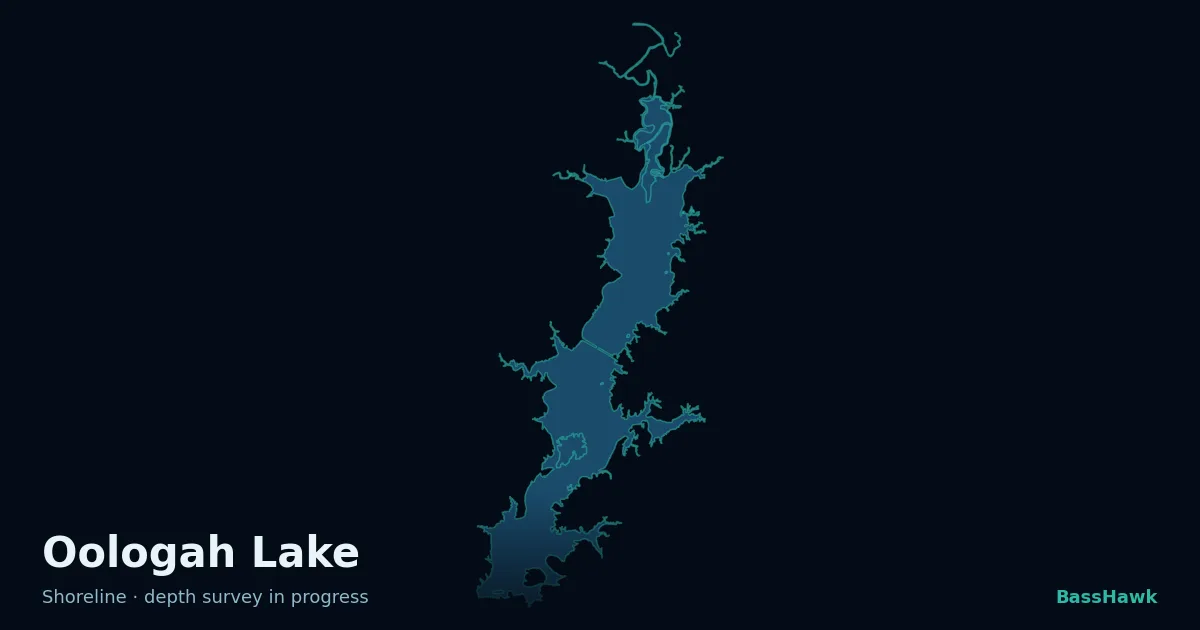
Brutal heat and murky water mean early, deep, and dark. Fish the thump-and-flash game at first light on the east side, then hunt the shaded ledges and creek channels.
Water's 93 degrees and the sun's coming straight down on a flat, clear sky. In this kind of heat, largemouth pull deep and tight to shade and cover, and they're mostly done feeding until the sun gets low. The water's stained to muddy, which is normal here, and that's your friend today because dark colors and vibration matter way more than finesse. The pressure's steady, so there's no feeding surge ahead of weather. Expect the real bite in the early window and again late afternoon into dusk. Midday is basically a scouting mission or a nap break.
The day's game plan
Where to fish
- Spencer Creek (east side) — 4 to 16 feet (flats to drop-offs) · Brush piles, riprap, shallow flats adjacent to deep-water channels, weed beds
Historical largemouth concentration area on the east side. Shallow flats connected to deep-water access draw bass in early morning and evening. Stained water here favors power presentations. - Blue Creek (east side) — 4 to 16 feet (flats to drop-offs) · Creek channels, secondary points, brush, riprap, hard-bottom drop-offs
Another premier east-side largemouth zone. Creek arms funnel bass migration between shallow and deep water. Structure here concentrates fish and provides shade during midday heat. - Main-Lake Channel Bends and Ledges — 14 to 25 feet · Hard-bottom transitions, channel edges, deep timber and brush if present, inside bends of the Verdigris channel
Deep-water refuge during peak heat. Bass hold on these ledges and edges during midday, and they're accessible by vertical presentations or methodical dragging. Deep water with adequate structure is the second choice when shallow bite is slow. - Windblown Points and Flats (east side) — 6 to 14 feet · Points that drop into deep water, shallow flats exposed to SSE wind, riprap or natural rock if present
Wind-blown banks concentrate baitfish and warm water slightly, attracting bass during evening transition. If the SSE wind has been consistent, these areas can light up as the sun angle drops.
What to throw
- Spinnerbait — n/a · white, chartreuse, or black · 1/2 oz (early and evening), 3/8 oz (dusk) (Early morning, evening, and dusk. Anytime you need to cover water and trigger reaction.)
Slow roll along shallow flats and over structure, keeping the blade thumping continuously. Cast tight to cover. Vary your retrieve speed based on response, but in this heat keep it deliberate, not speedy. - Lipless Crankbait — 3 in to 3.5 in · black, dark shad, or dark purple · 3/8 oz (Morning transition into midday, and late afternoon. Best on structure where you need precision.)
Cast and twitch sharply on slack line, then pause. Work the structure with quick twitches and dead sticks. Great for picking apart ledges and drop-offs. Can also be cast and worked steadily across flats. - Finesse Worm (4 inch) on Drop Shot or Shaky Head — 4 in · green pumpkin, watermelon, smoke, or natural shad · 1/8 oz jig head (shaky head) or 1/8 oz drop shot weight (Midday heat, or anytime the reactive bite slows. Best on deep structure and ledges.)
Shaky head: cast and work with a subtle wrist shake, dragging the bottom slowly. Drop shot: hold vertically and shake softly, letting the bait hover just off the bottom. Let the bait breathe; movement should be small and deliberate. - Texas-Rigged Plastic Worm (5 inch) — 5 in · black, junebug, watermelon, or dark purple · 3/16 oz to 1/4 oz (light cover) or 3/8 oz (deeper structure) (Early morning around cover, midday on deep structure, dusk and night in the shallows.)
Cast tight to cover, let it sink on slack line, then drag it slowly along the bottom with occasional pauses. Skip it under docks and overhanging brush. Work methodically. - Topwater (Buzzbait or Popper) — n/a · black or dark colors · 3/8 oz buzzbait (Dusk, in the last 30 to 45 minutes before dark, in very shallow water.)
Cast and retrieve steadily or with a walking motion for poppers. Work it slowly in the dusk shallows. Only throw if the water is calm or nearly calm, not in rough conditions.
How to work it
- Slow Roll — Anytime the bite is active or transitions (early morning, evening, dusk). Avoid midday heat. · Shallow flats, points, and ledges in 4 to 12 feet, especially in early morning and evening.
Cast a spinnerbait and retrieve at a steady, deliberate speed, keeping the blade churning contact with the bottom or just above it. Feel the thump through your rod. Do not speed up even if nothing bites for 20 casts. - Shaky Head Drag — Midday heat when bass are inactive but positioned. Also effective anytime finesse is needed. · Deep structure, ledges, channel bends, and humps in 14 to 25 feet.
Fish a 4-inch finesse worm on a light (1/8-ounce) shaky head. Drag it along the bottom with a subtle shake of the wrist, barely lifting the rod tip. Keep the bait in contact with the bottom and structure. Pause frequently. - Skip Pitching — Early morning, dusk, and night. Anytime bass are locked in thick cover to escape the heat. · Under docks, beneath overhanging vegetation, in tight brush, and around fallen timber in shallow water (2 to 6 feet).
Hold the rod low and pitch a Texas-rigged worm or small jig underhanded at the water, letting it skip across the surface like a stone before diving under docks, overhanging branches, or tight cover. Land softly to avoid spooking. - Twitch and Pause — Morning through late afternoon. Best when working deep structure. · Ledges, drop-offs, and channel edges in 10 to 20 feet. Anywhere structure has hard edges.
Cast a lipless crankbait, twitch the rod sharply on slack line to make it dart, then pause and let it fall or hover. Repeat. Vary the timing: two twitches and pause, then three twitches and pause. Let the fish tell you the rhythm. - Vertical Presentation — Midday and whenever you need to stay in one small zone and work it thoroughly. · Main-lake humps, deep channel bends, and ledges in 18 to 30 feet.
Drop a drop-shot rig straight down over deep structure or marks on the sounder. Shake it gently in place, letting the bait hover just off the bottom. Move the boat slowly to cover a ledge vertically rather than across it.
Pro tips
- In this heat, the two-bite day is your reality. Early morning (first 2 hours after sunrise) and evening (last 2-3 hours before dark) are the only aggressive feeding windows. Midday is a scouting mission or a siesta. Don't waste energy between 11 AM and 4 PM unless you're on a deep ledge with marks on your sounder. Save your legs and your frustration.
- Stained-to-muddy water is your advantage here, not a handicap. Largemouth are more confident shallow in low-clarity water because they feel hidden. Meanwhile, light-sensitive fish (walleye, stripers) are buried deep. Exploit the fact that largemouth are in reach while other pressure is elsewhere. Dark colors and rattle-heavy baits separate your catches from finesse-focused anglers' goose eggs.
- Pool is down 1 foot, which is typical summer drawdown. This compresses structure slightly and concentrates bass on fewer predictable high spots. Scout the channel bends and look for any point or hard-bottom transition that breaks the flat. One good ledge that holds fish all day is worth more than wandering 10 miles of featureless bottom.
If conditions change
If a front rolls in tonight or tomorrow and pressure rises sharply, the bite will shut down hard. Fish will tighten to the densest cover available (thick brush, inside vegetation, rock piles). Switch to a 4-inch finesse worm on a 1/16-ounce jig head and fish ultra-slow right on the cover. Skip under docks and downed timber. If clouds roll in and the breeze shifts to a consistent northwest wind bringing cooler air, bass will stay shallow longer and the midday lull will shrink. You can push shallower presentations into the 12-2 PM window. If the water clears unexpectedly from a rain or creek inflow, downsize everything by 25 percent, add a fluorocarbon leader, and fish deeper on harder structure. If the stain gets worse and murkier, upsize your spinnerbait to 5/8 ounce and use pure black or solid-color dark trailers to create maximum contrast and vibration.
Find more fish. This is a real report from that day's conditions — open the app for today's · free account