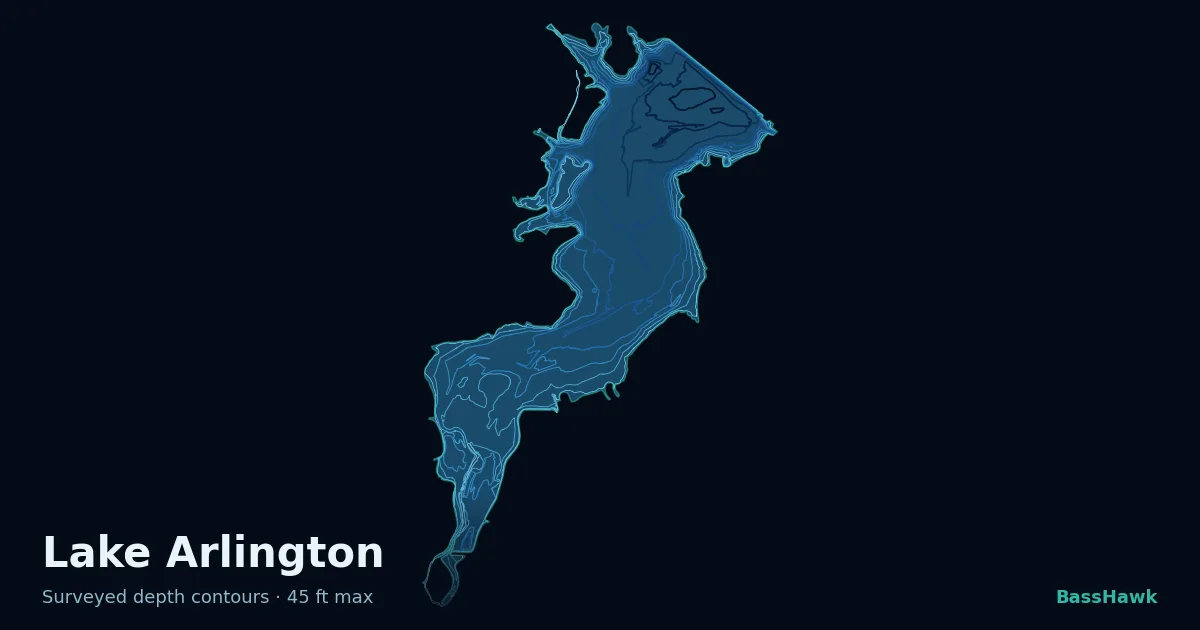
Extreme heat shuts down the midday bite. Fish early and late, go deep and slow, hunt brush and points in the deeper slots.
Water is brutal at 103 degrees, pushing largemouth into survival mode. In this kind of heat they'll feed hard right at sunrise, then disappear into deeper structure and thick cover by mid-morning. The pressure is dropping ahead of some weather, which should fire them up early. The pool is down nearly 5 feet, so some shallow areas are exposed and some of your old marks might be high and dry. Stained water is working in your favor because it filters the brutal sun and keeps bass a touch more comfortable. They'll slide back shallow again toward dusk and after dark when the air cools a bit. This is a first-light and last-light lake today.
The day's game plan
Where to fish
- Main Lake Points in 10 to 18 feet — 10 to 18 feet · Hard bottom, ledges, structure breaks. Can include brush or rock.
Primary staging and feeding zone in summer. Points funnel bass between deep water sanctuaries and shallow hunting areas. Early morning and evening, bass work these edges. Hard bottom means cooler water circulation and attracts baitfish. - Brush Piles and Rock Piles in 15 to 25 feet — 15 to 25 feet · Submerged brush, rock piles, manmade structure (docks, pilings, marked stumps).
Deepest refuge in extreme heat. Thick cover blocks sun and provides the only comfortable water. Midday and hot afternoons, bass hole up here. Marked structure is disproportionately important on this lake because natural cover is sparse. - Channel Ledges Near Creek Entries — 12 to 22 feet · Drop-offs, ledges, channel bends where current flow occurs.
Channels serve as highways and have water movement that circulates cooler water and concentrates baitfish. Bass position on ledges near channels to feed with minimal movement. Current helps keep dissolved oxygen higher and gives relief from dead-still heat. - Shallow Docks and Riprap in 4 to 10 feet — 4 to 10 feet · Dock pilings, shallow timber, riprap, shallow edges adjacent to deeper water.
Evening and night, bass slide shallow to hunt. Docks and riprap provide quick shade and feeding lanes. These are the primary evening and night hunting zones, especially as water temperature begins to drop after sunset.
What to throw
- Topwater Walker — 4 to 5 in · white or chartreuse · n/a (First light, calm or light wind, when bass are aggressive)
Steady side-to-side walk, keep it moving, let it glide between pauses. Early morning rhythm. - Deep Diving Crankbait — 3 to 4 in · chartreuse or natural silver shad · n/a (Early morning into mid-morning, morning transition period)
Cast and crank down, tick and bump bottom, cover water steadily. Steady retrieve with pauses. - Texas-Rigged Creature Bait — 4 in · black and blue or candy watermelon · 3/8 to 1/2 oz (Mid-morning through late afternoon, anytime in heavy cover)
Dragged slow on bottom, worked around structure, pauses critical. Can pitch into cover or drag along edges. - Drop Shot — 3 in worm · green pumpkin or black and blue · 1/4 oz weight (Midday heat peak when bass are deepest and most inactive)
Vertical presentation or slow drag on bottom, minimal movement. Twitch and pause rhythm. - Shallow Crankbait — 3 to 4 in · natural shad profile, ghost minnow · n/a (Evening and dusk when bass move shallow)
Crank to 8 to 12 feet, work with tick and pause, deflect off structure, steady pull then pause.
How to work it
- Power Fishing Early — Sunrise through 9 AM. Pressure is dropping and bass are aggressive. Capitalize on the window before heat. · Main lake points and shallow structure, 8 to 15 feet
Work fast, cover ground, throw topwaters and crankbaits, move on if no hits within 3 casts. Big casts, big baits, big retrieves. - Slow Dragging Deep Structure — Mid-morning through early afternoon when heat peaks. This is survival mode fishing for inactive fish. · Brush piles, rock piles, channel ledges, deepest available cover
Drag creature baits, worms, or jigs along bottom in 18 to 25 feet. Keep the bait on the ground, move it 6 inches, pause 3 to 5 seconds. Repeat. Feel every tick. - Dusk Shallow Attack — 5:30 PM onward as sun drops. Bass move shallow and the second-best bite of the day fires up. · Shallow structure within 4 to 10 feet, docks, points transitioning to flats
Target docks, riprap, shallow edges with topwater and shallow plastics. Fish tight to cover. Expect bass to chase and commit. Work with energy but keep baits in the strike zone, not overhead. - Night Shallow Feeding — After sunset through sunrise. Temperature drop coaxes shallow feeding all night. · Docks, shallow timber, riprap, shallow brush in 4 to 12 feet
Keep it dark, keep it slow, use black or dark colors. Allow longer pauses, let bass track the bait by feel. Night fishing is about patience and a loaded rod tip, not visual strike detection.
Pro tips
- With the pool down nearly 5 feet, some of your usual shallow marks may be dry or inaccessible. Scout carefully and trust your electronics. Shallow areas that looked good last year may be high and unsafe. Focus on deeper structure first and confirm water depth before committing.
- The falling pressure today should spark an early bite, but don't sleep on the dusk and night bite. As the sun drops and air cools, bass move shallow and feed aggressively through the night. Night fishing in extreme heat often outproduces even sunrise because bass know the shallows cool down after dark.
- In stained water at these temperatures, vibration and dark colors matter more than exact lure shape. A creature bait or craw profile displaces water and is felt before it's seen. Black and blue works because it creates the strongest silhouette in low-clarity conditions. Save natural colors for clearer spots or for early light when visibility is less of an issue.
If conditions change
If a cold front rolls in and water cools 5 to 10 degrees over a few hours, the bite will shut down hard. Downsize to finesse presentations, go even deeper and tighter to cover, drag it slower. If wind picks up and roughens the surface, that's a gift in this heat because it reduces light penetration and can extend the shallow bite. If clouds thicken, the shallow and early transition bites will stretch longer and deeper than forecast. If the water clears unexpectedly from rain, shift to natural shad colors and finesse baits, and fish slightly deeper because clarity lets bass see farther and makes them more cautious in the light.
Find more fish. This is a real report from that day's conditions — open the app for today's · free account