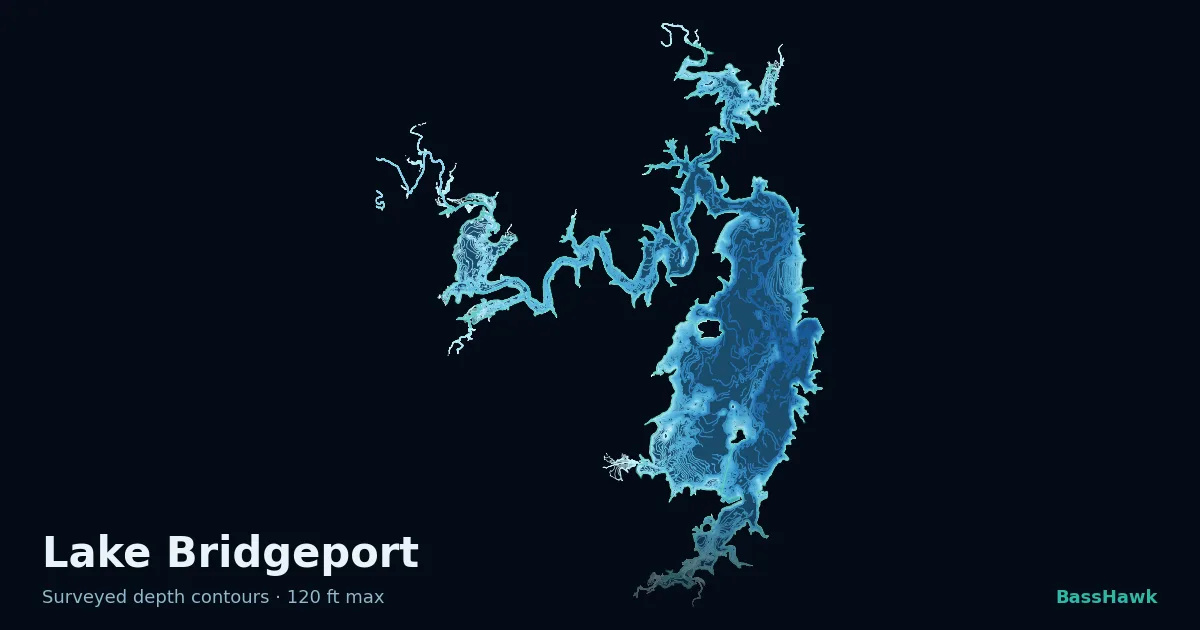
Hot water pushes fish deep early, but the pressure drop ahead of weather is firing them up on structure before the front hits.
Water's sitting at 90 degrees, which means largemouth are uncomfortable and selective. They're spending the day parked on deep ledges and rock structure where it's cooler and they've got good oxygen. Early morning is your best window before the sun cranks up, and you'll want to fish fast and aggressive on the main-lake hard cover because the pressure is dropping ahead of some weather coming in. That pressure swing is actually working in your favor right now, it gets them chewing a little harder than they normally would in dead summer heat. The lake level is down about eight months of pool, so any shallow flats or coves that hold fish in spring are starting to get exposed. Expect clean water under this clear sky, so downsize your presentations and use natural colors in the shallows, but go darker and louder on the deep rock and gravel piles where the better fish are stacked.
The day's game plan
Where to fish
- Captain Kidd Point and Windy Point — 3 to 18 feet, boulder banks meeting channel edge · Hard cover, boulder banks, transition from shallow flats to deep channel
Boulder banks and riprap create multiple depth bands where largemouth transition from shallow early-morning water to deeper daytime structure. These points funnel fish movement and provide both shallow reaction opportunities at dawn and deep summer holding spots. - Submerged gravel piles near Lakeview Lodge and off Steele Island — 12 to 28 feet, hard-packed bottom · Gravel composition, isolated bottom transitions, hard structure
Gravel piles are prime summer largemouth habitat because hard bottom provides good footing and clear visibility for feeding. These isolated structures concentrate baitfish and predators year-round. Clear water and depth options make them reliable all day. - Main-lake creek channels and channel bends — 15 to 25 feet on drop-offs, 8 to 15 feet on inside bends and flats adjacent to channel · Soft-to-hard bottom transitions, steep drop-offs, outside bends and inside flats, current breaks
Creek channels serve as summer highways and staging areas. Largemouth use the edges and transitions to move between deep and shallow water without fully committing to the shallows in hot water. Inside bends and soft-to-hard transitions concentrate forage and are prime late-afternoon spots. - Secondary points and upper cove entrances in creek arms — 3 to 12 feet · Hard cover, boulder banks, proximity to deeper water, subtle depth transitions
Secondary structure in creek arms is where largemouth stage early and late in the day when they're willing to hunt shallow. These areas warm first in morning and cool first as evening arrives. Good access to deeper escape water makes them appealing in hot conditions.
What to throw
- Crankbait — 2 in · Natural shad or chartreuse · 1/4 to 3/8 oz (Early morning on shallow rock banks and riprap before sun gets high)
Short sharp twitches just off the rocks in shallow water, 3 to 6 feet. Burn it faster in warm water to trigger reaction strikes. - Shaky Head with soft worm — 4 in · Green pumpkin or watermelon red-flake · 3/4 oz (Mid-morning through afternoon on main-lake ledges and channel transitions, 12 to 18 feet)
Drag slowly along the bottom with subtle rod twitches, maintain bottom contact, lift and drop with 30-second deliberate pauses on high-percentage spots. - Vertical spoon — n/a · White or chartreuse · 1/2 to 3/4 oz (Midday on the deepest ledges and humps, 20 to 28 feet, when bass are in survival mode)
Drop it straight down, snap up 12 inches, flutter back down on slack line. 10 to 15 second vertical cycles with deliberate pauses. - Chatterbait with soft plastic trailer — 3/8 to 1/2 oz · White or chartreuse · included in size (Evening as sun lowers and bass transition to intermediate structure, 8 to 15 feet)
Steady medium-pace retrieve, let the blade create vibration and flash, work it through every piece of cover with crisp casts. Keep tension on the line. - Topwater plug or small swimplait — 2 to 3 in · Dark colors in low light, natural shad if water's slightly stained · 1/4 to 1/2 oz (Dusk, 7:30 PM to 8:45 PM, on shallow banks and boulder-lined coves, 3 to 8 feet)
Twitch and pause right at the cover, create small disturbances that trigger shallow strikes. Keep bait in the strike zone longer than at midday.
How to work it
- Dragging — Mid-morning through late afternoon when bass have pulled to deeper structure · Main-lake ledges, channel swings, and hard-bottom transitions, 12 to 22 feet
Drag a shaky head or Texas rig slowly along the bottom with subtle rod twitches, maintaining bottom contact and deliberate pauses on structure transitions. - Vertical jigging — Midday during peak heat when bass are in their deepest summer comfort zone · Deep ledges and humps, 20 to 28 feet, away from creek arms
Drop a spoon or jig straight down, snap it up 12 inches, flutter back down on slack line with 10 to 15 second cycles and distinct pauses. - Bank walking with reaction baits — Early morning and evening when light is low and largemouth are transitioning · Riprap, boulder banks, and secondary points, 3 to 15 feet
Work crankbaits or chatterbaits with sharp twitches and steady retrieves tight to rock cover, make crisp casts and cover water efficiently. - Slow rolling — Late afternoon when bass are cautiously feeding but not aggressive · Channel ledges and creek-arm transitions, 15 to 22 feet
Slow roll a Texas-rigged worm along the bottom with deliberate, lazy retrieve speed, let the worm work without muscling it.
Pro tips
- The pressure is dropping ahead of weather, which is firing them up more than they normally would in dead summer heat. Fish aggressive reaction baits and cover water fast in the morning window before the pressure stabilizes and fishing gets harder. Once a front rolls through and pressure rises, expect a shutdown for 24 hours and scale way down to finesse baits on the densest cover you can find.
- Water is down almost a foot from full pool, so any shallow hardcover and flats that look productive in spring are starting to pull away from the bank or dry out entirely. Adjust your navigation and don't waste time on shallow structure that was good in May. Stick to the rock banks and deeper transitions where the fish have adjusted to lower water.
If conditions change
If the front hits sooner and skies stay clear with falling temperature, the bite will actually stay better than normal through the afternoon because the pressure drop keeps them aggressive. If clouds roll in and wind picks up, the shallow bite will extend longer and you can work the banks later into the midday period. If the water clears even more than it is now, downsize everything by 25 percent and use natural, translucent colors only, fish fluorocarbon leaders on the main lake. If an algae bloom or runoff muddies the water, switch to dark colors (black, junebug), upsize to 5 to 6 inch baits, and focus on vibration and displacement with chatterbaits and big Colorado-blade spinnerbaits. If the wind dies completely flat, the shallow morning and evening bites will compress into tighter windows, so get out early and fish fast, then go deep and vertical at midday without looking back.
Find more fish. This is a real report from that day's conditions — open the app for today's · free account