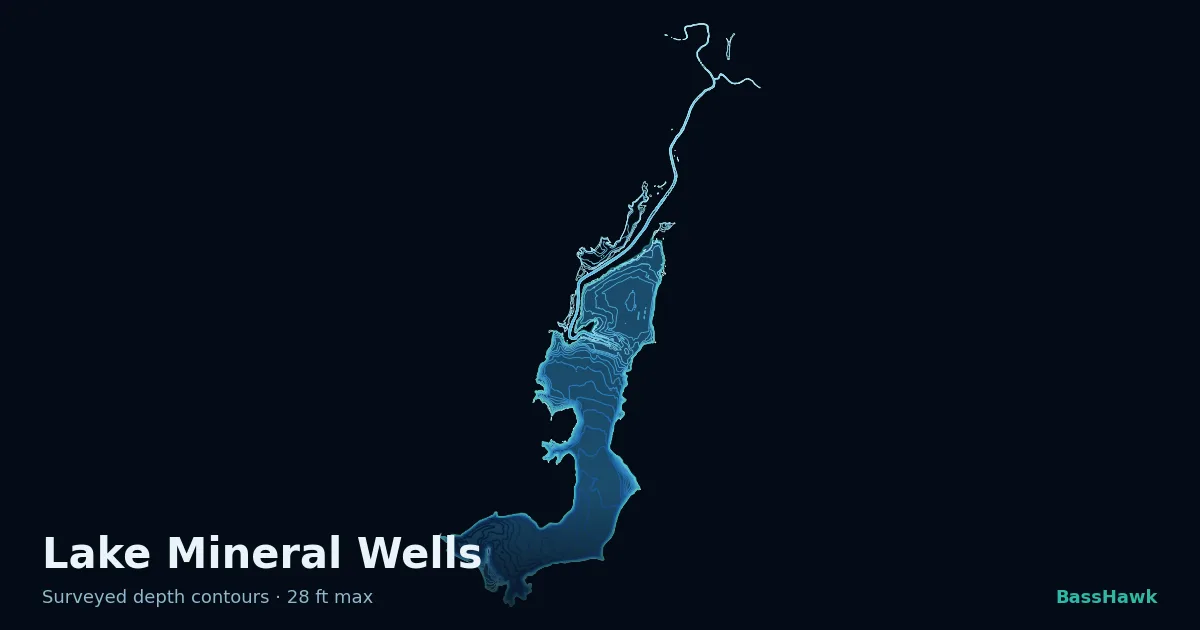
Dead-hot summer, work the shade and deep water early and late, slide shallow only at first light.
Water's sitting at 90 degrees and the sun is brutal, so the bite is compressed into dawn and dusk. Largemouth pull deep to escape the heat and find oxygen during the day, which means your midday fishing is going to be tough unless you're on the deepest brush and timber the lake has. The lake's running a little low, so edges and structure are sharper and more defined, which actually helps you dial in where the bass want to be. No clouds today, so everything's in full sunlight by mid-morning and that pushes fish deeper faster. Your best window is right at sunrise when bass slide up to hunt before the water gets uncomfortable, and then again in the last couple hours of daylight when it cools just enough to bring them looking. Work the dam, the water willow edges, and any deep brush or standing timber in the early and late periods. During the heat of the day, skip the shallows entirely and focus on the deepest available cover.
The day's game plan
Where to fish
- Water willow edges and dam face — 2 to 8 feet · shallow weed line, submerged vegetation, riprap along dam, hard bottom
Willow provides shade, holds small baitfish and crawdads, and is specifically mentioned as a productive seasonal pattern. The dam is a hard-structure feature that concentrates bass. Work this in early morning and evening when bass hunt shallowly. - Submerged brush piles along the dam and isolated brush — 6 to 15 feet · fallen timber, brush, dense cover, proximity to deep water
These are explicitly productive spots and provide shade and refuge from heat stress during the day. They concentrate bass and are mentioned as a reliable summer pattern. Vertical presentations and light tackle work best here. - Standing timber in upper end and Rippy Branch mouth — 10 to 25 feet · submerged trees, creek channel edges, deep holes, current breaks
Standing timber holds bass year-round and is specifically cited as a productive area. The upper-end location and Rippy Branch mouth create deeper water and cooler pockets. Bass stack here during heat stress. The creek channel funnels current and oxygen. - Main creek channel and channel drop-offs — 15 to 30 feet · bottom contour change, channel edges, hard bottom transitions, proximity to deep water
Channels are migration highways and provide access to cooler, deeper water. Drop-offs concentrate bass during heat stress. This is where big bass stage in midday and late afternoon. Blade baits and heavy presentations work well here.
What to throw
- Plastic worm — 4 to 5 inch · black, watermelon-red, watermelon-red flake, dark grape · 1/4 ounce (early morning, late evening, dusk, and night when bass are shallow or slightly stressed)
Texas rigged on an offset hook, dragged slowly along bottom and through cover, crawling it around weeds and wood - Spinnerbait — n/a · chartreuse-white, white, Colorado blade · 1/2 ounce (early morning before the sun climbs, around water willow and dam)
cast and burn slowly near weed edges and shallow cover, keeping the blade turning steadily just outside the grass line - Drop shot — 3 to 4 inch · green-pumpkin, junebug, watermelon · 1/8 ounce (weight only, bait size separate) (midday when bass retreat to deep brush and timber during heat stress)
fished vertically around deep brush, ripped upward with quick 12 to 18 inch movements and allowed to fall on slack line; maintain light contact - Lipless crankbait — 2.5 to 3 inch · black, black-blue, chartreuse · 1/2 ounce (midday and late afternoon around deep timber and brush when reaction strikes are needed)
cast tight to timber and submerged brush, rip sharply upward with quick rod jerks, then allow to flutter and settle on a tight line - Topwater popper — 2 to 3 inch · white, chartreuse-white · n/a (evening and dusk as light drops and water temperature cools slightly)
cast near weed edges and shallow cover, work with sharp pops followed by 3 to 5 second pauses; let it sit and listen for strikes
How to work it
- Slow drag — early morning, evening, dusk, and night when bass are shallow or feeding · water willow edges, shallow flats, around brush piles and timber
Keep your rod low and parallel to the water, drag the worm or bottom bait along the structure with steady, slow movement, pausing occasionally to let it settle - Drop shot vertical — midday and early afternoon when bass are deep and stressed · deep brush and timber, submerged logs, channel edges 12 to 25 feet
Position the boat directly over or beside the cover, cast the drop shot down, rip upward sharply with quick 12 to 18 inch rod movements, then allow to fall on slack line; repeat - Reaction ripping — heat of the day when passive presentations fail · timber, submerged brush, rock piles, any dense cover in deep water
Cast the lure tight to cover and immediately jerk upward aggressively with sharp, quick rod movements, pause briefly, then repeat; work it vertically or with short sweeps - Topwater work — low-light periods (early morning, evening, dusk) when bass feed at the surface · shallow flats, water willow edges, near the dam and shoreline cover
Cast near cover, pop the lure sharply 2 to 3 times with the rod tip, then pause for 3 to 5 seconds and listen for strikes; repeat; vary pop intensity
Pro tips
- In this brutal heat, forget about grinding the shallows all day. Find the deepest brush and timber available and work it hard from 11 AM to 4 PM. Most anglers give up at midday, but the bass are still there, they're just deep and grumpy. A 1/2-ounce lipless crankbait ripped aggressively around deep timber will catch them when nothing else will.
- The solunar major at 1:45 PM falls right in the worst part of the day, so don't expect a dramatic bite window. Your real edge is the early-morning major before sunrise gets hot, and the evening minor near dusk. Fish hard from 6:45 AM to 8:30 AM and then again from 5:00 PM to 8:50 PM, and you'll catch more fish than most people fishing the midday clock.
- Water willow is your easiest pattern right now. It's shallow, easy to find, and holds bass reliably in early morning and evening. Learn how to work the edge of the weeds with a worm or spinnerbait, and you can catch consistent fish without fighting the deep water. Skip casting under the overhanging willow branches, it's worth the effort.
If conditions change
If a front moves in with cooling air and dropping pressure, bass will feed aggressively and move shallower even midday. Move up on the flats and work spinnerbaits and crankbaits faster and longer into the bright sun. If the wind picks up and clouds roll in, the shallow bite extends throughout the day, so stay on water willow and shallow structure longer and skip the deep midday grind. If the lake gets muddier from recent rain or runoff, upsize everything by 25 percent, use dark colors (black, junebug), and rely on blade baits and lipless cranks to generate vibration. If it gets clearer than normal and the sun stays bright and high, downsize all presentations to 3-inch baits, add a fluorocarbon leader, and work the deepest timber even more aggressively during midday.
Find more fish. This is a real report from that day's conditions — open the app for today's · free account