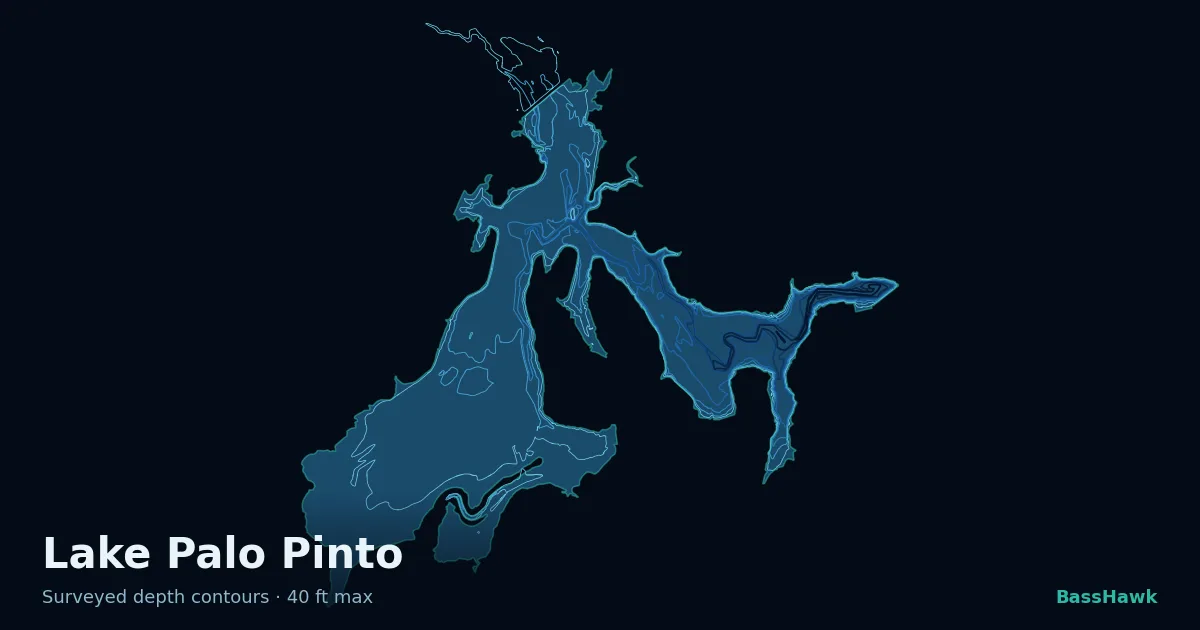
Summer grind on deep structure and docks. Early bite on topwater, then dial in to 15-20 feet.
Water's at 79 degrees, still in that uncomfortable range where bass sit deep to stay comfortable. Clear water and bright sun mean they're pulled down tight to cover and ledges. Pressure is rising after dropping, so they're settling in and getting picky. The lake is low by 1.6 feet, which tightens up the shallows and concentrates fish on structure with deep-water escape routes. Early morning is your best shot before the sun climbs. After that, they slide deeper and want slower, more precise presentations. Docks in shade and brush around 15 to 20 feet will be your home for the rest of the day. Night fishing on lighted docks can turn on late if the pressure stays steady.
The day's game plan
Where to fish
- Main-Lake Rocky Points — 10 to 22 feet, with steep drop-off to deeper water · Hard clay or gravel bottom, scattered brush piles, rock outcrops. Deep-water access within 30 to 50 feet.
Bass use rocky points as feeding stations and migration routes. The hard bottom attracts crawfish and natural forage. Deep water nearby lets them escape when the sun climbs. This is the foundation pattern all summer. - Boat Docks with Shade — 8 to 18 feet, variable based on dock placement · Dock pilings, deck shade, moored boats, brush underneath. Position relative to open water.
Shade is worth its weight in gold when the water is warm and clear. Docks concentrate bass all day, and at night the lights turn them on. Proven pattern on the lake year-round but especially in summer heat. - Channel Ledges and Deep Brush — 15 to 25 feet, edges where structure meets basin floor · Hard-bottom transitions, submerged timber, brush piles, stumps. Proximity to main lake basin critical.
Bass retreat to the deepest structure available when water is warm and sun is bright. These transition zones between shallow and deep serve as ambush points where bass wait for forage moving through. The lake's low level tightens everything up, making these features more concentrated and predictable.
What to throw
- Topwater Plug — 2 to 3 in · White or shad · n/a (Early morning, first 45 minutes after sunrise)
Cast to shallow structure and rocky points. Twitch and pause, let it sit 2 to 3 seconds between pops. Work the surface deliberately, not fast. - Small Swimbaits — 3 to 4 in · White or pearl · n/a (Morning and early afternoon around shaded docks)
Drag slowly near dock shade and pilings. Keep the bait tight to structure and pause frequently. - Carolina Rig with Watermelon Fluke — 3 in · Watermelon or green pumpkin · 1/2 oz sinker plus 8-pound fluorocarbon leader on 18-inch tie (Midday and early afternoon on deep structure, 15 to 22 feet)
Drag it slowly on the bottom, tick bottom structure and brush piles. Let it rest for 5 to 10 seconds between movements. - Football Jig with Creature Trailer — 3 to 4 in creature · Green pumpkin or watermelon · 3/8 to 1/2 oz jig head (Late afternoon and early evening when shade is critical)
Hop it slowly on the bottom around dock pilings and brush. Short 6 to 12 inch hops with pauses. Stay tight to cover. - Live Shiners or Shad — 2 to 3 in · Natural silver · Light jig head 1/4 oz or freelined (Dusk and night, 7:30 PM onward)
Fish under dock lights or on shallow rocky edges. Let the bait move naturally. For dock fishing, cast near the light source and work the bait slowly.
How to work it
- Slow Bottom Dragging — Midday and early afternoon when sun is high and bass are locked deep · Deep ledges and brush piles, 15 to 22 feet
Keep your sinker or jig on the bottom and drag it deliberately. Maintain light line contact and work 2 to 3 feet per retrieve pause cycle. Tick rocks and structure as you go. - Dock-Shade Hunting — Morning, late afternoon, and evening when shade is available · Scattered boat docks 8 to 18 feet deep throughout the lake
Work the shaded side of boat docks methodically. Cast parallel to pilings and fish 6 to 12 inches from wood. Pause regularly and let baits sit in shadow longer than open water. - Spinnerbait Slow Roll — Evening when light is fading and bass are slightly more aggressive · Rocky points and channel ledges, 10 to 18 feet
Cast out and retrieve at a slow, steady pace. Let the blade tick bottom occasionally without dragging. Maintain enough speed to keep the blade turning but not racing. Vary your pause length and blade speed until you dial it in. - Lighted Dock Feeding — Dusk and night, 7:30 PM onward, when baitfish and bass both feed under lights · Lighted boat docks, any area of the lake
Fish live bait or light jigs directly under dock lights where baitfish school. Cast tight to pilings and light fixtures. Keep the bait in the illuminated zone. Work early to ensure the dock light is on.
Pro tips
- The lake level is low by 1.6 feet. Shallow docks and areas that normally hold bass have shifted deeper. Focus on docks that sit in deeper water naturally, and fish the lower ends of rocky points where they still have escape depth.
- Pressure is rising, which means bass are settling in and getting more territorial. They'll hold tighter to their chosen spots but will be pickier about what they eat. Slow presentations and staying on structure longer pay off.
- Water clarity is good right now. That means bass can see lures from farther away but it also makes them spookier. Use fluorocarbon leaders on finesse presentations and keep baits natural in color and profile.
If conditions change
If a cold front blows through and the pressure spikes higher, expect a tough bite for 12 to 24 hours. Move to the thickest cover available, downsize everything to 3-inch finesse baits, and fish slow and tight on dock pilings and deep brush. If wind picks up from the south or southwest, it warms the water and extends the shallow bite an hour or two. Work rocky points longer into late morning. If the water clouds up from a rain, switch to darker colors like black or junebug and fish spinnerbaits or chatterbaits with wider blade vibration so bass can find your bait easier. If it stays clear and bright all day, fish deeper and slower, lean on docks all afternoon, and save your energy for the night dock bite when lights turn on.
Find more fish. This is a real report from that day's conditions — open the app for today's · free account