Summer heat's got them locked deep and tight; hunt ledges and channel breaks before 9 AM, then finesse the shade.
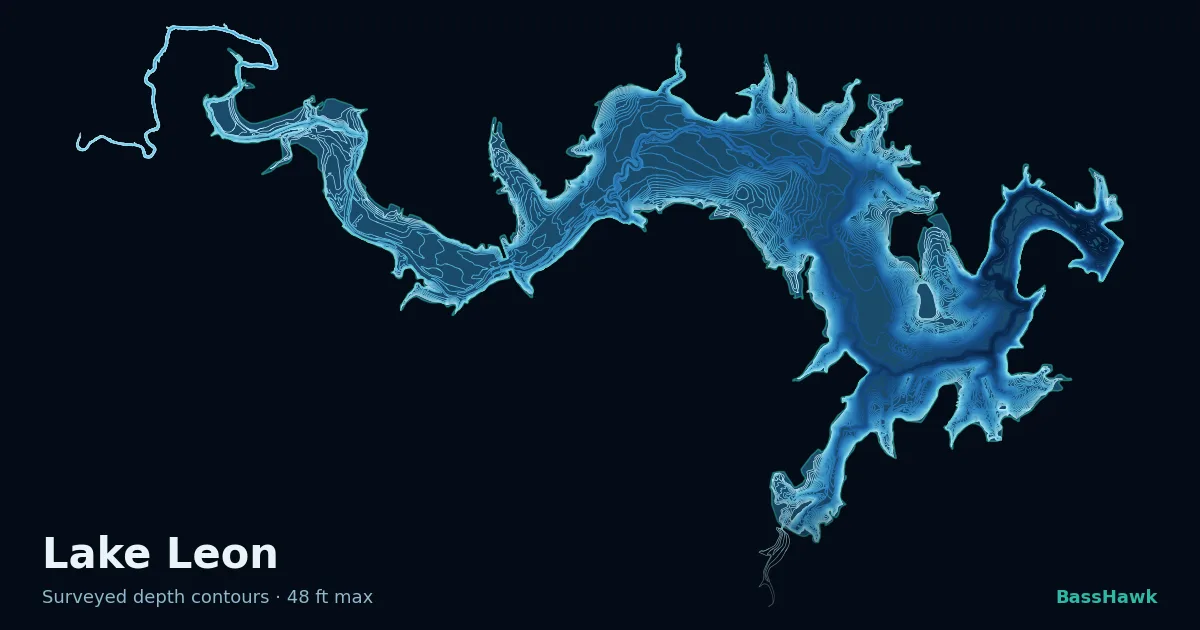
Water's sitting at 84 degrees, right at the point where largemouth get uncomfortable and start hunting shade and depth to stay cool. That's why you won't see them chasing shallows under a bluebird sun like this. They're stacked on ledges 15 to 25 feet down, especially channel edges where there's a quick drop and some current break. The lake's clear enough to spot structure, and that wind pushing south means some banks are getting churned up, which helps early. Pressure's steady, so no bonus aggression, but the solunar major at 1:48 PM can help if the sun peaks hard enough that they get lazy in the afternoon. Your play is simple: get shallow and hunt hard before the sun climbs high, then go deep and slow for the rest of the day.
The day's game plan
Where to fish
- Main-Lake Channel Ledges and Bends — 18 to 30 feet · Rocky or timber-laden drop-offs, hard bottom transitions, and current-break areas where the channel bends.
In summer heat, deep water holds the coolest temperatures and structure provides shade. Bass stage here to escape the heat and find adequate oxygen. Channel bends concentrate forage and offer escape routes to even deeper water. - Secondary Points and Creek Channel Swings — 8 to 15 feet · Hard bottom points with timber, rock, or riprap; inside and outside bends of creek channels.
These are migration corridors and intermediate rest stops between shallow and deep sanctuary. Early morning and late afternoon, bass pass through these zones en route to feeding flats or deep water. The depth transition and structure concentration make them reliable bite locations during transition windows. - Shallow Riprap Banks and Dock Pilings — 2 to 8 feet · Rock breaks, docks with pilings, boat lanes, and timber on shallow flats backed by deep water access.
Early morning before the sun climbs, bass hunt here because the water is coolest and forage is abundant. Dusk and night, low light and cooler shallows draw feeding bass. Any shallow structure with a nearby deep-water escape route concentrates bass throughout the day. - Sunken Timber and Rocky Humps — 12 to 25 feet · Standing timber, brush piles, and boulder fields on main-lake humps or inside creek bends.
Timber and rock provide shade, thermal refuge, and ambush cover. In summer, bass cluster around dense cover at medium to deep depths where they balance comfort with feeding opportunity. These areas are accessible during morning transitions and early evening movements.
What to throw
- Green Pumpkin Finesse Worm — 4 to 5 in · green pumpkin · 1/8 oz (drop shot) to 1/4 oz (jig head) (Early morning, evening, and dusk when bass are transitioning or not fully aggressive.)
Drop shot or light jig head; drag slowly with short hops and long pauses, focusing on structure edges and timber. - Lipless Crankbait — 2.5 to 3 in · chrome or pearl · 3/8 oz (Early morning and morning windows when bass are transitioning from shallow zones.)
Cast to structure and retrieve with sharp jerks and pauses; cover ground horizontally along depth changes. - Shaky Head with Watermelon Red Flake — 3 in · watermelon red flake · 3/16 oz (Midday on deep ledges and humps when bass are locked in tight.)
Drag along bottom with minimal action; more pause than movement. - Blade Bait with White Trailer — n/a · chrome blade, white curly-tail · 1/2 oz (Late afternoon when fish are buried deep and non-responsive to other presentations.)
Jig vertically or drag along drop-offs with quarter-turn rod lifts and controlled descents. - Dark Crankbait or Black Finesse Worm — 2.5 to 3 in (crankbait) or 4 to 5 in (worm) · black or black/blue · 1/4 oz (worm on jig) or 3/8 oz (small crank) (Night fishing under low moonlight or complete darkness.)
At night, work slowly with pauses; use vibration-based presentations like a spinnerbait with Colorado blade if you need lateral-line appeal.
How to work it
- Deep Ledge Dragging — Midday through late afternoon when bass are deep and inactive. Most effective in the 2:00 PM to 4:30 PM window. · Ledges, humps, and channel bends in 18 to 30 feet.
Position on a main-lake channel ledge or hump. Lower your bait to the bottom, then drag it slowly with micro-movements, feeling for bottom contact. Lift slightly to maintain depth and move the bait a few feet at a time. Pause for 3 to 5 seconds between moves. - Channel Edge Cranking — Early morning and morning (6:57 AM to 10:30 AM) when bass are mobile and feeding intention is climbing. · Secondary points, creek channel swings, and inside bends where structure meets deep water.
Cast to the shallow side of a channel drop-off and retrieve parallel to the depth change, working the bait along the edge where bottom transitions from 8 feet to 15 feet or deeper. Use sharp jerks with brief pauses to mimic fleeing prey. - Dock and Wood Finesse Soaking — Early morning before 8:30 AM and dusk from 6:30 PM onward. Productive most of the day if shade structures are present. · Shallow flats and creek arms near docks, timber, and riprap in 2 to 8 feet.
Cast a drop shot or light jig near dock pilings, fallen timber, or root systems. Let the bait sit with minimal movement, twitching slightly every 10 to 15 seconds. Work vertically or with short horizontal slides along the cover face. - Night Vibration Hunting — Night from 8:22 PM until dawn. Most effective under low or no moonlight. · Shallow flats, timber, and dock pilings in 1 to 6 feet after sunset.
Use a small dark spinnerbait with a Colorado blade or a lipless crankbait. Cast and retrieve on a steady, slow pace that maintains consistent blade rotation or body vibration. Let the lateral-line thump guide bass to the lure in the dark.
Pro tips
- Start your day on shallow riprap and docks at first light with a crankbait or drop shot before 8:30 AM. The fish that bite early are often the largest and most aggressive. Once the sun climbs above 8:30, abandon the shallows and commit to deep water and ledge fishing for the rest of the day.
- Summer bass relate hard to the depth transition where structure meets open water. Instead of fishing timber or rocks in isolation, focus on the EDGE where rock meets sand, or where timber stands at the base of a drop-off. That's where bass position to feed and escape quickly.
- Use your electronics to identify hard bottom and depth changes. In clear water, you can see rocks and structure on the sounder. Mark ledges at 15 to 25 feet with good bottom composition, and work them systematically with a slow drag or shaky head. This pattern repeats across the lake.
If conditions change
If a cool front drops pressure and temperature in the next 24 hours, bass will move shallow and aggressive for a brief window before and immediately after it passes. Fish moving water early and often with crankbaits to capitalize. If wind shifts hard north or calms completely, the shallow bite shuts down faster and deeper bite slows as well, so focus on dense timber and rocky shade on main-lake structure. If the water clouds from heavy rain runoff, switch to darker colors (black, black/blue, chartreuse) and add vibration-heavy presentations like spinnerbaits with Colorado blades; visibility will be lower so silhouette and feel matter more than natural color mimicry. If the lake clears further, scale down lure sizes 25 percent, lengthen your leader to 2 feet of fluorocarbon, and fish deeper (20+ feet) because bass will push down to avoid exposure in clear shallow water.
Find more fish. This is a real report from that day's conditions — open the app for today's · free account