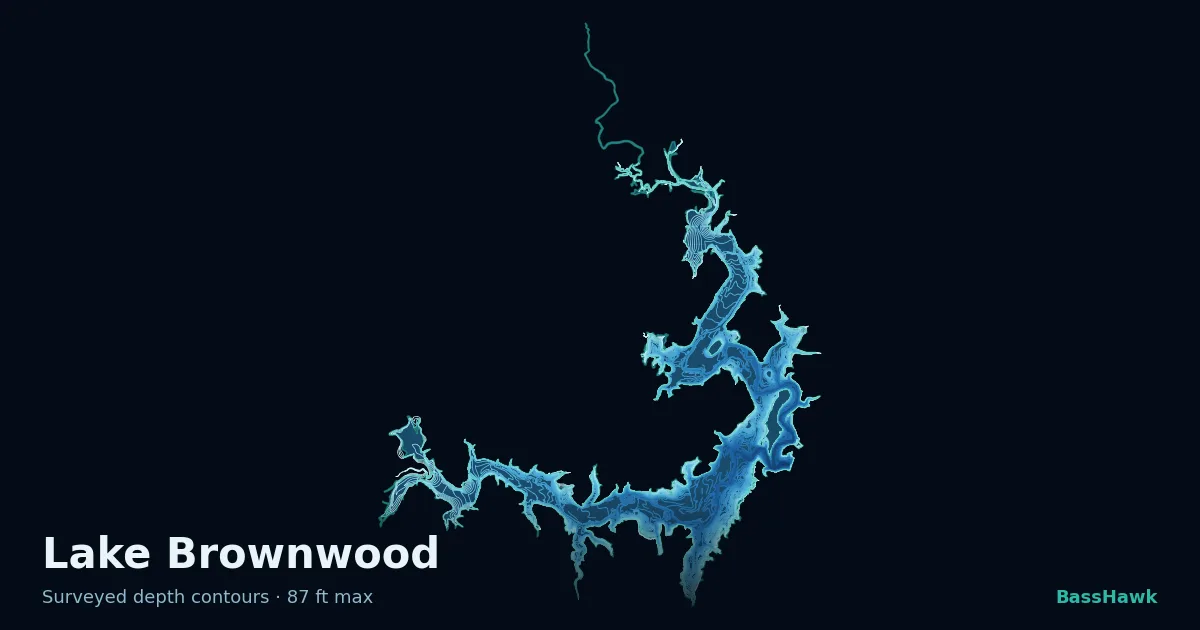
Dog days peak heat, early and late is your window. Work the ledges and deep brush in midday, topwater frogs and shallow cover at first light.
Water is 92 degrees and uncomfortable for the bass. They're pushed deep to find cooler water and more oxygen, clustering on ledges and brush piles in 12-25 feet during the day. The water is stained, so they can see contrast and vibration. The lake is down 1.7 feet from pool, pool is low, so the shallow grass and docks are less productive than usual. Pressure is dropping ahead of some weather coming in, which should fire them up at first light and dusk before the front arrives. This is peak summer shutdown mode. Early morning and late evening are when bass slide shallow to feed. Midday you hunt the deep structure or you're wasting gas.
The day's game plan
Where to fish
- Main lake ledges and channel swings — 12-25 feet · Hard-bottom transitions where depth changes 3-5 feet in short distance. Rock, clay, and channel bends.
Ledges funnel bass between shallow and deep water. In summer heat, bass stack on the deep side of the ledge where it's cooler. The transition itself concentrates forage. This is the most reliable summer pattern. - Deep brush piles and timber on main lake — 15-25 feet · Submerged timber, brush piles, and laydowns. Denser cover is better.
In peak heat, bass retreat to the thickest cover available to stay comfortable and hidden from predators. Main lake brush holds bigger fish than creek brush. Target the piles closest to the deepest water. - Shallow shoreline grass and dock structure — 2-10 feet · Grass flats, dock pilings, timber, and rocky banks.
Early morning and dusk, bass hunt shallow to feed. Dock shadows provide shade and baitfish shelter. This water is cooler early and later because the sun exposure is limited at low angles. - Inside creek channels and creek-mouth transitions — 6-18 feet · Creek channel bends, where creeks meet the main lake, and inside creek brush.
Creeks offer cooler, slightly fresher water during summer heat. Bass use creeks as highways and stage on the transitions where they can access deep main lake water. Morning bite is strong here.
What to throw
- Shaky head with green pumpkin F5 worm — 4 in · green pumpkin · 1/8 oz to 1/4 oz jig head (Morning and late afternoon on ledges and channel transitions 12-18 feet.)
Cast on or near structure, shake the rod tip gently while dragging along bottom transitions. Pause 3-5 seconds between movements. Let it fall on slack line. - Drop shot rig with 6-inch morning glory worm — 6 in · morning glory · 1/4 oz to 1/2 oz weight below (Morning and midday 12-25 feet on main lake ledges and deep brush.)
Cast and position vertically on ledges. Shake the rod tip 6 inches up and down while holding the line tight, creating vibration. Pause frequently. Drop back on slack line between shakes. - Texas rig trick worm — 7 in · watermelon or green pumpkin · 3/8 oz to 1/2 oz weight (Midday peak heat 18-25 feet in dense brush and timber.)
Cast into heavy cover and brush piles. Work it slow along the bottom with long pauses. Use a lift-and-drop pattern, letting it sit 5-10 seconds between moves. Point the rod low to keep tension. - Topwater frog (hollow body) — 2 to 2.5 in · black or dark green · n/a (Early morning and dusk in shallow grass and around docks 3-8 feet.)
Cast to grass, docks, and shallow cover. Work it slow with pauses, walking the dog gently. Let it sit 2-3 seconds between twitches. Keep it in the strike zone, don't overwork it. - Square bill crankbait — 2.5 to 3 in · crawfish or perch pattern · n/a (Morning, late afternoon, and evening 6-18 feet around rocky shorelines and brush.)
Cast and crank steadily, bumping it off the rock, wood, and bottom structure. Keep the rod tip down. Fish it at varying speeds. In shallow, crank it fast. On ledges 12-18 feet, slow roll and let it hunt.
How to work it
- Vertical shake and drop — Morning through late afternoon when bass are deep and lethargic. Works best in stained water where vibration matters. · On main lake ledges, channel swings, and brush piles in 12-25 feet.
Position boat directly over structure. Cast a shaky head or drop shot and shake the rod tip 6-12 inches vertically while keeping tension on the line. Pause 3-5 seconds, then drop back on slack line. Repeat. - Slow bottom drag — Midday when bass are locked to cover and not willing to chase. Forces strikes from fish holding tight. · Brush piles, timber, and rocky bottom in 15-25 feet during midday peak heat.
Keep the rod tip low and drag the bait along the bottom with long pauses. Move 1-2 feet, pause 5-10 seconds, repeat. Let the bait sit longer than you think. Minimal rod movement. - Topwater walk-the-dog — Early morning and dusk when bass are shallow and feeding. Works in low light and stained water because of the surface commotion. · Shallow grass, docks, dock shadows, and inside creek channels in 2-10 feet.
Cast a topwater (frog, plopper) and retrieve with a steady rhythm, twitching the rod tip side-to-side to make the bait walk across the surface. Keep tension but don't jerk too hard. Maintain a slow to medium cadence. - Reaction strike on cover — Morning, late afternoon, and evening. Most effective when bass aren't feeding actively but will strike out of reflex. · Rocky shorelines, dock pilings, and brush edges in 6-15 feet.
Cast a square bill or lipless crank tight to timber, rock, and dock pilings. Crank it into the structure so it deflects off the hard bottom or wood. The sudden direction change and noise trigger strikes from territorial or competitive fish.
Pro tips
- The lake is down 1.7 feet from pool. Shallow docks and flats that hold fish in normal water are less productive right now. Focus on the docks with deeper water immediately adjacent and the grass lines with immediate access to 12+ foot water. The drop-off matters more than the shallow piece.
- Pressure is dropping ahead of some weather. Bass will be slightly more active at first light than a typical August morning. Fish hard from 6:58 AM through 9:00 AM. This pre-front window is your best chance for a quality bite. Once the front passes and pressure rises, fishing will turn hard for 24 hours.
- Stained water means dark colors and vibration win. Don't overthink color. Black, dark green, watermelon, and morning glory all work because they create contrast and bass sense them by sight and lateral line together. Keep your presentations tight to cover and slow. Wide, fast retrieves waste time in 92-degree water.
If conditions change
If clouds thicken and wind comes up strong before the front, the shallow bite can extend an hour or two longer because cloud cover drops the sun angle effectively. Keep working the grass and docks longer than you would under bluebird sky. If the front comes through and pressure rises with clearing skies, expect a hard shutdown for the rest of the day. Abandon deep structure, downsize to 4-inch worms and drop shots, and fish tight to the densest cover you can find. Fish slower than you think. If the water clears up after rain, which is unlikely in August, switch to natural shad and perch patterns and add a fluorocarbon leader. If water gets murkier from wind chop, stay on dark colors and upsize your vibration baits. Square bill cranks and bladed spinners become more effective in muddy conditions. The fundamentals don't change: early and late is always your window. Midday peak heat always pushes fish to 18-25 feet. Match the depth and you match the fish.
Find more fish. This is a real report from that day's conditions — open the app for today's · free account