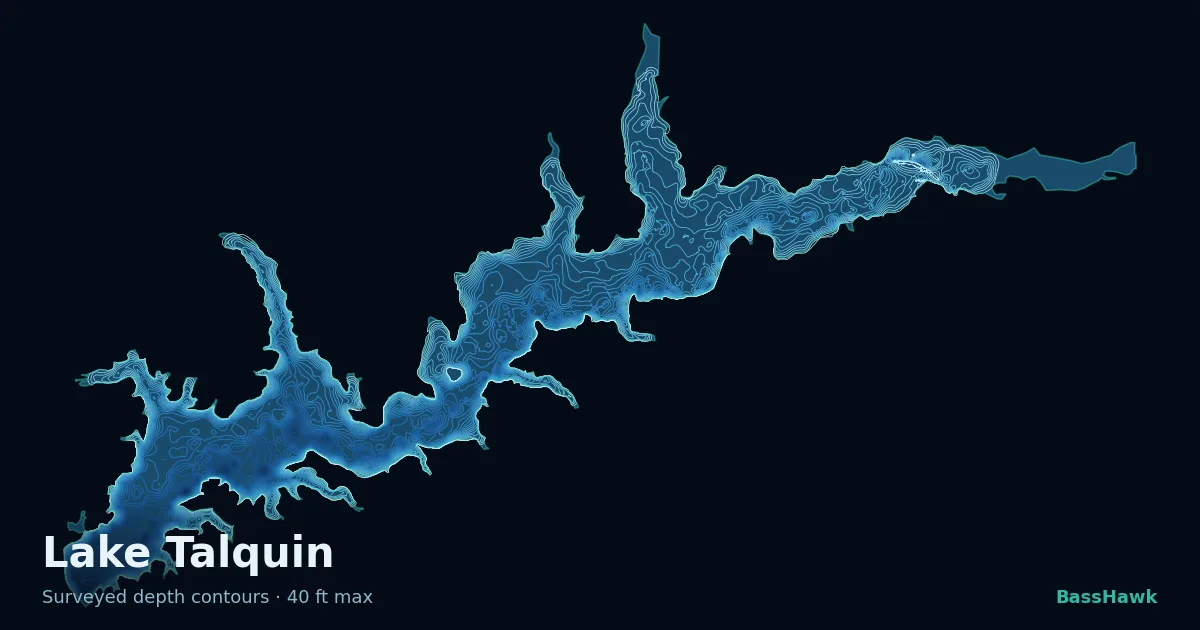
Summer heat shut the shallow bite off. Key the channel ledges and deep timber before 9 AM, then hunt shade in 15 to 25 feet.
Water's running 89 degrees, way too hot for anything but a dawn patrol. Clarity's always stained on Talquin, so you've got good contrast to work with, but the bass are tucked deep and lazy until the sun climbs. Pressure's rising after dropping, which means the fish got fired up yesterday and today they're settling back into the heat pattern. Early and late light are your windows, and everything in between is a grind. Target the channel edges and deep brush where the fish are holding comfortable water, because shallow flats are empty right now. Get on the water before sunrise and hunt the deeper structure until around 9, then either take a break or flip to shade and patience until the evening bite fires again.
The day's game plan
Where to fish
- Ochlockonee River Channel and Main Channel Bends — 18 to 28 feet on the flats and drops, inside bends and outside turns · Old river channel with clay and sand bottom, hard-packed drop-offs, scattered stumps and timber along the edges.
This is the freeway bass use to migrate between deep summer holding and shallow feeding. Channel bends create current breaks and concentrate both bass and baitfish. The depth and proximity to shallow water make it ideal all day, especially early and late. - Creek-Mouth Timber and Brush Piles — 15 to 22 feet, with deeper water just outside at 24 to 28 feet · Sunken timber, brush piles, and man-made fish attractors around the old creek channels feeding into the main river channel.
Brush and timber provide shade and cover bass need in summer heat. Deep water is just outside, so bass can slide in to feed and pull back to comfort immediately. Baitfish school around cover, drawing bass throughout the day. This structure holds fish all day in summer. - Secondary Channel Ledges and Transitions — 15 to 20 feet on the ledge tops, dropping to 24 to 28 feet · Hard-bottom ledge edges where the creek channels meet the main channel, often scattered with stumps and broken timber.
Ledges funnel bass movement and are the first place fish look for baitfish in low-light windows. Deep water access is immediate, so bass feel secure lingering in transition zones. Early morning and evening activity concentrates on these breaks. - Deep Holes and Bends Away from Shallow Banks — 22 to 30 feet, the deepest stable water without access to shallower flats · Hard clay bottom, open water or sparse timber, some older crappie brush piles.
Midday refuge when water temperature and light intensity are at their peak. Bass pull to these deepest zones when they can't tolerate shallower water. Not a feeding zone, but a holding zone where a carefully presented bait can draw strikes from uncomfortable fish.
What to throw
- Finesse Worm (4-inch) — 4 in · Black, Junebug, or dark green pumpkin · 1/16 oz (Early morning and evening, along channel ledges and timber. Dawn to 9:30 AM is the premium window.)
Shaky head rig, dragged slowly along bottom ledges or pitched tight to cover. Pause frequently and let the bait sit. Shake it subtly when paused. - Creature Bait (3.5-inch) — 3.5 in · Black, dark purple, or junebug · 3/16 oz (Late morning through early afternoon when bass are tucked in thick wood seeking shade.)
Pitch and skip tight to timber and brush piles. Let it sit 5 to 10 seconds on bottom, then shake and lift slowly. Work cover vertically or with short hops. - Shad Swimbait (3-inch) — 3 in · White, silver, or chartreuse · 1/4 oz (Midday when fish are at maximum depth and least willing to chase. Also works at night soaking around structure.)
Vertical drop presentation near the boat or slow drags along deep bottom. Work it methodically, 10 to 15 feet per cast. Let it rest on bottom and twitch occasionally. - Swimbait (5 to 6-inch) — 5-6 in · White, chartreuse, or silver · 1/4 oz (Evening and dusk when bass are feeding and looking up. Fading light through sunset.)
Steady retrieve 2 to 3 feet per second along edges and shallow flats. Cast and work it through cover with consistent speed, or pause it near timber. - Topwater (Small, 2 to 3-inch) — 2-3 in · Black, black and white, or chartreuse · 1/8 oz (Dusk and night when light is nearly gone and bass feed aggressively near cover.)
Cast to timber edges and shallow banks, work it with short pops and pauses. Let it rest 2 to 5 seconds between pops. Work the bait slowly and deliberately in low light.
How to work it
- Vertical Jigging on Deep Structure — Midday when bass are at maximum depth and reluctant to chase. Also productive at night when bass feed on baitfish holding deep structure. · Deep main-channel bends, old river channels, and creek mouths in 20 to 28 feet.
Drop a small jig or weighted finesse bait straight down to bottom near the boat. Work it with small hops and shakes, keeping it on or near bottom. Work 10 to 15 feet of vertical depth per drop, then reposition. - Tight-Cover Pitching — Morning through early afternoon when bass retreat into shade. Also effective during brief midday windows when heavy cover provides the only viable shade. · Timber piles and brush in 15 to 20 feet, especially near creek mouths and channel bends.
Pitch a jig or creature bait into thick timber, brush piles, and laydowns. Let it settle, then shake it subtly or lift it slowly. Work short distances, 8 to 12 feet per cast, moving from one piece of cover to the next. - Ledge Dragging — Early morning when bass are active on the edges and transitioning between deep holding and shallow feeding. Also works in evening as bass move back out to the ledges. · Ochlockonee River channel ledges and secondary channel edges, 15 to 24 feet.
Cast uptide of a channel ledge and drag a small finesse worm or creature bait slowly along the drop-off. Let it tick bottom with frequent pauses. Work 20 to 30 feet per cast, covering the transition zone between the ledge top and the drop. - Shallow-Flat Feeding in Low Light — Evening and dusk when light drops and bass feed in shallow water. The first 1 to 2 hours after sunset produces the second-best bite of the day. · Shallow flats and coves adjacent to channel drop-offs, 3 to 10 feet, especially east-facing banks.
Cast to timber, docks, and laydowns on shallow flats. Work baits tight to cover with pauses. Topwater or subsurface retrieves work depending on visibility. Move deliberately and cover edges rather than open water.
Pro tips
- Water's stained year-round, so dark silhouette colors outproduce bright ones by a mile in summer. Black, junebug, and dark green pumpkin are your workhorse colors dawn to dusk. Save chartreuse and white for the brief windows when you need visibility in fading light.
- The pressure's rising, which means the bite you had yesterday when it was dropping is gone. Today the fish settled back into the heat pattern. Don't expect fast action in the midday hours. Plan two focused windows, early and late, and take a break or fish vertically with patience in between. Chasing the shallow bite in the heat is a waste of boat fuel.
- Pitch and skip everything you can into thick timber and under laydowns. The thicker the cover and the tighter the presentation, the bigger the bass you'll find in summer. Open-water presentations produce numbers, not size. Fish the wood.
If conditions change
If the sky clears even more and the sun gets hotter, pull even deeper by 3 to 5 feet in the midday and extend the midday grind another hour on each end, fishing vertical drops in 25 to 30 feet. If the wind swings to the south and strengthens, the sun-facing banks warm faster, so move to north and east-facing banks and any shade you can find. If rain moves in and the pressure drops, bite like it did yesterday: throw everything you've got at the shallow timber in the morning window and again at dusk, because falling pressure fires the bite up for a few hours. If the clarity muddies significantly from runoff or algae, upsize your finesse baits to 5 inches, go darker on colors, and rely more on blade baits and chatterbaits to create thump and vibration in the stained water. If it stays clear like it is, stick with the smaller profiles and finesse presentations.
Find more fish. This is a real report from that day's conditions — open the app for today's · free account