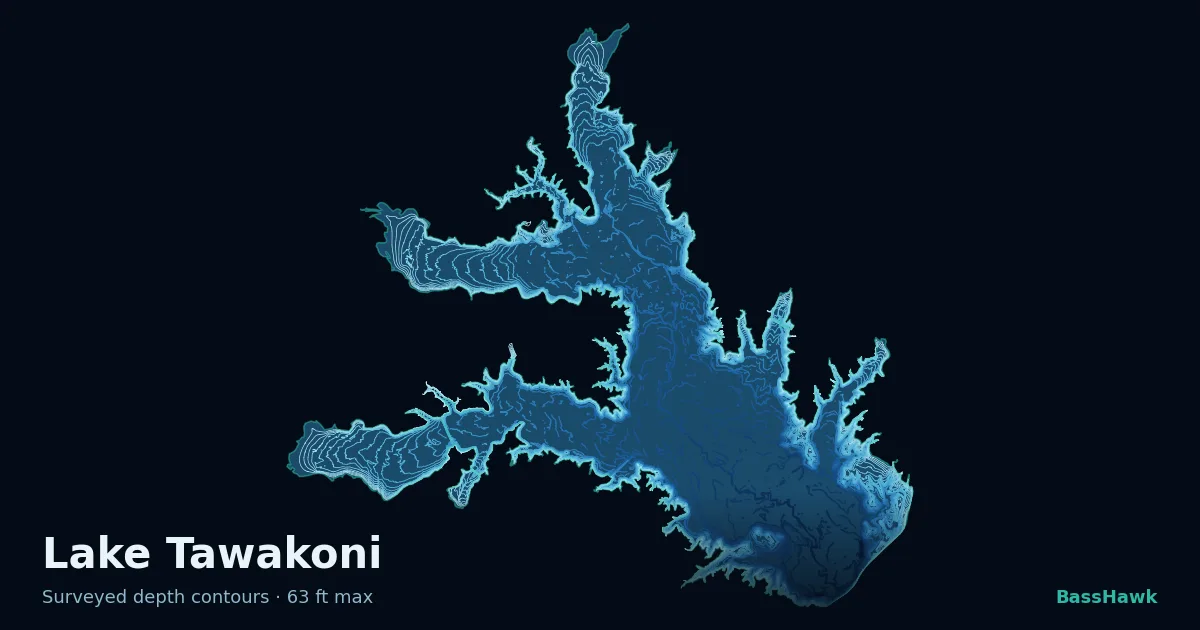
Summer heat has bass buried deep on the ledges. Dawn and dusk only. Slow presentations, deep water, and patience.
Water is sitting at 93 degrees, which is well above what bass like. They're not feeding aggressively right now. The fish have pulled out to the deepest, coolest ledges they can find and are basically shut down except for first light and last light when the sun isn't cooking the shallows. The water is lightly stained, which helps a little by reducing light penetration. The pool is dropping slowly, which can actually help concentrate fish on structure. The pressure is falling ahead of some weather, so there's a hint of aggression in the water, but the heat is the dominant factor. Expect a tough day unless you're on the water at the right times in the deepest structure available.
The day's game plan
Where to fish
- Main Lake Ledges (15 to 40 feet) — 15 to 40 feet, focus 22 to 35 feet in peak heat · Hard-bottom ledges with steep sides, drop-offs adjacent to channels, rocky or clay bottom. Any spot where bass can drop from shallow to deep quickly.
Bass retreat to deep, cool ledges when water is over 85 degrees. Ledges provide structure and immediate access to even deeper sanctuary. These are the only productive zones in midday heat. Work them vertically or drag presentations slowly along the edges. - Creek Channel Swings (18 to 30 feet) — 18 to 30 feet along the channel edges · Inside bends of creek channels, ledge breaks where channel meets structure, hard-bottom areas on the channel walls.
Channels are migration highways and concentrate baitfish. Bass stage here between deep water and shallow feeding flats. These spots produce throughout the day if you work them methodically. The channel provides cooler water and current breaks that concentrate prey. - Shallow Docks and Riprap (4 to 12 feet) — 4 to 12 feet, with deep water access immediately adjacent · Dock pilings, riprap banks, shallow points with hard cover, shallow timber if present. Focus on the side of cover facing deeper water.
These areas light up at dusk and into the night. Bass move shallow to hunt baitfish after dark, and docks and riprap provide cover and shade during the transition. This is the prime aggressive window of the day. Fish them hard from 5:30 PM onward.
What to throw
- Shaky Head with Soft Plastic Worm — 3 to 4 in · Black, Black/Blue, or Dark Green · 3/8 oz to 1/2 oz (Early morning on deep ledges, late afternoon during transition, and anytime you need a precise, slow presentation in deep water.)
Drag slowly along ledge edges and structure. Pause 3 to 5 seconds on bottom. Shake gently. Let it sit and work the immediate area thoroughly instead of covering water. - Drop Shot Rig — 3 in · Watermelon or Ghost Minnow · 3/8 oz sinker 12 to 18 inches below hook (Mid-morning through late morning on deep ledges in 25 to 35 feet. Anytime you need to keep a bait suspended just above bottom in deeper water.)
Vertical drops and small hops off bottom. Maintain constant light contact with the sinker on bottom. Work it up and down 2 to 3 feet, pausing between reps. - Vertical Spoon — 3 to 4 in · White or Silver · 1/2 oz to 3/4 oz (Midday when you're hunting for deep schools on electronics. Anytime bass are stacked on structure and inactive.)
Drop vertically on marked structure. Snap it 3 to 6 feet up, pause 2 seconds, let it settle. Repeat on the same spot. Don't move laterally, work the hump or ledge thoroughly from one angle. - Texas Rig Soft Plastic Worm — 5 to 6 in · Black, Dark Green, or Watermelon Red · 3/16 oz to 1/4 oz (Evening and early dusk when bass move shallow. Late morning or early afternoon if you find shaded dock structure in shallow water.)
Cast and drag slowly along shallow structure (docks, riprap, points). Keep the worm on or just above bottom. Let it slow-walk and settle into crevices. Work methodically without rushing. - Squarebill Crankbait or Spinnerbait — 2 to 3 in crankbait; 3/8 oz spinnerbait · Natural Shad (tan/silver) for crankbait; Gold or Chartreuse blade with natural skirt for spinnerbait · n/a for crankbait; 3/8 oz for spinnerbait (Dusk through early night when bass are actively feeding and moving shallow. This is the most aggressive window of the day.)
Cast and retrieve steadily. Let the crankbait bounce off bottom and cover. For spinnerbait, keep blade spinning and work around cover. Maintain constant contact and speed.
How to work it
- Work Ledges Vertically — All day, every period. In summer heat, vertical work is more efficient than casting because you keep the bait in the strike zone longer. · Main lake ledges in 15 to 40 feet, especially where ledges are wide and have hard bottom (rock, clay).
Use electronics to locate structure, mark it, then drop a shaky head, drop shot, or spoon straight down. Work the bait up and down 2 to 6 feet without moving the boat. Fish tight to the contour of the structure. - Target Deep Water Access Points — Early morning and dusk when bass move between deep sanctuaries and shallow feeding areas. This is the migration highway. · Creek channel mouths, main lake points with steep drop-offs, dock complexes on deep ledges, shallow points near 20+ foot holes.
Look for shallow areas (flats, docks, points) that are immediately adjacent to deep water (drop-offs, channels). Fish the edge of these transition zones, casting shallow but positioning to reach deep structure quickly. - Match Forage with Color in Stained Water — Anytime you're matching the forage bass are actually seeing. Shad are 2 to 3 inches this time of year, so downsize accordingly. · All depths and structures.
The lake is lightly stained, so natural shad colors (watermelon, ghost minnow, natural shad patterns) work better than bright chartreuse or black. Keep contrast moderate; don't oversaturate with neon in stained water.
Pro tips
- Use electronics aggressively in summer. Mark fish on the sounder on deep ledges, then work them vertically. Visual fishing doesn't work when bass are 30 feet down. Scan main lake structure methodically and mark anything showing on bottom with a clean signal.
- Don't waste time in the middle of the day fishing shallow or mid-depth structure. Bass are deep and dormant. Use 11 AM to 3:30 PM to locate fish with your sounder, move to new ledges, or recharge. Save your focused casting for early morning and dusk when the bite is actually on.
- The falling pressure ahead of the weather system is a small edge, but don't oversell it. The heat is still the dominant factor. Expect an uptick in aggression at dusk, but the overall day will still be tough. Focus on location (the deepest ledges with hard bottom) rather than assuming a magic early morning or midday window.
If conditions change
If clouds roll in and skies darken, the shallow bite can stay alive longer into midday and push earlier into the afternoon. Fish the 8 to 18 foot range on points and channel breaks instead of retreating to extreme depth. If the wind picks up, prioritize wind-blown banks and points that face the breeze because wind oxygenates water and can focus baitfish. If the lake muddies from run-off (water gets darker), shift to darker, more vibration-heavy presentations like a black spinnerbait or dark chatterbait instead of the subtle shaky head. If the front moves in and pressure drops further while cooling slightly, expect a brief feeding window; hit dusk and early evening hard because bass will be more aggressive. Stay flexible with depth and color, but always default to deep ledges and slow presentations until proven otherwise in this heat.
Find more fish. This is a real report from that day's conditions — open the app for today's · free account