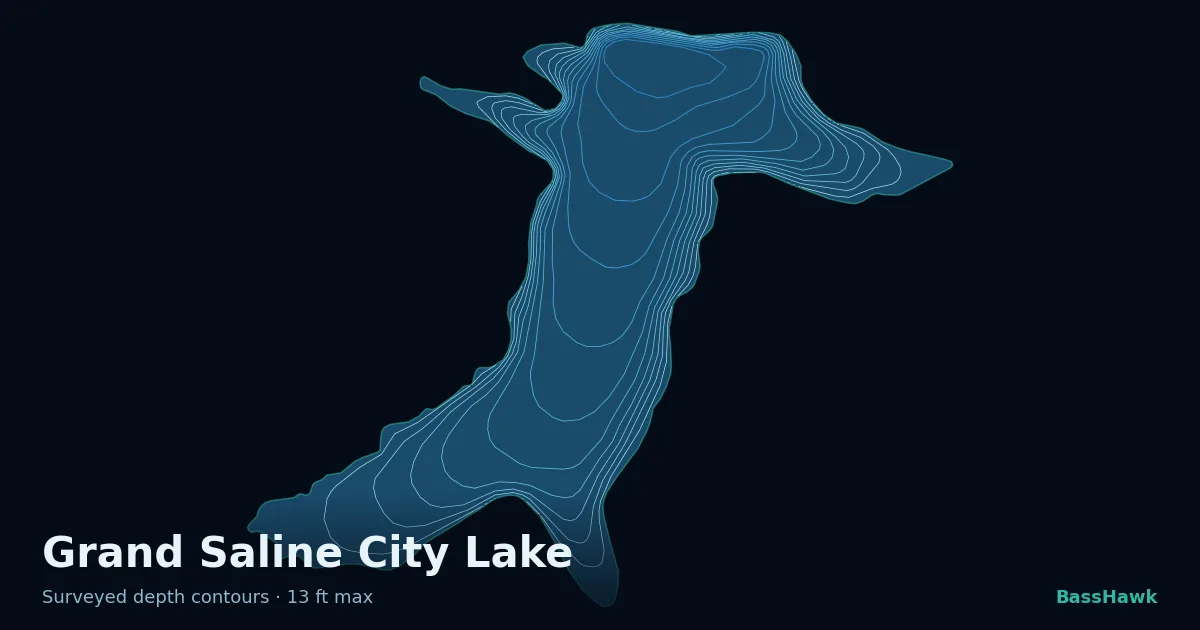
Dog days heat has them deep and scattered, work the 12-24 foot range early and offline, then pick timber and points after the sun climbs.
Mid-August heat means water's sitting in the low 90s and bass are uncomfortable in the shallows. They stack in two zones: tight to deep structure and timber when it's bright, or pulled up shallow early and late when there's still some low light. The pressure is dropping ahead of weather moving in, which should fire them up a bit, but right now this heat is the dominant factor. Work early and late hard, expect the midday bite to be scattered and slow, and focus on areas where bass can access deep water quick. The pool is slightly down, which concentrates fish on the deepest available structure.
The day's game plan
Where to fish
- Main Lake Points with Deep Water Access — 5-12 feet shallow shelf, transition to 15-25 feet channel · Hard bottom clay or gravel, often with timber, connected to deep creek channels.
These are the highway intersections where bass position to hunt shallow when conditions are right but escape deep quickly when sun gets high. They hold fish all day in summer if the deep water connection exists. Early morning and late evening they hold from the shallow 5-foot range, midday the same fish are at 15-20 feet on the same structure. - Secondary Points in Creeks — 6-15 feet · Timber, rock, mixed hard bottom, inside bends of the creek swings.
Secondary points don't draw as much pressure as main lake points and they concentrate fish in defined small areas. In summer heat these are reliable because they offer shade, cooler water near the channel, and easy access to deep refuge. Work them methodically through the morning and late afternoon transition. - Roadbeds and Humps in Main Lake — 18-24 feet · Hard bottom ridges, old road traces, standing timber or rock.
When the heat is intense and the sun is high, these are where the schools stack up. The hard bottom provides structure that concentrates baitfish, and the depth puts bass just above the thermocline where oxygen is adequate. Humps also create current breaks that bass key on. Midday this is the only reliable bite. - Creek Channel Bends — 8-18 feet outer edge, 12-24 feet in the channel floor · Inside bends have softer banks and reduced current, outside bends drop steep and provide deep cover, often laydowns and brush at the bend.
Channels are the main migration routes and feeding highways in summer. Fish use the deeper channel as a funnel to move between shallow feeding zones and deep daytime structure. Outside bend drops are ambush points and baitfish congregate there. These spots produce when other areas go dead midday.
What to throw
- Square Bill Crankbait — 2.5 in · Shad pattern · half-ounce (Early morning in 2-8 feet, also early evening around grass and shallow flats.)
Cast parallel to points and structure, work a steady rhythmic retrieve with slight pauses, let it deflect off timber and rock. - Chatterbait or Bladed Jig — half-ounce to three-quarter-ounce · Bluegill or white and chartreuse · n/a (Early morning 2-6 feet, also works midday in stained water if bass are suspended shallow.)
Cast to shallow structure and work steady to slightly erratic retrieve, feel the blade thump through your hand, rip and pause around timber. - Finesse Worm on Shaky Head — 4 to 5 inch · Watermelon, green pumpkin, or junebug · quarter-ounce to half-ounce (Morning transition 6-12 feet, late afternoon 8-16 feet, dusk around timber.)
Cast to structure and drop vertically or drag on bottom in short hops, lift the rod slowly and let it fall on slack line, repeat. - Deep Crankbait — n/a · Shad pattern, chartreuse back or natural · 3/4 oz to 1 oz (depends on model, e.g., DD 22) (Midday 18-25 feet on offshore structure, humps and roadbeds.)
Cast far to allow deep dive, work with steady rhythm and occasional jerks, pause slightly to let it rise and fall, keep contact with bottom structure. - Texas Rig with Large Worm — 7 to 10 inch · Green pumpkin with orange flake, or watermelon red · half-ounce to 1 oz (Late afternoon 8-16 feet in timber and brush, evening 5-12 feet around structure.)
Pitch or cast near cover, drag on bottom with slight lift-drop motion, keep rod tip low and feel for bumps and resistance, set hard when you feel weight or stall.
How to work it
- Vertical Jigging on Deep Structure — Midday when bass are suspended or stacked on distinct structure, works best when you have located a school with electronics. · Humps and roadbeds 18-24 feet, main channel bends, creek channel swings.
Lower football jig or drop shot rig straight down to bottom on humps and roadbeds, work with vertical lifts and pauses, feel the bottom and baitfish activity on your graph. - Drag and Pause on Bottom — Morning transition, late afternoon, dusk, and any time bass are tight to cover and water temperature is warm. · Timber and brush in 6-20 feet, near channel ledges, deep cover.
Cast a Texas rig or heavy jig, let it settle to bottom, drag it slowly a foot or two, pause 3-5 seconds, lift slightly and repeat. Move slowly and deliberately. - Shallow Deflection Cast — Early morning and early evening when bass are positioned to ambush from shallow cover. · Shallow structure 2-8 feet, timber-lined points, rocky banks.
Cast parallel to the point or timber edge, work the bait tight to structure and let it bang off logs and rocks, the deflection and sudden direction change triggers strikes.
Pro tips
- Use your electronics to see the thermocline and baitfish suspend. That's where fish are or will be. If you see clear layers at 22-24 feet and no forage below, that tells you exactly where the target zone is for midday. Fish ABOVE the thermocline, not through it.
- The pressure dropping ahead of weather is a rare advantage in August. If you can get out before the front hits tonight or early tomorrow, the bite will be better than normal. Don't sleep on that window.
- Big summer bass on this lake are often suspending 12-18 feet on the outside of structure rather than sitting tight on bottom. Don't assume they are on the deck. Graph the water column and adjust depth accordingly.
If conditions change
If a cold front blows through after today, expect the bite to shut down hard. Downsize everything to 4-inch finesse worms and drop shots, fish the thickest timber and brush you can find, and work slow and methodical right on the cover. Skip baits under any docks and overhanging brush if you have access. If the wind picks up to 15+ mph, the shallow bite will improve on wind-blown banks, so shift effort to the windward side of points and main lake banks in 3-8 feet. If clouds build and the sun gets blocked, bass will stay shallow longer, so extend the shallow bite through midday with crankbaits and chatterbaits rather than committing deep as early. If water clears dramatically, downsize all offerings and use natural colors (ghost minnow, watermelon, shad), and fish deeper because clear water bass push away from the surface to avoid predator exposure.
Find more fish. This is a real report from that day's conditions — open the app for today's · free account