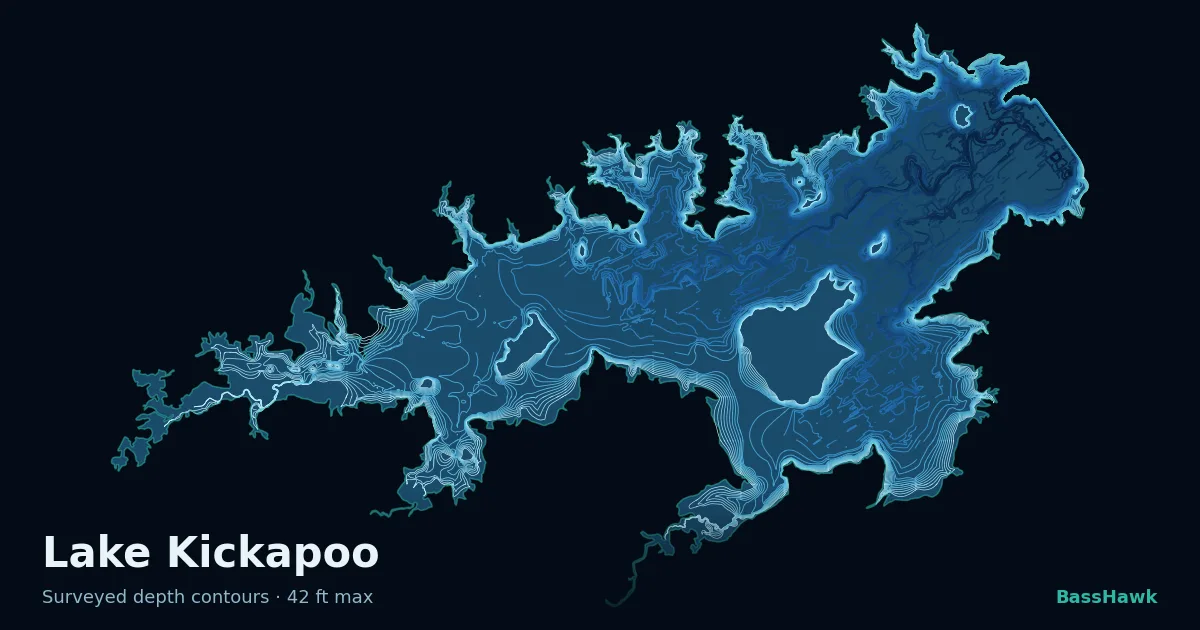
Hot water, clear sky, bluebird sunshine pushes bass deep and tight to shade. Work the channel ledges and rocky points hard at first light, then transition deep.
Water's sitting at 88 degrees, which has bass looking for comfort in deeper, cooler water and heavy shade. The lake is its natural clay-stained self, around 1 to 2 feet of visibility, so bass are keyed to structure and vibration. Pool is down 2.5 feet, which concentrates fish tighter on the edges where deep water meets shallow. Pressure is steady and the sky is clear, so there's no weather trigger helping you. This is a heat-refuge day. Bass will bite hard at first light when it's cooler and on the shallow rocky points and wind-blown banks if there's any breeze, but once the sun climbs and the heat intensifies, they'll slide deeper into the channel breaks and ledges to stay comfortable. The next feeding push comes around the 1:48 PM solunar window if you're positioned on deep structure, but don't expect a wide-open bite in full midday sun. Dusk will bring another shallow window when the sun angle drops.
The day's game plan
Where to fish
- Main-lake rocky points and riprap banks — 3 to 10 feet shallow, 12 to 16 feet on the point break itself · natural rock, rip-rap, clay-stained bottom, hard transitions
Primary early and late-light zones where bass stage before committing deep. Hard cover in stained water is where forage congregates and bass hunt. Structure concentration is key in this lake due to sparse vegetation and heavy reliance on hard cover. - Secondary points and inside creek bends — 6 to 12 feet · inside-bend quiet water, secondary drop-offs, hard bottom
Bass migrate through creek channels en route to deep water. Inside bends create current breaks and depth transitions. These zones are productive when primary points cool down mid-morning and warming again late afternoon. - Main-lake channel ledges and humps — 15 to 25 feet, depending on location · hard-bottom transitions, channel swings, clay composition changes
Deepest daytime refuge in hot summer weather. Bass stack on ledges where they can watch and feed on passing forage. Depth and proximity to deep water make these zones critical in mid-summer heat when shallow water is inhospitable. - Shallow wind-blown islands and banks — 2 to 6 feet · rocky islands, shallow banks exposed to wind, oxygenated water
Evening and night feeding zones. Wind pushes oxygen into shallows and concentrates baitfish. Lower sun angle and cooler water bring bass back to hunt aggressively in the hours around sunset and into night.
What to throw
- 5-inch green pumpkin finesse worm — 5 in · green pumpkin · 3/16 oz bullet weight (early morning and evening on shallow rocky points)
Texas rig, dragged slowly along bottom with 3 to 5 second pauses, working tight to rocks and hard cover - 3/8-ounce chartreuse and white spinnerbait — n/a · chartreuse blade, white skirt · 3/8 oz (morning and late afternoon on secondary points and creek bends at 6 to 10 feet)
steady retrieve with occasional pauses parallel to depth changes, blade thump and vibration throughout - 1/2-ounce black or junebug lipless crankbait — n/a · black or junebug · 1/2 oz (midday on deep channel ledges in 15 to 22 feet)
dragged vertically or with short horizontal sweeps along ledges, shake-pause rhythm with semi-slack line drops to feel bottom transitions - 4-inch finesse worm on drop shot — 4 in · dark green or watermelon · 1/4 oz weight, worm 18 inches above (late afternoon on outer banks and inside creek bends at 12 to 16 feet)
vertical presentation with light twitches, hover and settle, constant bottom contact - 4-inch shad-pattern swimbait on jighead — 4 in · silver and gray shad pattern · 1/8 oz jighead (dusk on shallow islands and wind-blown banks)
steady, shallow retrieve in top 6 feet, natural swimming action
How to work it
- Dragging on bottom — early morning and evening when bass are shallow and willing to hunt · shallow rocky points and inside-creek flats in 3 to 10 feet
Cast to structure, keep line contact, drag weight and bait slowly along bottom with 3 to 5 second pauses between movements, feel for rocks, stumps, and depth changes - Ledge dropping and shaking — midday during peak heat when bass are stacked on deep structure · main-lake channel edges and structure transitions in 15 to 25 feet
Position over a ledge or hump, drop the weight vertically, establish bottom contact, then work lure with short vertical and horizontal sweeps, feel every contour change - Spinnerbait paralleling — morning and late afternoon as bass move between shallow and deep zones · secondary points and creek bends at 6 to 12 feet
cast across or parallel to depth transitions and breaklines, retrieve steadily with occasional pauses, keep blade thumping and vibrating, cover ground methodically
Pro tips
- The solunar window at 1:48 PM is workable if you're dialed in on deep ledges and drop shots, but don't expect it to turn a slow midday flat. Stay on structure and work methodically. The real magic is dawn and dusk when water cools enough to shift bass shallower.
- In stained water this persistent, vibration wins over size and flash. A 3/8-ounce spinnerbait or lipless crank does more for you than flashy swimbaits. Bass find you by lateral line in one to two feet of visibility, so make the bait work for them.
- Pool is down 2.5 feet, which means the outside edges of points and ledges are steeper and more defined than they might be at full pool. Bass use those harder edges as funnels. Fish the outside break, not the gradual inside slope.
If conditions change
If a breeze picks up or clouds roll in, the shallow bite will extend later into morning and start earlier in evening. Stick longer on the secondary points and slow the retrieve. If the pressure drops ahead of weather, expect bass to feed more aggressively all day, especially on reaction baits like spinnerbaits and lipless cranks. If water clarity improves after a rain or current, downsize everything and switch to natural finesse baits with fluorocarbon leader. If clarity degrades further into mud, go full black or dark blue with maximum-thumping blades and upsize your weight. If the wind goes calm and the sky stays clear all day, accept that the bite will stay tight to the deepest available structure and commit to vertical presentations and drop shots on the ledges rather than covering ground horizontally.
Find more fish. This is a real report from that day's conditions — open the app for today's · free account