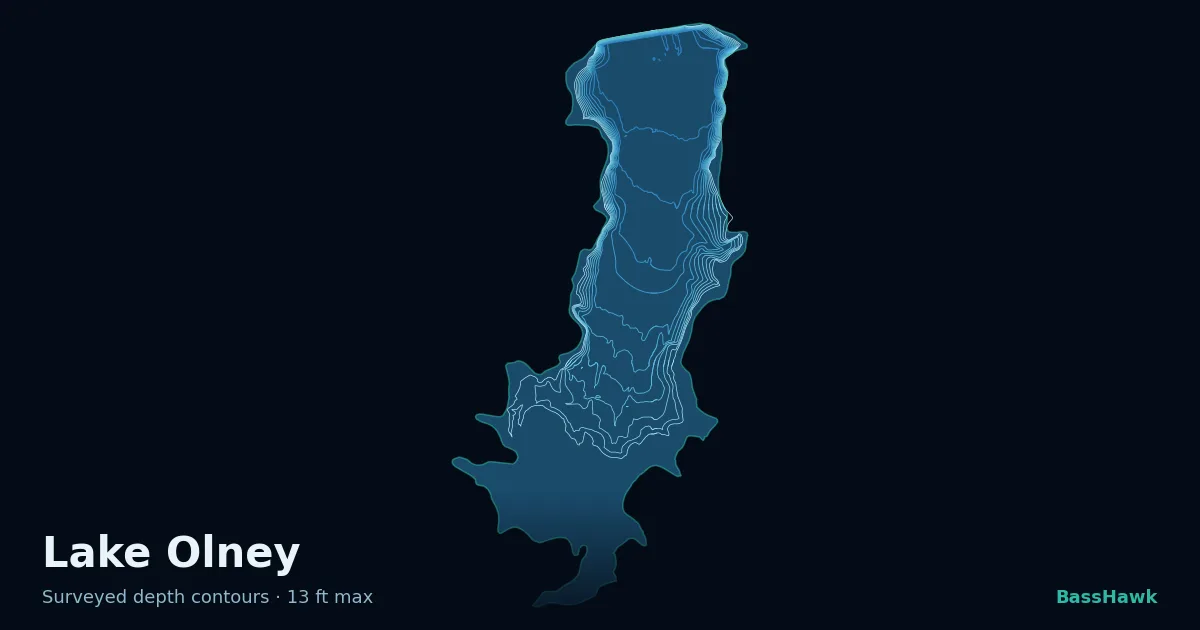
Brutal midday heat has them buried deep and tight. Hunt the shade and the channel ledges before 9 AM and after 6 PM.
Water's at 89 degrees, which means the bass are stressed and uncomfortable. They're not feeding like they do in the comfort zone. You'll find them relating to the deepest, shadiest structure they can reach, and they're only willing to chase something if it's right in front of them or if it triggers a reaction. The pressure's dropping ahead of some weather, which should fire them up some, but that heat is the real player today. Your window is early and late. Midday you're basically burning time unless you get on something shaded or you're willing to work the deep channel edges where there's still some cool water. The wind is pushing from the southeast at 10, which helps a bit, but under a clear sky like today the shallow bite will be minimal until the sun moves lower.
The day's game plan
Where to fish
- Mesquite Creek channel and ledges — 15 to 22 feet on the edges, 25+ feet in the main channel · Hard-bottom channel bends, outside ledges where the creek dips, transition from flat to drop-off
The creek is the main deep-water highway. On a 89-degree day, bass position on the ledges where they can access cool, deep water but still hunt the shallower edge. The channel bends concentrate baitfish and bass staging areas. - North and east-side shallow timber and banks — 3 to 8 feet · Laydown wood, root systems, shade from trees and rock outcrops, riprap if present
With the southeast wind pushing water and baitfish northeast, the north and east banks concentrate forage. Early and late light make this shallow stuff livable. Shade is the limiting resource in heat, so anywhere with heavy cover or overhanging trees is worth working. - Main-lake points with deep-water access — 8 to 15 feet on the point, 20+ feet on the outside edge · Gravel or clay hard-bottom, transition zone where point meets channel
Points funnel bass movement between shallow and deep. On hot days, bass use these as staging areas to move from deep cool water up to feed in early and late light, then retreat deep. The proximity to both shallow and deep makes them reliable all day. - Dock pilings and riprap banks — 2 to 6 feet immediately around structure, 8 to 12 feet nearby · Vertical pilings, riprap banks with crevices, shade from dock decks
Docks and riprap provide instant shade and cover that bass need in midday heat. Early morning and evening, they hunt these areas. At night, if docks have lights or nearby ambient glow, they become feeding zones. These are high-percentage spots during low-light windows.
What to throw
- Finesse worm — 4.5 in · green pumpkin · 1/4 oz jighead (Early morning and evening on shallow cover, post-frontal conditions when bass are tight)
Shaky head over shallow timber, small hops with 2-second pauses - Lipless crankbait — 2.5 in · white or chartreuse · 1/2 oz (Midmorning through afternoon on deep structure, pressure dropping)
Slow drag along channel ledges 15 to 22 feet deep, tick bottom and twitch - Chatterbait — 3/8 in · black skirt with black trailer · 1/4 oz (Early morning, stained water, low light conditions)
Steady retrieve with occasional twitches over timber, 3 to 8 feet - Drop shot rig — 4 in · watermelon or smoke Senko · 1/2 oz sinker (Midday heat, 20 to 30 feet deep, no structure visible)
Vertical soaking 2 to 4 feet off bottom in deep water, tiny lifts and pauses - Paddletail swimbait — 4 in · white, pearl, or natural shad · 1/4 to 3/8 oz jighead (Dusk and evening when bass move shallow and start feeding)
Steady retrieve 18 inches to 2 feet deep, rise and fall rhythm
How to work it
- Slow drag on the ledge — Late morning through afternoon when bass have pulled deep · Channel ledges, main-lake points, 15 to 22 feet
Cast along the depth break where the shallow point or flat meets the deeper channel. Keep the crankbait ticking bottom, twitch it up a foot, let it drop on slack line, repeat at a snail's pace. - Pitch and skip tight cover — Early morning and evening when light and temperature allow shallow feeding · Shallow docks, timber, riprap, 2 to 6 feet
Underhand or sidearm pitch a Texas-rigged worm or shaky head into docks, root balls, and laydown wood. Skip it low under structure and let it settle. Work it with tight hops in place, don't retrieve far. - Vertical jigging deep structure — Midday when bass are stacked tight on deepest available structure · Main-lake humps, deep channel bends, 20 to 30 feet
Position the boat over a deep spot on a hump or channel bend. Drop the sinker to the bottom and work the drop shot or jig with small lifts, barely moving it. Let pauses between movements do the work. - Reaction retrieve on falling pressure — When pressure is dropping, morning through afternoon · Channel ledges, edges of deep structure, any transition zone
Cast a lipless crankbait or chatterbait and retrieve steadily or with sharp twitches. Don't slow down or hesitate. The goal is to trigger a reflex strike, not mimic a wounded baitfish.
Pro tips
- The pressure is falling today, which normally fires bass up. But at 89 degrees, the heat is the dominant factor. Use the pressure drop to your advantage in early and late light when temps are slightly tolerable, not midday. Don't waste energy throwing midday when the heat has them buried and locked down tight.
- Water at 89 degrees means shallow water is a dead zone from 10 AM to 5 PM. Shift your entire focus to deep structure on the channel and the main-lake ledges during those hours. A 1/4-inch depth difference in deep water can mean the difference between a bite and nothing because bass are packed tightly on the coolest available ground.
- Baitfish drive everything. The southeast wind is pushing surface water and baitfish toward the north and east banks. Plan your early and evening movements around those banks because that's where the forage concentrates and the bass hunt. Scout the wind-blown banks first in low light.
If conditions change
If a front blows through and the pressure spikes and temps drop 10 or more degrees, bass will recover from the heat stress quickly and start moving shallower. Shift away from deep drops and work the 8 to 15-foot band on main points and the channel shoulders hard. If the wind switches to north and picks up, the heat will feel worse but the wind-blown banks could still hold scattered fish early and late. If afternoon clouds roll in unexpectedly, the shallow banks will stay livable longer into midday because the sun won't hammer as hard. In that case, extend your morning shallow bite and compress your midday deep stay. If clarity is stained from algae or run-off, move to darker baits: black, junebug, or chartreuse on bladed gear. The dark profile will stand out better in reduced visibility and help bass locate the lure faster when they're lethargic.
Find more fish. This is a real report from that day's conditions — open the app for today's · free account