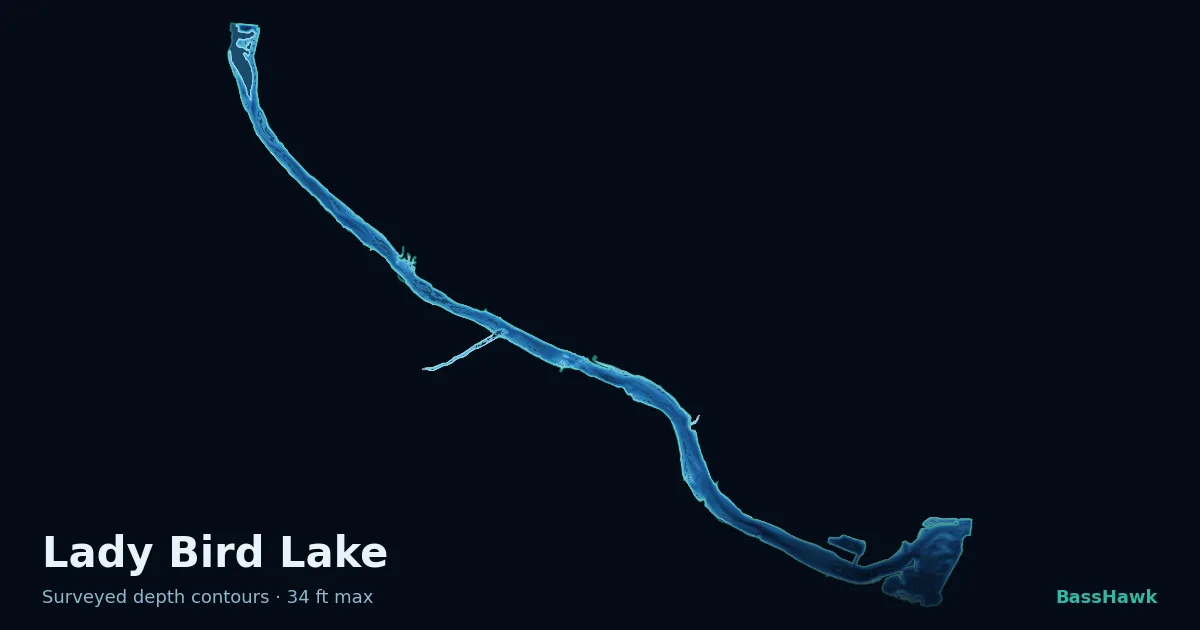
Summer heat has them locked deep and sulky. Early light and the night bite are your windows. Fish the pilings and channel structure shallow at dawn, then go deep to the ledges and shade by 9 AM.
Water's hot at 95 degrees, which means the bass have pulled back into a survival mode. They're not looking up much during the day. This is slow-bite summer, plain and simple. What saves you is that Lady Bird is small and full of shade and deep-water access. The pilings, the channel edges, and the brush near Barton Creek all have escape routes to cooler water. Pressure is steady and clean, which keeps things predictable. Your best window is the first hour after sunrise when the water is still coolest and the bass are most willing to feed shallow. After that, expect them to slide deeper as the sun climbs. The night bite is real here too, especially around structure and shade. If you're fishing midday, you need to be on deep water or heavy timber.
The day's game plan
Where to fish
- Bridge Pilings (Central Channel) — 4 to 10 feet, deeper edges up to 16 feet · Concrete pilings with shade and current breaks, often with brush nearby
The pilings concentrate bass throughout the day by providing shade, structure, and proximity to deep-water escape routes. They are the most reliable pattern on Lady Bird and fish from dawn through dusk and into the night. - Barton Creek Confluence and Upper Lake — 6 to 14 feet · Spring-fed creek with cooler, clearer water, grass beds, cypress roots, and brushy banks
Barton Creek stays slightly cooler due to spring influence, making it a refuge for bass during the heat of summer. The confluence holds both numbers and trophies. The clear water rewards finesse presentations. - Main-Lake Ledges and Channel Edges — 12 to 18 feet · Drop-offs, rocky bluff faces, and submerged brush piles along the central river channel
Summer bass pull back to the deepest available structure with shade and cooler water. These ledges are the daytime sanctuary, especially midday when the sun is high and the shallows are too warm. - Congress Avenue Bridge Area and Shoreline Brush — 3 to 8 feet · Bridge pilings, overhanging trees, laydown timber, and bulrush along banks
This section offers diverse cover with immediate deep-water access. It is highly productive at dusk and night when bass feed shallow. The shallow banks become active feeders as light fades.
What to throw
- Texas-rigged Zoom Fluke — 5 in · watermelon, watermelon-red, natural shad · 3/8 oz (Early morning and evening, when bass slide shallow into cover)
Cast to pilings and timber, work slow with 18-inch hops and 3 to 5-second pauses. Let it sit in the shade. - Zoom Trick Worm on Drop-Shot — 4 in · green pumpkin, natural shad · 1/8 oz weight on drop-shot (Late morning through early afternoon on deep structure and pilings)
Fish on bottom with 2 feet of separation between weight and hook. Dead-stick 10 to 15 seconds, then nudge 2 to 3 inches. Repeat. - Neko Rig with 3-inch Soft Worm — 3 in · green pumpkin, brown · small nail weight in the worm (Midday on deep structure when fish are locked tight)
Drag slowly along ledges and brush piles. Pause 3 to 5 seconds every 10 feet. Work vertically around pilings. - White Spinnerbait — n/a · white, white/silver · 3/8 oz to 1/2 oz, Colorado blade (Dusk and night, around cover in shallow water)
Steady retrieve with light vibration, letting the blade thump the water. Cast around pilings and timber, especially after dark. - Small Topwater Plug — 2 to 3 in · white, chartreuse · n/a (Dusk and night on shallow banks and pilings)
Walk it side-to-side or pop it sharply near timber and pilings. Keep it in the 3 to 6-foot zone.
How to work it
- Dead-Sticking on Deep Structure — Midday and late afternoon when bass are locked on structure and not actively hunting · Main-lake ledges, pilings, and brush piles in 12 to 18 feet
Position the bait on the bottom or in heavy cover and let it sit motionless for 3 to 10 seconds between tiny movements or pauses. Use long casts on clear water to avoid spooking fish. - Vertical Jigging Around Pilings — Early morning and throughout midday when bass are tucked tight to concrete · Central-channel bridge pilings in 6 to 10 feet
Hold the kayak or boat position, drop the jig straight down next to the piling, work it with small lifts and pauses, keeping it close to the structure. Target the shaded side of the piling. - Slow-Trolling Channel Edges — Late morning and late afternoon to cover water and locate fish transitioning between depths · The main river channel and creek confluences at 10 to 16 feet
Use an electric motor to move slowly along the depth change between shallow and deep water. Work a paddle-tail swimbait or small crankbait with the retrieve synchronized to the trolling speed. - Pitching Timber with Weedless Rigs — Early morning and evening when bass are feeding shallow near shade · Barton Creek confluence and shoreline brush throughout the lake
Make short 15 to 25-foot casts into overhanging brush and laydown trees. Let the weedless bait sit 3 to 4 seconds before slowly dragging it back to the kayak. Repeat multiple casts per log.
Pro tips
- Lady Bird is small and the water is clear. Use long casts (35 to 50 feet) on the pilings and banks, especially in early morning and midday. Short casts spook fish in this visibility. Fluorocarbon leader is not critical for largemouth, but it never hurts on clear water over 6 feet depth.
- Summer is a numbers game on deep structure. Once you find a productive ledge or brush pile with your drop-shot or neko rig, mark it and fish it thoroughly. Work multiple casts at different depths and angles before moving on. Consistency beats covering water.
- The night bite is underutilized on Lady Bird. Paddle out after sunset with a white spinnerbait or topwater and work the pilings and timber. Bass feed aggressively and the lack of gas motors and light pollution make it a premium window. Bring a headlamp and watch the treble hooks.
If conditions change
If afternoon winds pick up and the lake gets choppy, the water will oxygenate and darken slightly, which can extend the daytime bite into the midday slump. Stay on the pilings and shallow banks longer than you normally would. If a cold front rolls in tonight or tomorrow with rising pressure and clearing skies, expect a severe shutdown. Move to the thickest cover available, downsize to 3-inch finesse worms, and fish ultra-slow on the deepest pilings and timber. If water clarity drops from a rain or upstream release from Lake Travis, switch to chartreuse and darker colors, upsize to 6-inch worms, and fish bladed spinnerbaits for vibration. The pattern shifts deeper and more vibration-focused. If water cools even 2 or 3 degrees from a cool-water discharge, the shallow pilings and Barton Creek area become significantly more productive—bass will slide up eagerly. Fish early and evening longer than you normally would in July summer heat.
Find more fish. This is a real report from that day's conditions — open the app for today's · free account