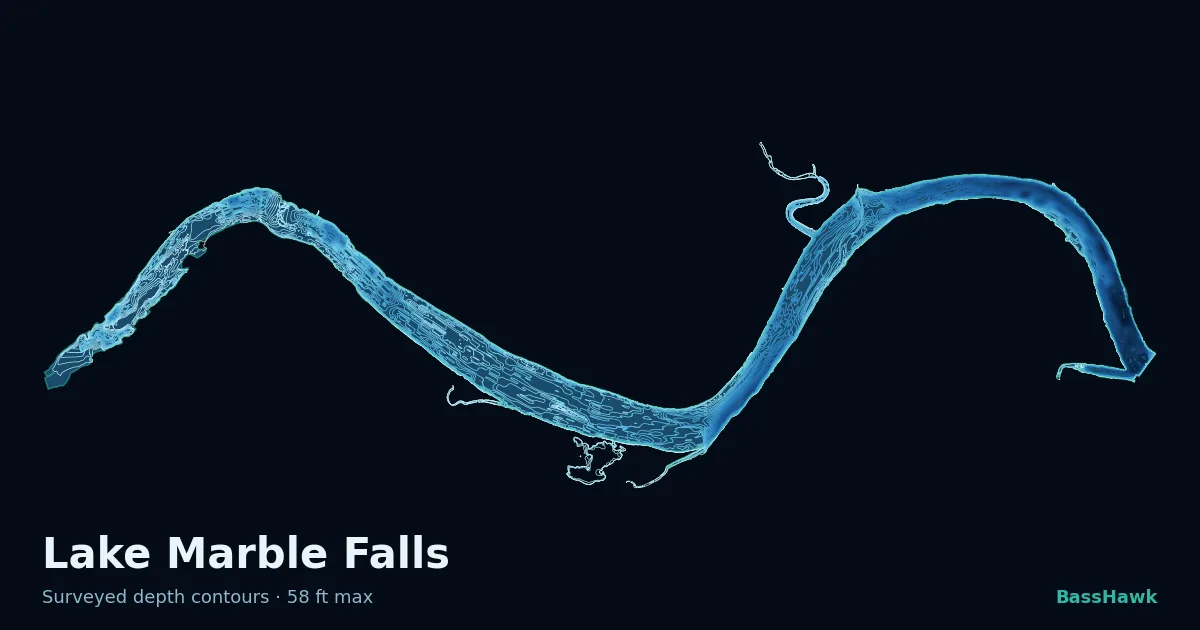
Brutal midday heat means dock shade and deep ledges only. Early and late light are your windows.
Water's 91 degrees and that's pushing bass into survival mode. They're not chasing anything in the heat of the day, they're tucked in deep shade or pulled down to cooler water around 15 to 20 feet where they can breathe easier. The pressure's dropping ahead of some weather rolling in, which should fire them up for a few hours early and late, but expect a real dead zone from about 10 AM through 4 PM. The lake's normal stain, so your colors have room to work natural or a touch brighter. Skip docks on the deeper side of the lake, work the rock ledges where they're staged, and match what you see on the graph. Find the bait first, find the bass.
The day's game plan
Where to fish
- Dock Structures on the Deeper Side of the Lake — 3 to 8 feet under pilings · Boat docks, boathouses, pilings, shade lines
This is the classic Marble Falls pattern. The shade keeps bass cool in summer heat and provides ambush points. The deeper-side docks have better depth nearby for bass to escape to. Best early morning and late evening. - Bluff Rock Walls and Boulder Banks — 6 to 18 feet on the face, deeper adjacent structure · Steep rock outcrops, boulder fields, hard-bottom ledges
Bass hold tight to rock year-round. In summer they work the edges where they can slide up to feed in cooler low-light and pull back deep for midday sanctuary. Rock always holds baitfish, which hold bass. - Channel Bends and Ledges — 15 to 28 feet in the main channel troughs, 10 to 15 feet on the adjacent shelf · River channel structure, hard bottom, drop-offs from shallow to deep
Channels are highways for bass and bait. Deep ledges adjacent to shallow flats let bass pick and choose where to hunt based on temperature and light. This is where they hold during midday heat and stage for early and late feeding. - Open Water Above Shad Schools — Variable, typically 12 to 25 feet · None, but positioned directly above baitfish
Follow the graph. Where shad are, bass are nearby. In summer, bass often suspend just above or below baitfish schools rather than on bottom. Vertical jigging and drop-shots on these marks often outfish conventional bottom-contact presentations.
What to throw
- 4-inch Wacky-Rigged Senko — 4 in · watermelon or green pumpkin · n/a (Early morning dock shade, late dusk dock work, all day on cooler days.)
Skip under dock pilings and structure. Let it fall slowly through the shade. Slight twitches on the way down, minimal movement. Work it right on the wood. - 3/8-ounce Jig with Craw Trailer — jig head 3/8 oz · black or junebug head, matching craw · 3/8 oz (Morning transitions, ledge work, all-day ledge grinding, deep structure.)
Cast to rock structure and ledges. Drag it slow along the bottom, keeping contact. Make short hops and pauses. Work it vertically on deep ledges. - Paddle-Tail Swimbait — 4 to 5 in · white or chartreuse · 3/8 oz (on jighead) (Midday ledge work, late afternoon transitions, early evening feeding windows.)
Drag slow along ledges and bottom structure. In deeper water, work it vertically or use steady retrieve just off bottom. Match baitfish present on the graph. - Medium Diving Crankbait — 2.5 to 3 in · shad or silver · n/a (Morning bite, late afternoon, early evening before the heat settles.)
Cast and crank steady. Vary depth by how hard you crank and the rod angle. In morning, fish shallow ledges at 8 to 12 feet. In evening, work 10 to 15 feet along rock. - 1/16-ounce Drop-Shot — 2.5 to 3 in plastic · green pumpkin or watermelon soft plastic, 2.5 to 3 in · 1/16 oz weight (Midday grind when bass are deep and inactive. Also works post-front when fish are buried.)
Hold just off bottom on deep ledges. Make tiny vertical hops and small horizontal movements. Barely move it. Let the weight sit and the plastic dance.
How to work it
- Skip Casting Under Docks — Early morning and dusk when bass are in shallow shade. Also effective all day on overcast days or after a front. · Dock structures on the deeper side of the lake, 3 to 8 feet of water.
Pitch a worm or jig low and let it skip under the dock structure like a flat stone on water. Land it tight to pilings and boathouse support. Work it slowly, right on the wood. - Vertical Jigging on Ledges — Midday grind when horizontal presentations fail. Works year-round in deep structure. · Deep ledges and channel edges in 18 to 28 feet, especially where shad are schooling.
Drop a jig straight down on a marked ledge or channel bend. Hop it in 12 to 18-inch lifts, pause, and let it settle. Work it slowly and deliberately. Mark your depth and stay on the target. - Graph and Chase Baitfish — All day, every day in summer. Baitfish are the magnet. Bass follow them. · Channel bends, deep ledges, open water where shad suspend, and transition zones between shallow and deep.
Spend 15 to 20 minutes idling and scanning with electronics before committing to a spot. Locate schools of shad on the graph, then position your boat to target that exact location. Fish the area where bait is present. - Rock Drag with Crankbaits and Swimbaits — Morning and evening when bass are active around structure. Also works dawn on calm days. · Bluff banks and boulder-strewn banks, 6 to 15 feet deep.
Cast a crankbait or swimbait to the rock wall and retrieve steady contact with the structure. Let the lure tap and deflect off rocks. Vary your depth with rod angle and crank speed. Work the break line where rock drops into deeper water. - Slow-Soak Wacky Presentations — Early morning, dusk, and any time bass are lethargic from heat or cold fronts. · Dock pilings, vegetation if present, rock crevices, any vertical cover.
Rig a Senko or small worm wacky style (hook through the middle). Cast it to cover and let it fall on slack line. Work it with tiny twitches. Let gravity do the work, not your arm.
Pro tips
- Graph before you fish. Spend 15 to 20 minutes idling and scanning before you make your first cast. Locate shad schools and deeper ledges where bass stage. This single habit outproduces random casting by a wide margin in 91-degree summer water. Mark waypoints on productive ledges and return to them daily.
- Early and dusk dominate. Don't waste energy grinding from 11 AM to 3 PM unless you're willing to go deep and vertical. Use midday for travel, electronics work, rest, and repositioning. Save your best effort for early morning skip-casting and late evening dock work when the bite is genuine. Two quality hours beat a long day of dead water.
If conditions change
If the pressure rises sharply after today's front blows through, expect a tough 24 to 48 hours. Bass will bury in the thickest dock shade and rock cover. Downsize everything to drop-shots and tiny jigs, fish ultra-slow, and target maximum shade. If the wind swings to the north and the sun clears, shallow patterns die even faster, pull even deeper and fish vertical. If a second front comes through within a few days and pressure falls again, you get a second bite window. If water clarity improves beyond normal stain toward clear, use more natural colors, upsize your leader, and fish finesse. If it muddies from rain or run-off, go darker and louder, bigger paddles on blades, and rely on vibration. Rain early is your friend, it cools the surface a few degrees and extends the feeding window. Stay flexible and chase the shade and depth.
Find more fish. This is a real report from that day's conditions — open the app for today's · free account