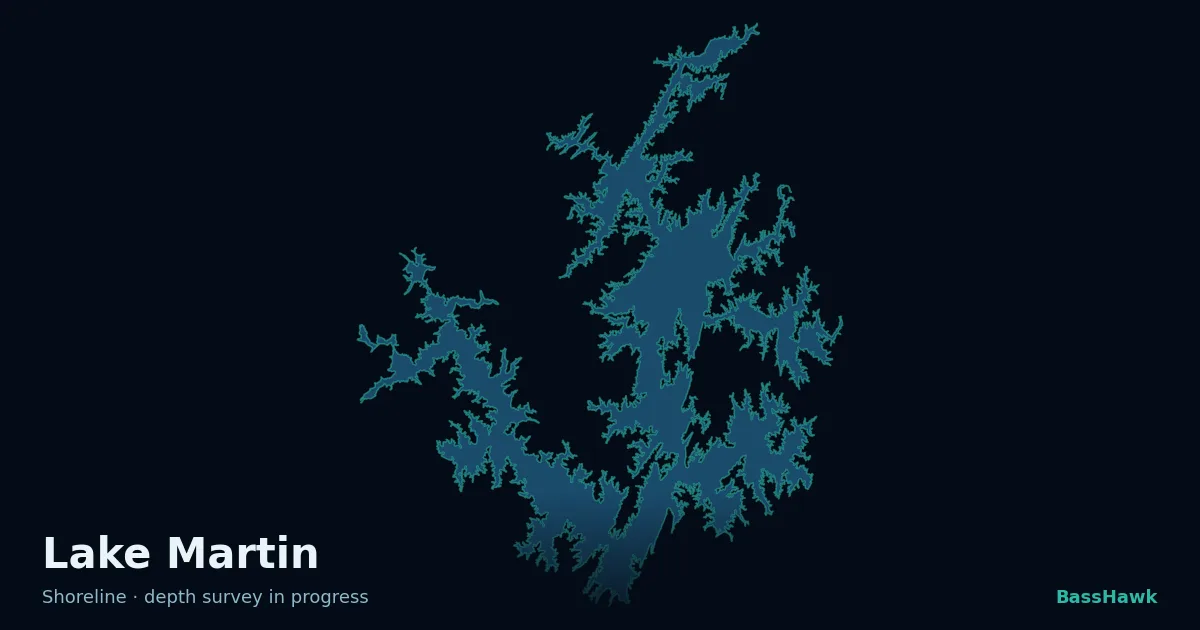
Summer split-day bite: topwater early before the heat clamps down, then chase schoolers and finesse deep.
Water's still hot at 86 degrees, so you're looking at the classic late-summer grind where the morning and evening belong to the shallows and the middle of the day pushes everything deep or into heavy cover. The lake's clear from the lower end all the way up, which means bass see your bait from a long way off but also means they're spookier in the bright sun. Pressure is steady, so the bite should be consistent but not fired up. With clouds overhead most of the day, you might stretch the shallow window a little longer than usual, but expect the heat to still drive the aggressive feed to the seawalls and pockets early, then out to the main-lake structure by mid-morning. The waning moon and solunar minors won't move the needle today, but the major window at just before 1 PM might help when you transition deep.
The day's game plan
Where to fish
- South-end seawalls and shallow pockets — 1 to 6 feet along the bank transition · Rock walls, docks, laydown timber, brush in tight pockets
This is the clearest part of the lake and holds largemouth in shallow structure where they hunt early and late in the day. The solid bank and brush concentrate both cover and bass. High-percentage topwater zone at first light. - Main-lake secondary points and humps — 8 to 20 feet · Rock, brush piles, cane, stumps, chunk rock
These transition zones hold bass moving between the deep summer sanctuary and the shallows. Morning and afternoon windows are prime as bass slide up and down the structure. Electronics work well here to locate isolated cover. - Deep main-lake channel bends and high spots — 18 to 28 feet · Humps, brushpiles, cane stands, open-water edges, hard bottom transitions
Summer largemouth escape the heat and light by stacking on the deepest available structure with brush. This is the daytime sanctuary. Spoons and vertical jigging work best because the depth and cover eliminate subtle presentations. - Creek mouths and channel swings near flats — 5 to 15 feet transitioning to 20+ feet · Current breaks, inside bends, grass and brush edges, hard transitions
These are the highways bass use to move between shallow and deep. Late afternoon and evening, bass slide up the channel toward shallow feeding flats. Early morning, they're staging here before pushing shallower. Excellent transition-time zones.
What to throw
- Topwater Popper (Zara Spook or similar) — 3 to 4 in · Natural shad, black · n/a (Early morning (6:05 to 7:30 AM) and dusk (6:30 PM onward) in shallow water (1 to 6 feet))
Walk it side-to-side along seawalls and bank edges at first light and dusk. Keep a tight line and work it steady, letting the pops and noise draw bass from shallow cover. Stop occasionally and let it sit. - Dice-style Soft Bait / Finesse Minnow — 3 to 3.5 in · Shad, watermelon red flake, natural · 1/32 oz jighead (morning/transition) to 1/4 oz jighead (deep midday drag) (Morning (7:30 AM to 10:00 AM) on mid-depth points, and afternoon (2:00 PM to 4:30 PM) on deep structure)
Cast past the target, shake the head subtly while dragging or crawling the bottom. Pause frequently. In very clear water, the bait must look natural and move slowly or it spooks bass. This is a confidence lure that requires patience. - Jigging Spoon — 1.5 to 2 in · Chrome, white, silver · 3/8 to 1/2 oz (Midday (10:00 AM to 2:00 PM) on deep main-lake structure (18 to 28 feet))
Drop it vertically on deep humps and high spots. Work it with sharp upward lifts, then let it flutter on a slack line on the fall. The flutter triggers reaction strikes. Keep baits tight to brush and rock. - Bladed Jig (ChatterBait or similar) — 2 to 3 in (body only) · Black, junebug, chartreuse · 1/4 oz (Evening (4:30 PM to 6:30 PM) in transition depths (5 to 12 feet) and dim-light periods)
Cast and retrieve with a steady crawl or hop it along the bottom. The blade generates constant vibration. Use a dark trailer (Yamamoto Zako, creature bait, or similar). Fish it around wood, points, and deeper grass edges. - Wacky-rigged Worm (Senko or maxscent style) — 5 in · Watermelon, natural, black · Nail weight: 3/32 oz (light) or unweighted for slower drop in clear water (Evening (4:30 PM to 6:30 PM) around timber and dock structure, and anytime you need a slow, natural presentation in shallow cover)
Rig on a 1/0 EWG hook at the midpoint. Cast near wood, docks, or brush and let it sink slowly on a slack line. Shake it subtly or hop it 6 inches at a time. In clear water, the slower the better.
How to work it
- Forward-facing sonar / Electronics scanning — When visibility is good and the sun is high, bass are deep and tight to cover. Electronics let you find them rather than guess. · Main-lake humps, channel bends, and high spots during midday (10 AM to 2 PM)
Idle slowly over deep points and humps with LiveScope or traditional sonar, picking out isolated brush, cane piles, and stumps in 18 to 28 feet. Once you locate fish, mark the spot and make a precise cast rather than blind-casting across the area. - Bank-running with topwater (seawall and shallow pocket work) — Early morning (6:05 to 7:30 AM) and dusk (6:30 PM to sunset) when topwater is most effective · Seawalls, dock pilings, laydown timber, and shallow pockets in 1 to 6 feet
Methodically work the bank edge with a popper or walking bait, casting parallel to the bank and covering 50 to 100 yards before moving. Keep the lure right on the transition line where deep water meets the shallow bank. Hold each piece of cover for 3 to 5 casts before moving. - Shaky head drag on point edges and transition zones — Morning (7:30 AM to 10:00 AM) and late afternoon (2:00 PM to 4:30 PM) when bass are transitioning between shallow and deep · Secondary points in 8 to 15 feet, channel edges, and rocky transitions in 12 to 20 feet
Cast to the deeper side of a secondary point or the edge of a channel swing. Drag the shaky head slowly along the bottom with slight lifts every 2 to 3 feet. Keep tension light and let the bait tap bottom. Fish move toward it or crush it on the bottom. - Skipping wacky rigs under docks and overhanging wood — Morning and afternoon when the sun is high and bass retreat to shade · Dock structures, boat lifts, and overhanging timber in 3 to 8 feet
Use a sidearm cast or skip the worm under dock platforms and hanging limbs. Let it sink on slack line and work it minimally. Bass often hold suspended around dock posts and pilings. The unweighted or lightly weighted worm appeals to fish that are resting in shade.
Pro tips
- In this clear water at 86 degrees, leader visibility matters as much as bait color. Stick with 12-pound fluorocarbon behind 16-pound braid, and don't jump to heavier leaders thinking it helps. Bass in ultra-clear reservoirs see thick mono or heavy flouro and turn away. Thin fluorocarbon is nearly invisible and lets you fish lighter jigheads and subtler presentations.
- The lake's so clear that finesse baits outfish anything bigger. Don't throw 5-inch swimbaits or full-sized crank baits expecting them to work better than 3 to 3.5 inch minnows. Match the natural forage size, which is small, and use light jigheads. Every tournament winner on this lake in clear water has downsized everything.
- Summer topwater on this lake produces its best bites in the last 15 minutes of daylight, not at absolute first light. The sun being slightly above the horizon creates just enough shadow and color shift to make bass aggressive and visible to each other. If you're fishing dusk topwater, don't leave until the last cast is made at the water's edge.
If conditions change
If a front rolls through and pressure rises with clearing skies, bass will lock tight to the thickest cover. Switch immediately to a wacky-rigged worm in black or junebug and skip it under docks and deep timber. Fish slow and right on the cover, forgetting the open-structure points. If the upper Tallapoosa arm muddies after rain but the south end stays clear, stay south and rely on slightly darker colors (junebug, black/blue) and bladed baits that generate vibration. If wind picks up and clouds thicken, expect the shallow topwater window to stretch by 30 to 45 minutes in both early morning and dusk, and you can spend more time on the secondary points in 8 to 12 feet. If the wind clams down and the sun stays bright all day, abandon the shallow banks by 8 AM and commit fully to deep finesse on the main-lake structure, because the bass will be locked down longer and deeper than usual.
Find more fish. This is a real report from that day's conditions — open the app for today's · free account