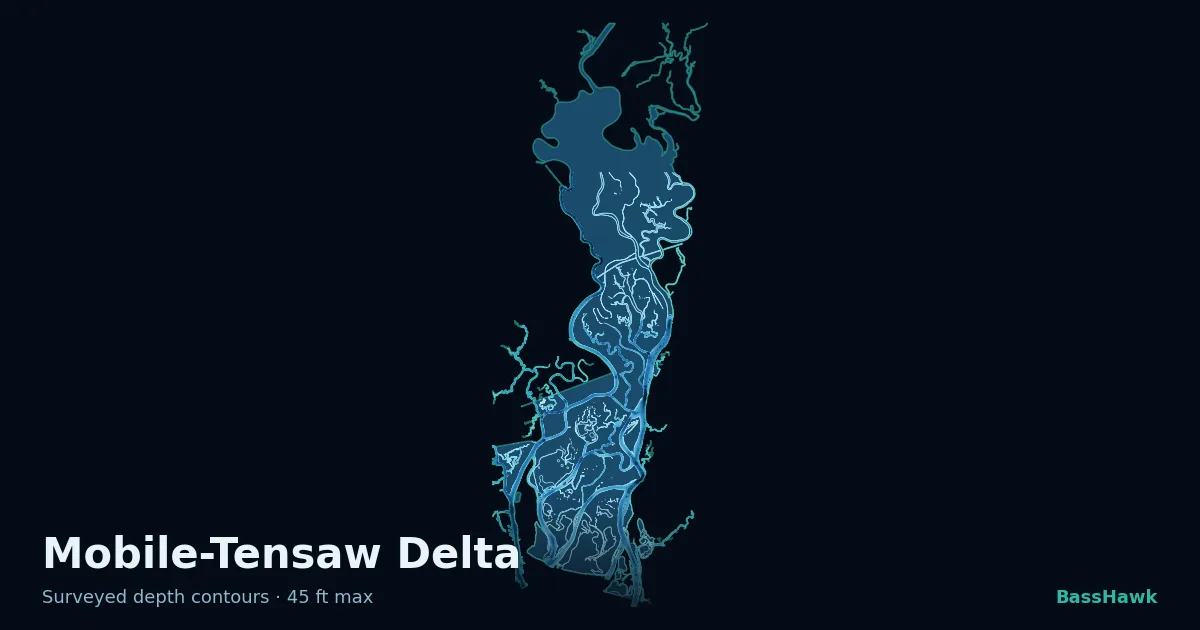
Hot, clear, rising pressure: hunt shade and structure early, then go deep and slow when the sun peaks.
Water's running 89 degrees and stained to muddy, which keeps bass tucked tight in shade and cover most of the day. This time of year they feed hard at first light when it's coolest, then shut down once the sun climbs and the heat settles in. They'll slide back up to shade and structure again in the evening, but not with the same aggression as dawn. Rising pressure after this morning means fish are getting lazier as the day goes on, so start fast and cover water early. The tides will shift a foot or two and that'll push bass on and off the shallow wood and flats, but the deeper structure and cypress edges hold fish all day if you know where to look.
The day's game plan
Where to fish
- Upper Tensaw Submerged Wood and Cypress (7 to 10 feet) — 7 to 10 ft · Laydown logs, submerged cypress knees, overhanging cypress limbs, current breaks near channel bends.
This is prime early-morning structure where bass set up to intercept baitfish in moving water. The depth keeps them cool, the timber provides ambush cover, and the current stacks forage. Work topwater and swim jigs here at first light. - Creek Mouths and Drain Outfalls (2 to 6 feet at mouth, 8 to 15 feet in adjacent main-river zones) — 2 to 15 ft (variable) · Confluence of freshwater drains with the main river, often marked by vegetation edges, cypress, and hard bottom. Tidal funnels concentrate bass.
Tidal flow pulls bass in and out of these zones. Incoming tide brings them shallow to feed, outgoing tide compresses them at the mouth and in deeper adjacent channels. Fish both phases. Baitfish concentrate here making it a natural ambush point. - Deep Cypress Holes and Oxbow Channels (12 to 18 feet) — 12 to 18 ft · Oxbow lakes, cutoff bends, dense cypress with multiple laydowns and deep timber, off-channel pockets with overhead shade.
Heat-of-the-day sanctuary. Bass lock into these zones during peak sun because they offer the coolest, darkest water available. Use finesse presentations and drop shots to fish tight to the timber. Limited current but maximum shade makes these survival zones during midday stress. - Grass Flats and Shallow Pads Adjacent to Deeper Structure (2 to 6 feet) — 2 to 6 ft · American lotus beds, scattered emergent vegetation, shallow cypress flats with quick drop-off access to deeper water.
Evening and dusk feeding zones. Bass move shallow to hunt in lower light. The grass and shallow wood provide cover and the pads break up light. Quick access to deeper sanctuary water nearby makes these low-risk feeding areas. Topwater and frogs excel here when light is dropping.
What to throw
- Zara Spook or Skitter Walk Topwater — 5 to 6 in · Black or Bone · n/a (Early morning (6:16 to 8:30 AM) when bass are positioned shallow and aggressive on structure.)
Work it slow and deliberate over deeper wood in early morning, letting it pop and walk through submerged cypress and timber. Keep the rhythm steady but unhurried. - Swim Jig with Crawdad Trailer — 3 to 4 in (jig head + trailer) · Green pumpkin or Black · 3/8 oz (All day, but most effective early morning (6:16 to 8:30 AM), late afternoon (2:30 to 5:00 PM), and evening (5:00 to 7:37 PM).)
Swim it through submerged timber and cypress zones at a medium pace in early morning and evening, then slow way down during midday. Keep the jig bumping cover and wood. - Texas-Rigged Purple Worm — 4 to 5 in · Purple · 1/4 to 1/2 oz (bullet sinker) (Morning through late afternoon (8:30 AM to 5:00 PM), especially in heavier shade and cypress.)
Crawl it slowly along the bottom near wood and laydowns. Let it drag and pause. In stained water, the purple profile stands out and telegraphs movement clearly. Work it methodically, not fast. - Drop Shot with Finesse Worm — 3 in · Green pumpkin or Purple · 1/8 oz (drop-shot weight) (Midday when bass are locked tight to the deepest cover.)
Drop it vertically near deep timber and cypress holes during the heat of the day (11:00 AM to 2:30 PM). Work it with small twitches and slides along the bottom, keeping the worm hovering just above structure. - Ribbit-Style Buzzing Frog — 2 to 2.5 in · Black or White · n/a (Evening and dusk when bass slide shallow to feed and light is dropping.)
Buzz it over shallow grass and pads in evening and dusk (5:00 PM to 7:37 PM), popping it occasionally through lily pads and cypress edges. Work it with short, rhythmic pops over shade.
How to work it
- Following the Tide — All day. The tidal swings in the Delta are subtle (1 to 2 feet) but the timing dictates where bass position to intercept baitfish. · Creek mouths, grass flats, cypress drains, and river seams.
Fish incoming tide on shallow flats and creek mouths (bass push up to feed), switch to deeper structure and drain mouths on outgoing tide (bass compress as water drops). - Shade-Line Hunting — Midday to late afternoon when sun angle is high and heat peaks. This is where fish hide during the day. · Anywhere bluff banks, cypress, or palmetto create deep shade from the overhead sun.
Work the hard edges where sunlight meets deep shade: under cypress knees, overhanging palmettos, timber shadows on north-facing banks. Bass compress into these zones in hot water. - Structure Progression — Use this throughout the day to stay on fish as they migrate vertically in response to sun and water temperature. · Upper Tensaw timber, cypress holes, oxbow channels, and drop-offs.
Start shallow (7 to 10 feet) at dawn, move to mid-depth zones (10 to 15 feet) by mid-morning, then finish deeper (12 to 18 feet) at peak heat. Reverse the pattern as sun drops in evening. - Working Current Seams — Early morning and evening when tides are moving and bass are feeding aggressively on concentrated baitfish. · River junctions, creek mouths, and main-channel bends.
Cast above and around tide-driven current breaks where the main river flow stacks baitfish. Retrieve baits through these seams and let current do half the work.
Pro tips
- Rising pressure kills aggressive feeding as the day goes on, so front-load your effort in the first two hours after sunrise. This is when you'll get your best bites and biggest fish. After 9 AM, shift mentally from search baits to precision work on identified cover. Fish are not going to chase; you're going to make them bite where they sit.
- In stained to muddy water, dark colors and vibration matter more than natural detail. Black, purple, and dark green pumpkin profiles punch through the stain. Keep your lure in the zone longer and work it slower to let bass track it on lateral line. Speed is your enemy in hot, dirty water with lethargic fish.
- The tide is your metronome on this system. A one-foot swing in water level is nothing on a big lake, but it's everything here because it funnels bass in and out of shallow zones twice daily. If you're catching fish at a specific spot, note the tide time and depth, then repeat that exact combination on the next tide. Pattern consistency beats luck every time.
If conditions change
If a front rolls through tonight and pressure spikes tomorrow, water will likely get clearer and the bite will turn sluggish. Fish will tuck even tighter to the heaviest cover and drops will get smaller. Downsize to 3-inch worms on a drop shot or shaky head and fish the deepest cypress holes at extremely slow speeds, almost stationary. If winds pick up from the north, shallow feeding windows compress or disappear entirely. Focus all effort on the deeper main-river timber and channel edges. If afternoon clouds move in and light gets blocked, the shallow shade bite can extend later into the afternoon. Take advantage by working topwater and frogs through mid-afternoon before you normally would. If water clears beyond the current stain, shift to natural shad colors (pearl, ghost minnow, pale chartreuse) and lengthen your leader on finesse baits. Muddy water as it is now favors bold dark colors, but clearer water rewards subtlety.
Find more fish. This is a real report from that day's conditions — open the app for today's · free account