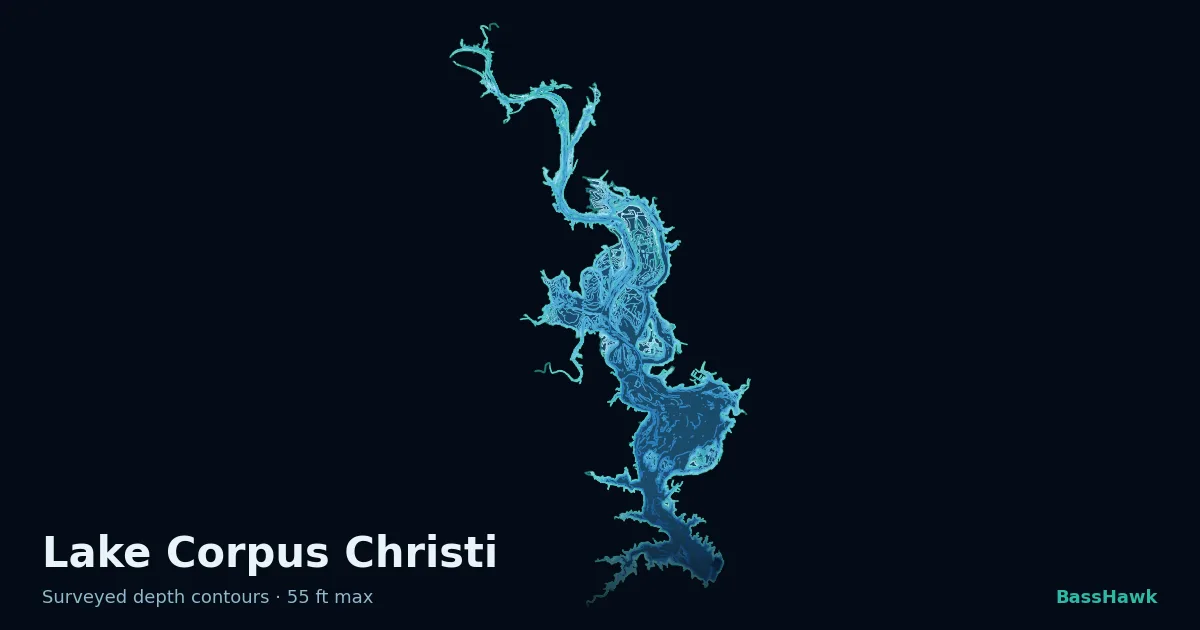
Brutal midday heat means early topwater bite and deep shade all day. Fish the weedbeds hard at sunrise, then hunt shaded timber and deep edges until dusk.
Water's sitting at 89 degrees, so the bass are in full summer survival mode. They're tucked into thick cover and deeper structure where it's cooler and there's more oxygen. The pressure is steady and the sky is clean bluebird, which means the sun is relentless and the shallow bite shuts down hard by mid-morning. Your window is tight: before the sun gets high, work the topwater and weedbed edges in the upper lake where the hyacinth is thickest. Once the heat ramps up, drop deep to timber, creek channels, and the shaded sides of points. The forage base here is solid with shad and bluegill, so match profiles and work structure methodically. Don't expect the kind of all-day bite you'd get in spring or fall. This is a grind where you hunt specific pockets and adjust your depth as the day heats up.
The day's game plan
Where to fish
- Upper lake hyacinth mats (Aransas and Poesta creek arms) — 1-4 feet shallow edges, 6-10 feet in deeper pockets · Dense water hyacinth cover with isolated open pockets, some shallow timber and brush
The hyacinth provides shade and traps threadfin and gizzard shad, making it a magnet for bass early and late when they're willing to hunt shallow. The pockets give them escape routes to slightly deeper water. This is prime topwater territory at sunrise and dusk. - Nueces River channel and main-lake creek swings — 15-30 feet on edges, 10-20 feet on shelves · Defined creek channel with steep drop-offs, outside bends with submerged timber and ledges, channel-edge transitions from hard to soft bottom
The channel is a summer highway and refuge. Deeper water holds cooler, more oxygen-rich zones where bass spend midday. Outside bends concentrate bass because they provide shade, depth access, and proximity to structure. This is your heat-of-day target. - Long sloping gravel points with rocky banks — 2-6 feet shallow slope, 12-18 feet deeper edges · Hard-bottom gravel transitioning to deeper water, often with submerged timber, rock ledges on shaded sides
Points funnel bass movement between shallow and deep water. In summer the shaded side of a point becomes a afternoon hotspot because rock absorbs and radiates less heat. Spinnerbaits and jigs work here because the structure is defined and the bass have clear highways.
What to throw
- Topwater Pop-R — 3 to 4 in · Pearl or white · n/a (Early morning and dusk when bass are hunting near the surface)
Quick twitch and pause over weedbed edges. Let it sit 2-3 seconds between pops to trigger topwater strikes. - Spinnerbait — n/a · White or chartreuse blade, white or shad-pattern trailer · 3/8 to 1/2 oz (Mid-morning on points and transitions before the heat drives fish deep)
Cast parallel to points and sloping structure. Retrieve steadily with a medium pace, keeping the blade thumping. Bounce it off timber on the structure. - Texas-rigged soft-plastic worm — 5 in · Watermelon, green pumpkin, or black · 1/4 oz (sinker only) (Midday when bass are deep and lethargic, and evening when they're recovering in cooler-water refuges)
Cast near deep timber and creek edges. Drag it slowly on bottom, pausing 3-5 seconds over likely cover. Feel for strikes and keep slack minimal. - Jig and craw — Craw trailer 2.5 to 3 in · Green pumpkin or brown · 5/16 to 1/2 oz (jig head only) (Deep midday periods and afternoon recovery when bass are stacked on structure)
Drag it along channel edges and deep structure with rhythmic lifts. Hold pauses over timber. Work it vertically or with a crawl retrieve. - Drop shot with shad-pattern finesse worm — 3 to 4 in · Shad or ghost minnow pattern · 1/8 oz (sinker only, 12-18 in below hook) (Late afternoon on shaded rocky banks and any deep ledge)
Hold vertical or move with subtle up-and-down bounces. Fish tight to rock ledges and timber. Let it hang and twitch for 3-5 seconds over strikes.
How to work it
- Work the weedbed edges early and late — First 90 minutes after sunrise and last 2 hours before dark when water is coolest and topwater is effective · Upper lake arms, Aransas and Poesta creek channels, anywhere dense hyacinth is present
Cast topwater or light jigs right along the hyacinth mat line, especially inside pockets where water is slightly deeper and baitfish are trapped. Keep casts within 2-3 feet of the edge. - Follow the channel swings — All day, especially midday when bass have retreated from shallow heat · Nueces River channel and all named creeks, especially outside bends in 15-25 feet
Identify where creek channels bend sharply and drop off into deep water. Work the outside edge with dragged jigs, worms, and drop shots. The bends funnel bass and create shade. - Fish shaded structure on points — Late afternoon when the sun angle shifts and shaded banks become thermal refuges · Long sloping gravel points with rock ledges, 8-15 feet on the shaded side
Look for the north- or west-facing side of main-lake points where rocky banks or timber throw shadows. Use drop shots or light jigs to probe the shaded zones. - Match the forage profile — All day, but especially during topwater windows when you can see the forage · Anywhere you see baitfish activity, especially upper-lake weedbed pockets
Watch for shad dimples and bluegill activity around cover. Throw shad-pattern soft plastics when shad are dominant, bluegill-profile baits (rounder, slower) when bluegill feeding is evident. Size down or match the forage size you observe.
Pro tips
- The pool is down 1.1 feet, which means the hyacinth line and shallow-brush shoreline have shifted inland slightly from the normal waterline. Spend 10 minutes at launch scouting where the weedbed edges sit today before committing to a creek arm. A point that holds bass in high water might be too exposed in low water, so confirm structure position first.
- August water temp at 89 degrees means dissolved oxygen drops sharply in the shallowest water and in stagnant pockets. Stick to areas with current flow (channel swings, creek mouths) and avoid fishing dead-still bays at midday unless they have heavy timber shade. Moving water holds more oxygen and more active fish.
- The steady pressure and clear sky mean no weather relief is coming today. Don't expect a midday bite surge from a passing cloud or wind shift. Plan for a U-shaped day with peaks at sunrise and dusk and a slow, methodical grind from 10 AM to 5 PM. Use midday to scout new areas, upgrade tackle, and prepare for the evening topwater push rather than grinding low-probability shallow water.
If conditions change
If clouds roll in or the wind picks up from the east or north, the shallow weedbed bite can extend through midday because overcast reduces light penetration and wind cools the shallows. Stay topwater longer and don't drop as deep. If a cold front moves through and pressure rises, the bite will shut down hard for 24-48 hours; drop to your smallest finesse baits (3-inch worms), fish the densest cover available (thick timber and hyacinth pockets), and work extremely slowly. If water clarity drops from rain or runoff and becomes muddy, switch to dark, vibration-heavy baits (black chatterbaits, dark lipless cranks with loud rattles) and upsize to maximum visibility. If clarity clears unexpectedly, downsize everything by 20 to 30 percent and rely on natural colors (shad, ghost, watermelon) and longer fluorocarbon leaders to avoid line-shy refusals.
Find more fish. This is a real report from that day's conditions — open the app for today's · free account