Early and late on the dam riprap and grass edges, water's too hot in the middle of the day for much shallow action
August water is in the uncomfortable zone, pushing 89 degrees, so largemouth are shifting deeper during the heat and only feeding hard at the coolest ends of the day. The lake's limestone structure and sparse vegetation mean you're working the dam riprap and whatever grass edges remain near the margins. Pressure is steady and the wind's light from the southwest, which keeps the morning and evening windows open. If clouds move in or the breeze picks up later, shallow feeding can push a few hours longer, but expect the midday stretch to be slow no matter what. Work fast and cover ground early and late, then get deep or back off the water during the heat.
The day's game plan
Where to fish
- Dam riprap — 3 to 12 feet · Stacked stone riprap, the primary hard cover on the lake
This is where largemouth hold and feed in the cool light of dawn and dusk. The riprap creates ambush points and reflects cooler water during the hot season. It's the most reliable shallow structure. - East-side limestone bluffs — 8 to 35 feet · Vertical limestone walls and natural ledges, the lake's defining geological feature
Bass stage on these breaks to access both shallow and deep water. The hard structure concentrates baitfish and gives bass relief from the summer heat by offering nearby deep water escape. - Shallow vegetation margins — 2 to 8 feet · Sparse native aquatic vegetation including pondweed, najas, and chara along the fringe
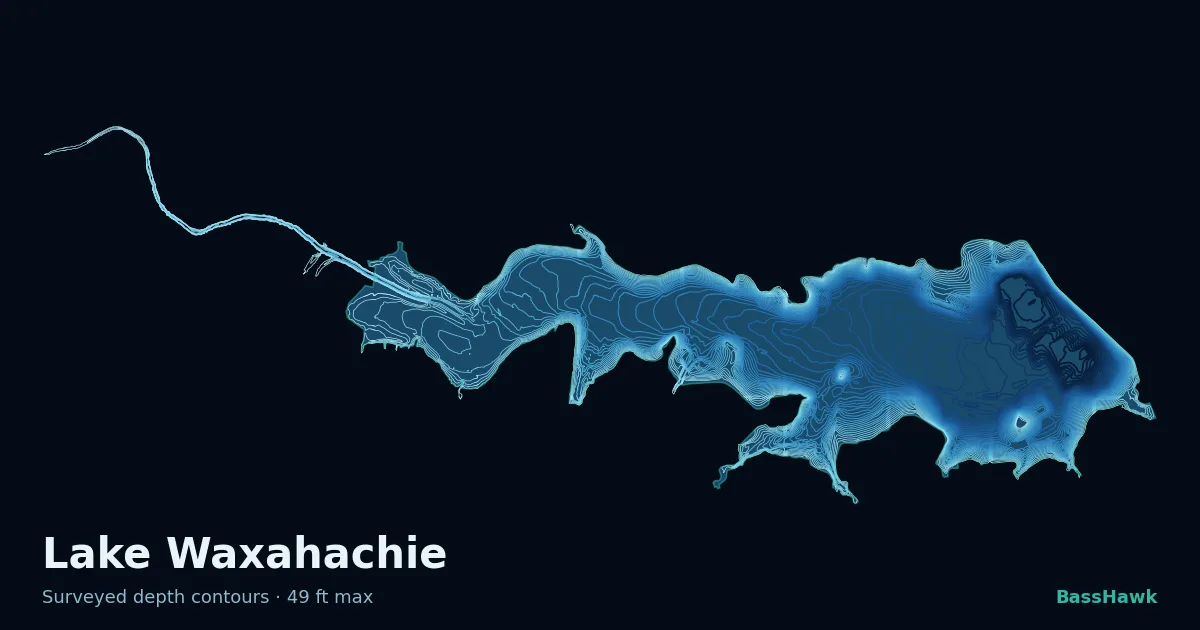
Thin cover but the only vegetation on the lake, so bass use these edges as feeding zones at first light and dusk. They're transition points between open water and the deeper channel. - Creek channel and bends near dam — 15 to 48 feet · Submerged creek channel bottom with hard structure and deeper water access
This is where bass retreat during the heat. The channel is a highway that concentrates baitfish and offers thermal refuge. The bends hold structure and current-break potential.
What to throw
- Small crankbait — 2 to 3 in · Shad, silver, or natural · 1/4 to 3/8 oz (Early morning and evening when bass are shallow and aggressive)
Steady retrieve tight to riprap and limestone walls, keeping depth shallow (3 to 8 feet) at first light and dusk, dropping to 12 to 18 feet mid-morning - Drop shot rig — 3 in finesse worm · Watermelon, green pumpkin, natural, or smoke · 1/4 oz tungsten drop shot weight (Midday heat and mid-morning staging periods in 12 to 35 feet)
Vertical drop down the bluff face or limestone ledge with tiny hops or just a slow drag. Let the bait breathe and move minimally. - Soft plastic worm — 4 to 5 in · Green pumpkin, natural shad, watermelon, black, junebug · Light Texas rig 1/8 to 1/4 oz or drop shot as above (All daylight hours from early morning through dusk, especially shallow zones at first light and last light)
Drag slowly along bottom and structure, pausing frequently. Work the grass edges and riprap with precision. Let the worm settle in cover. - Spinnerbait — 1/2 oz · White or chartreuse blade with dark skirt (black, black and blue) · 1/2 oz (Evening and dusk when light is failing and bass are aggressive)
Steady retrieve along the riprap and grass line with occasional pauses. Fish it shallow (3 to 10 feet) at first light and dusk, covering ground quickly to locate feeding fish. - Texas rig worm — 5 in · Green pumpkin or natural · 1/8 to 1/4 oz (All periods but especially midday and early morning when precision near cover matters most)
Pitch into tight cover along riprap and bass around grass, let it sink on a slack line and creep it slowly. Skip it under low-hanging structure if present.
How to work it
- Tight riprap work — Early morning at first light and evening into dusk when bass are shallow and feeding · Dam riprap, the only significant man-made cover on the lake
Cast directly to the dam riprap in 3 to 8 feet of water and retrieve close to the stones, feeling for snags and irregularities. Use crankbaits or soft plastics and fish every section of the riprap methodically. - Bluff edge drop shot — Mid-morning, midday, and early afternoon when bass have slid off shallows and are staging on structure · East-side limestone bluffs and secondary depth ledges in 12 to 35 feet
Position the boat parallel to the limestone bluffs and east-side structure, drop the rig straight down or drag slowly along the ledge face. Maintain contact with bottom and work the natural shelves and breaks vertically. - Grass edge search — Early morning through dusk, whenever working shallow water. Pause and let the bait sit in the thickest spots. · Shallow vegetation fringe around the margins, especially the sparse pondweed and najas near shallow flats
Work the perimeter of any remaining vegetation patches with a slow drag or steady retrieve. Focus on the defined line where grass meets open water, as that's where bass ambush baitfish.
Pro tips
- The sparse vegetation on Waxahatchie means cover is scarce, so every blade of grass and inch of riprap matters. Don't waste time on open water. Pick apart the riprap and margins precisely rather than working large areas fast.
- In August heat, the midday dead zone is real on this lake. Plan to either go very deep and slow or back off the water entirely from 11 AM to 3:30 PM. Your success window is early and late. Make those hours count.
- Fluorocarbon leader is worth rigging when the sun is bright and you're fishing shallow. Waxahachie's moderate clarity is clear enough that bass will see heavy braid, and a 12 lb fluoro leader will not cost you fish while gaining bites.
If conditions change
If a front rolls through and clouds thicken with a breeze, the shallow bite can stretch through midday, especially if the wind is from the west or south, pushing warmer surface water. Shift crankbaits and spinnerbaits to a longer window and extend your morning and evening periods. If the pressure rises after a front and skies clear hard, bass will go deep and tight immediately. Drop to 20 to 35 feet, fish the bluffs and creek channel, and use drop shot only. If the water takes on extra stain from upstream flow, switch to brighter crankbaits and darker soft plastics, but the pattern depth stays the same. If clarity improves and water looks glassy and clear, downsize everything by one increment, lengthen your fluorocarbon leader to 18 to 24 inches, and fish slower and deeper. The seasonal pattern won't shift because it's August and the water is hot, but these adjustments will keep you on fish as conditions tighten or loosen day to day.
Find more fish. This is a real report from that day's conditions — open the app for today's · free account