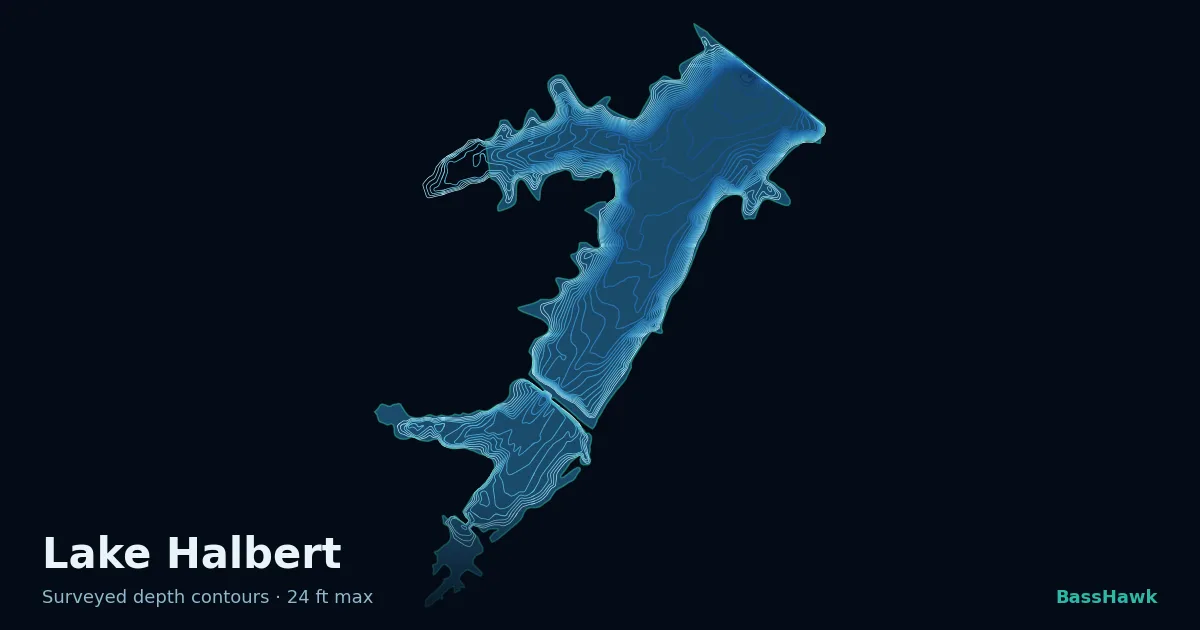
Heat and falling pressure trigger a late-first-light bite before the water locks up for the day.
Water is brutally hot at 90 degrees, so bass have shifted into full summer mode: they feed hard at sunrise and sunset, then bury deep or tight to shade during daylight. The water is stained, which normally extends the shallow window, but the heat overrides that. Before a front rolls in and pressure drops further, there's a fire-hours window at first light when bass move up to feed. The dam structure and riprap are your best cover since this lake runs shallow with minimal vegetation. Expect them to be hunting early, then scattered and lethargic through midday and afternoon. The evening bite reignites but won't last long once the sun drops and the lake cools slightly.
The day's game plan
Where to fish
- Railroad trestle riprap — 3 to 12 feet, steepest near the trestle itself · Historic railroad trestle supports and riprap foundation, hard edges and pockets for bass to hide
Only significant structure on the lake. Concentrates shad and bluegill. Bass stage here to hunt, especially in early morning and evening. - Dam pilings and concrete structure — 4 to 15 feet · Concrete dam face with timber pilings, hard structure with shadow and current breaks near the dam spillway
Second-best cover on the lake. Provides shade and structure for bass to ambush prey. Water near the dam often has slight current or circulation, concentrating baitfish. - Deep channels and drops near the main lake — 12 to 20 feet (the deepest water available) · Soft-bottom channels with occasional timber, the migration route between shallow and deep water
Summer refuge when heat pushes bass deep. Any hard spot (timber, rocks) on these drops holds bass during midday. Proximity to deep water is critical because this lake has no deep sanctuary, so bass use these channels to escape the heat and bright light.
What to throw
- Black or junebug lipless crankbait — 3.5 in · black, black/blue, or junebug · 1/2 oz (Early morning, late afternoon, evening bite)
Cast to riprap and dam structure, drag with short twitches and pauses, keeping it tight to cover - Dark jig with craw or dark trailer — 3/8 oz jig with 3-inch trailer · black, black/blue, or junebug · 3/8 oz (Early morning, evening, and whenever bass are tight to cover)
Drag along bottom through structure, flip into timber, work vertically near drops - Small white shaky head — 3 to 4 in with 1/4 oz head · white, pearl, or chartreuse-tipped · 1/4 oz (Morning into midday when bass pull deeper)
Drag slowly along bottom or work vertically near structure, keep pauses longer than movements - White drop shot with small finesse worm — 3 in worm on drop shot rig · white, pearl, or light chartreuse · 1/8 oz sinker 18 inches below hook (Midday heat when bass are deepest and least active)
Lower vertically near structure or suspend over deep water, minimal movement, work slowly up and down - Dark topwater popper — 2.5 to 3.5 in · black or junebug · 1/4 oz (Dusk and early night when bass move shallow to feed)
Cast near structure, work with gentle twitches and deliberate pauses, let the pop create the disturbance
How to work it
- Dragging structure — Early morning, late afternoon, evening when bass are feeding or transitioning · Trestle riprap, dam pilings, any submerged timber in 3 to 15 feet
Cast parallel to riprap, timber, or dam pilings. Drag the bait slowly along the bottom or just above it, pausing frequently to let it drop. Maintain contact with the structure. - Vertical jigging — Midday heat when bass are suspended or dug in deep · Deep channels, drop-offs, timber in 15 to 20 feet
Position boat over deep structure or drops. Lower jig to bottom, twitch it with short lifts and controlled drops. Work it in place rather than moving across the area. - Flipping cover — Dusk and night when you're picking apart known bass-holding cover methodically · Any visible timber, riprap pockets, or under structure in 2 to 10 feet
Use a longer rod, create slack in the line, let the jig flip into tight spots near cover (under docks if present, tight timber, riprap gaps). Set the hook when you feel resistance or see the line twitch.
Pro tips
- Water is stained year-round, so forget about clarity improving. Dark colors and blades that create vibration are your year-round advantage. Match the mud with black, junebug, and high-contrast chartreuse rather than natural shades.
- The heat is relentless in August. Bass are on a tight dawn/dusk schedule. Fishing the middle of the day is nearly pointless. Plan to spend your energy early and late, and use midday to scout for structure, check your gear, and shade up yourself.
- This lake is shallow with almost no vegetation, so hard structure (riprap and pilings) is everything. Don't waste time on open water or soft banks. Every cast should be at or within 10 feet of hard cover.
If conditions change
If the front blows through and pressure rises overnight, water will cool slightly but clarity will stay murky. Expect a tough post-front bite in the morning. Downsize to 4-inch finesse worms, stick to the densest cover (tight to the riprap and pilings), and fish slower. If wind picks up from the north and air temperature drops dramatically, the water may cool enough to extend the daytime bite slightly into midmorning, but don't count on it. If the water muddies even more from runoff or turnover, lean heavier on black, black/blue, and dark junebug, and use bladed baits (spinnerbaits, chatterbaits, lipless cranks) that create thump. If the stain clears unexpectedly (unlikely but possible after heavy rain dilutes the water), switch to more natural shad patterns and downsize everything 25 percent.
Find more fish. This is a real report from that day's conditions — open the app for today's · free account