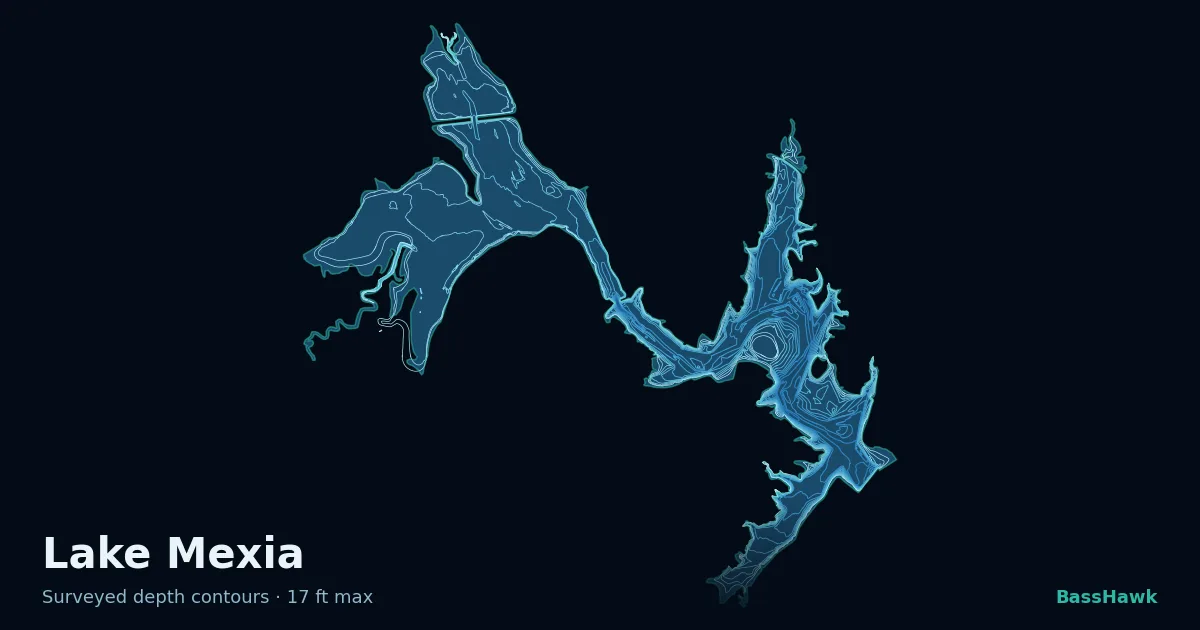
Peak summer heat shuts down the shallow game. Stay on dock pilings and deep brush in the lower lake until first light breaks.
Water's at 95 degrees and climbing into the uncomfortable zone. When it gets this hot, bass abandon the shallows during the day and lock to shade and cover. The lake's already stained, which helps keep light penetration down, but that bluebird sun beats down hard and pushes everything deep and tight. Docks, bridge pilings, and submerged brush in the lower lake are your anchors because that's where the bass hide from the heat and where the structure gives them escape routes to deeper water. Expect a hard midday shutoff. Your bite window is early, tight, and late, when water temps drop even a couple degrees and light softens. The pressure is steady, so no feeding surge, but that also means the pattern won't shift dramatically today.
The day's game plan
Where to fish
- Lower lake boat docks and covered structures — 2 to 6 feet, shade depth 0 to 3 feet under platforms · Wooden boat docks with pilings, covered boat slips, dock platforms with overhead shade.
Docks provide the refuge bass need in summer heat. Shade under platforms keeps water several degrees cooler and darker. Pilings offer vertical structure for ambush. This is the most reliable shallow pattern all day. - Bridge pilings and submerged brush in the lower lake — 4 to 12 feet, with drop-off access to 15+ feet nearby · Concrete or steel bridge supports, submerged timber, brush piles, and natural wood.
Pilings and brush create shade and current breaks (even in still water, they create slack zones). Bass use them as transition points between deep and shallow. Hard bottom structure nearby gives them depth access when they need to escape to cooler water. - Aquatic vegetation edge (waterwillow, lotus, pondweed) in the lower lake — 1 to 6 feet, with vegetation fringing open water · Weed lines and vegetation mats, gaps and pockets within vegetation, hard bottom under weed canopy.
Vegetation provides shade, ambush cover, and concentrates forage. In summer, bass relate to the vegetation edge where they can hunt prey moving between weed and open water. Early morning and dusk are peak times for the weed bite. - Channel-adjacent deep brush and structural breaks — 10 to 18 feet, sloping toward main channel at 20+ feet · Submerged brush, timber along the channel break, hard bottom transitions, any elevated bottom contour near the creek channel.
Midday heat drives bass to the deepest, most shaded structure available. Proximity to the main channel gives them an escape route to cooler, more oxygenated water. This is your refuge zone during peak sun when the shallow bite shuts down.
What to throw
- Finesse worm (shaky head) — 3 to 4 in · Black or junebug · 1/8 oz (Early morning through dusk, especially shallow cover.)
Shake it slowly on bottom near wood. Skip under docks, soak it on pilings, work weed edges with short casts. - Spinnerbait — n/a · Black or black/blue body with Colorado or willowleaf blade · 3/8 oz (early/late) to 1/2 oz (midday deep) (All day, especially transition times and brush structure.)
Slow-roll along brush, pilings, and ledges. Work uptide if there is wind or current. Maintain bottom contact with frequent casts. - Chatterbait (vibrating jig) — n/a · Black or black/blue with black or blue craw trailer · 3/8 oz (Early morning and evening when bass are shallow and reactive.)
Cast and steady retrieve along brush and pilings. Twitch occasionally to vary vibration. Work around dock edges and vegetation. - Lipless crankbait — 2.5 to 3 in · Black or black/chartreuse · 1/2 oz (Midday deep structure when you need a bait that vibrates without chasing fast.)
Cast and count down to the structure depth, twitch and drag along the bottom. Work methodically, maintaining vertical contact with brush and bottom contour. - Live shiner or cut bait — 2 to 4 in (live), chunks (cut) · n/a · n/a (Early morning and dusk if bass aren't striking artificials. Transition to cut bait at night for catfish.)
Drift or soak near docks, pilings, and brush. Fish on simple slip sinker rig near structure. Let it sit.
How to work it
- Dock skipping — Early morning and dusk, when bass hide under shade. This targets the tightest cover where bass escape midday heat. · Boat docks and covered structures in the lower lake, 2 to 6 feet deep.
Cast at a low angle under dock overhangs, letting the bait skip along the water and slide under platforms. Use a pitching motion and a short leader (12 to 18 inches) to clear obstacles quickly. Work tight to pilings. - Slow rolling — All day, especially morning transition and midday deep structure. Slow rolling keeps the bait in the strike zone longer and matches the deliberate pace of hot-water bass. · Brush clumps, channel edges, and pilings from 6 to 18 feet.
Cast across or slightly uptide of structure. Reel steadily at a slow pace, keeping the bait just above bottom or bumping it occasionally. Maintain a constant vibration and depth. - Dead-sticking (soaking) — Midday and during slow periods. Summer bass often refuse moving baits but will strike a stationary one placed right on top of them. · Dense cover near pilings and brush, 2 to 10 feet.
Cast your finesse worm or small bait to a target (dock post, brush, weed patch) and let it rest on the bottom with minimal movement. Wait 10 to 15 seconds, then shake gently or recast. - Pitching — Early morning and dusk for maximum cover access. Pitching places baits in spots a standard cast cannot reach and keeps you tight to the cover where summer bass hide. · Docks, pilings, submerged brush, and vegetation edges in 2 to 8 feet.
Use a 6 to 7 foot medium-power rod with 15-17 lb monofilament or fluorocarbon. Hold the bait in your hand, swing it underhand to the target, and guide it with your rod tip. Pitch to tight cover, dock gaps, and brush pockets.
Pro tips
- At 95 degrees, bass are not feeding out of hunger, they're feeding out of reflex or defense. Downsize your baits and presentations compared to spring and fall. A 3-inch worm and a 3/8 oz spinnerbait outfish their larger cousins in summer heat because the bass don't want to chase. Keep baits near or on cover, use dark colors for the murky water, and work slowly. Speed kills in summer.
- The lower lake is where the structure and shade concentrate because the lake is shallow overall. Don't waste time in the upper lake chasing open water or sparse cover. The majority of summer bass on Mexia are in the lower end around docks, pilings, and brush. Pick an area and fish it thoroughly rather than running five miles looking for scattered fish.
- The solunar majors at 1:39 PM and the minor at 8:28 PM (dusk) are your tiebreakers today. Early morning bite peaks before 8:30 AM even without solunar boost because temperature and light are favorable. But if the early bite is slow, focus harder at 1:39 PM during the major solunar window when even hot-water bass show a feeding pulse. Evening dusk into the minor at 8:28 PM is your second-best window and often holds until full dark.
If conditions change
If the pressure drops and a front approaches, expect a pre-front feeding surge for 12 to 24 hours before conditions deteriorate. Fish more aggressive presentations and faster retrieves, cover more water, and work reaction baits like chatterbaits and spinnerbaits. If the front blows through and pressure rises with clearing skies and cooling air, the bite will shut down hard midday. Stay on the densest cover, downsize to finesse worms, dead-stick baits on pilings, and fish slower. If a strong south wind pushes across the lake, the wind-blown banks in the lower lake will oxygenate water and push baitfish, so concentrate dock and brush work on the exposed banks. If the water gets darker or muddier from runoff, switch to brighter finesse bait colors like chartreuse or orange tips, and use Colorado blade spinnerbaits for maximum thump and vibration. If the water unexpectedly clears (unlikely given the lake's nature), match the clarity by using more natural colors like green pumpkin and watermelon worms, and lengthen your leader to 18 to 24 inches to reduce visibility of your line.
Find more fish. This is a real report from that day's conditions — open the app for today's · free account