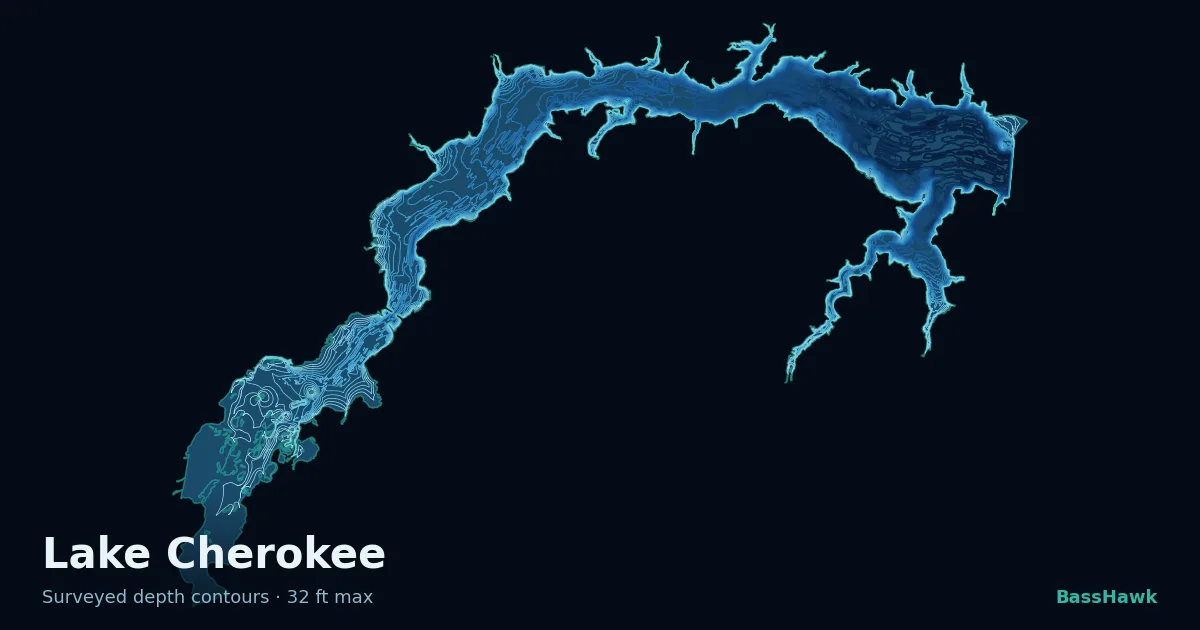
Hot-water bite is dawn-to-dusk cover work, then a brief window around noon when they'll hunt, tight to wood and shade.
Water's 90 degrees, which means largemouth are stressed and uncomfortable in anything shallow and open. They're holding tight to standing timber, flooded brush, and dock structure in deeper water, venturing up only in low light when the cover can shield them from the sun. The lake's timber-choked design works in your favor today because every shady edge and every piece of wood becomes a sanctuary. With zero cloud cover and a bluebird sky, the shallow bite is compressed to first light and last light. Around midday when the sun is hottest, expect a brief window when bigger fish will actually hunt from deeper staging areas, looking up at the timber shadows and the boat docks, but only if you put the bait right on the wood. The pressure is steady and not helping, so don't expect the bass to be aggressive, but they will eat if you're precise with cover.
The day's game plan
Where to fish
- Flooded timber in cove mouths — 6 to 14 feet · Standing timber lines, both fallen and upright, with dense brush underneath. North-facing banks and shaded edges.
Timber provides shade and thermal refuge from 90-degree heat. Cove mouths funnel bass movement between deep water and shallow feeding grounds. The wood edges are ambush points where bass intercept prey. This is the primary holding structure all day in hot summer. - Boat-house docks with brush piles — 2 to 8 feet under and around pilings · Dock pilings, man-made brush, and the shade created by covered boat slips. South-facing docks catch afternoon light, north-facing stay shaded longer.
Docks provide hard structure and dense shade in one package. Brush piles amplify the effect, creating multiple ambush points. Bass stage under docks to intercept baitfish. Light structures attract shad, which concentrate bass. This is reliable shallow cover all day and into the night. - Creek channels and deep water access — Channel bottom 18 to 25 feet, with 10 to 14 foot edges where channel swings near shallow structure · Sandy or hard-bottom creek beds with trees and brush on the edges. Inside bends create current breaks and deep holding areas.
Channels are highways for bass moving between summer deep-water sanctuaries and shallow hunting grounds. Edges where channels meet shallow flats or timber lines are staging areas. Bass hold on channel edges in hot water, ready to move shallow at dawn and dusk. This structure matters for morning and evening moves. - Hydrilla and vegetation edges — 2 to 6 feet · Hydrilla beds, lily pads, and matted cover in coves and slack-water areas. Hard edges where grass meets open water.
Vegetation holds shad and bluegill, the primary forage. It provides shade and cooler water in the column. Bass hunt vegetation edges, especially in low light. This cover is most productive in evening and night when bass move shallow to feed. The weed-wood combination makes this lake exceptional for cover-based fishing.
What to throw
- Dark jig with craw trailer — 3/8 to 1/2 in jighead · black or dark green · 3/8 to 1/2 oz (Early morning through late afternoon, anytime you want precision in thick wood)
Pitch tight to timber, shake on the fall, drag slowly along the base. Work methodically through cover without rushing. - Texas-rigged worm — 5 to 6 in · green pumpkin or dark red flake · 1/16 to 3/16 oz (light bullet weight) (Morning through evening, all day around wood and weed)
Flip or pitch into timber and vegetation, shake on the fall, drag slowly. Work every pocket and gap in the cover. - Hollow-body frog — 2.5 to 3 in · black or dark purple · n/a (Morning through evening, especially evening and dusk when bass are hunting shallow)
Cast over matted cover or under overhanging timber, walk it slow with deliberate pauses. Pop it occasionally to mimic struggling prey. - Small spinnerbait — 3 to 3.5 in · white or chartreuse blade with matching skirt · 3/8 oz (Midday and evening, around docks and deeper timber edges)
Slow roll around timber and through brush, maintaining contact with the bottom. Keep blade vibrating steadily. - Dark topwater popper — 2 to 2.5 in · black or dark green · n/a (Dusk through night, especially the last hour before full dark and after dark under lights)
Fish tight to timber and docks, pop sharply then pause 2-3 seconds, repeat. Let it sit motionless between pops.
How to work it
- Pitch and skip under docks — Morning through evening, best in midday when bass are buried in deepest shade · Boat-house docks with brush piles, especially pilings in 2 to 6 feet
Keep your rod tip high, use short accurate casts to slide a jig or worm under dock platforms and pilings. Let it fall on slack line, then shake it gently. Retrieve with minimal movement to avoid spooking. - Drag-and-shake on timber base — All day, but most productive early morning and evening when bass position on timber edges · Standing timber in 6 to 14 feet, especially timber lines between deep and shallow water
Drop a worm or jig to the bottom of a log or timber cluster, crawl it slowly along the wood, stopping to shake in place every foot or two. Let each shake settle slightly before moving on. - Walk-the-dog frog over matted cover — Morning through dusk, especially most effective in the last 2 hours before sunset · Hydrilla edges, lily pads, and dense timber canopies in shallow coves
Cast the frog beyond matted grass or timber, then work the rod tip side-to-side in a walking rhythm, letting the frog pop and glide. Pause occasionally for 2-3 seconds to let bass locate it. - Slow-roll spinnerbait through brush — Midday through evening, especially when reaction baits outproduce finesse · Timber edges, dock pilings, brush piles in 6 to 12 feet
Keep a steady retrieve with the blade thumping the water 3-4 times per second, maintaining depth and letting the blade vibration do the work. Don't speed up. Fish it right along the base of timber or brush.
Pro tips
- In 90-degree water, fish the deepest shade available every time. A bass in full sun on the edge of a dock is a myth. Find the darkest shadow under the heaviest timber or inside a dock slip, and you'll find the fish. This means pitching under overhangs and working your way into root balls and thick brush. Don't just fish the periphery.
- The midday window (noon to 1:30 PM) is when overhead sun creates the darkest shadows under the timber and docks. This is actually a brief feeding window because the shade is so complete that prey feels safe moving in it. Bass will hunt the shadows aggressively during this time. Don't leave the lake at midday just because the sun is high, because this is when a quality fish will actually eat in the shallowest cover.
If conditions change
If a front rolls through and the pressure starts dropping before it hits, the bass will feed more aggressively before the weather arrives. Stay on the reaction baits, speed up your retrieves slightly, and cover ground. If the front passes and pressure rises with clear skies, expect a feeding shutdown for 12-24 hours. Downsize everything to 4-inch worms and drop-shot rigs, fish slower, and stay in the thickest timber and dock shade possible. If the wind picks up and starts pushing water against the north shore or into the coves, position on those wind-blown banks because moving water oxygenates the shallows and concentrates forage. Fish topwater and reaction baits along the weed and timber edges on the windy bank. If clouds build during the day, the shallow bite will extend longer and the midday dead zone will be less severe. Work shallow timber and vegetation more aggressively if cloud cover develops. If water clarity drops due to runoff or algae, shift to darker colors and wider-vibrating spinnerbaits with Colorado blades. Visibility reduction means bass hunt by lateral line, so maximize vibration and silhouette over subtle color details.
Find more fish. This is a real report from that day's conditions — open the app for today's · free account