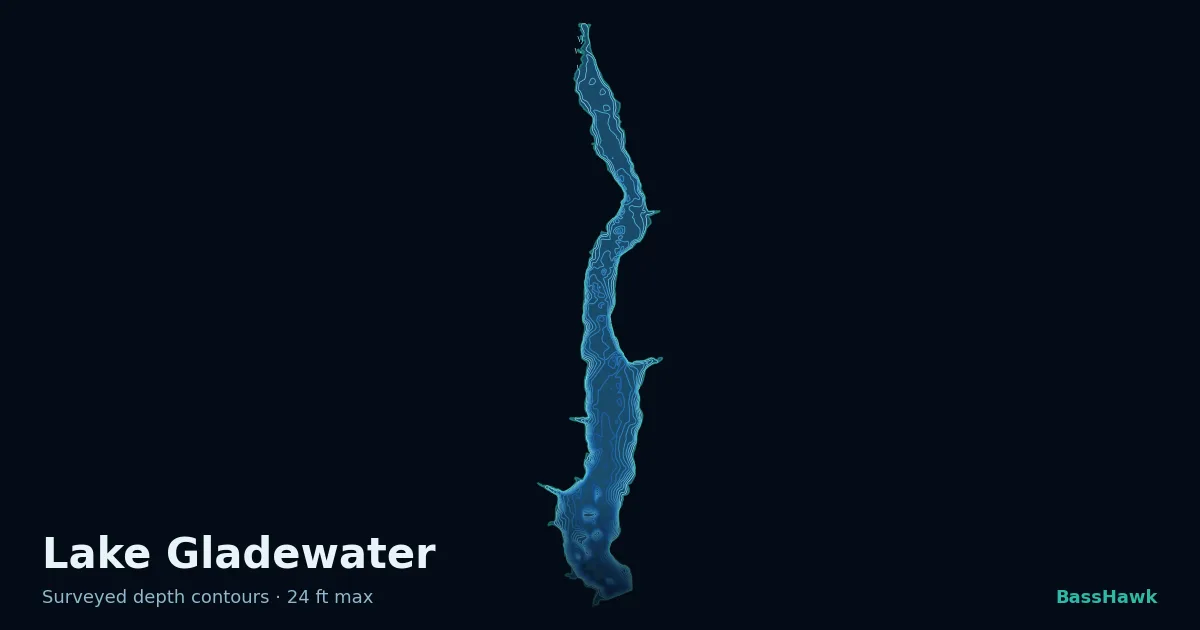
Summer doldrums in serious heat. Fish the timber and docks at dawn and dusk when it cools. Midday you're chasing shaded drops.
Water's sitting at 92 degrees, well into the hot zone where largemouth get lazy and tuck into deep shade and cooler water to stay comfortable. This is survival mode, not feeding mode. The pressure's dropping ahead of some weather, which should help, but the bluebird sky and 100-degree heat are pushing them down and out of the shallows hard. Timber, lotus edges, and dock structure are going to hold fish, but they're going to be tight to the deepest part of that cover. Dawn and dusk stretch the window when the air cools and light drops. Midday is a grind. You're hunting for shaded ledges near deep water access and waiting for that early morning and late evening bite when they slide up to hunt.
The day's game plan
Where to fish
- Main Timber on the Channel Edge — 8 to 28 feet, staging at 12 to 18 feet early and late, dropping to 20-28 feet at midday · inundated standing timber and fallen logs positioned where they meet the main Glade Creek channel drop-off
Timber is the signature structure at Gladewater and provides both shade and ambush points. Fish that are tight to the channel have immediate access to deep water, which matters in summer when bass need a thermal refuge. Work timber on the channel side first. - Dock Lines and Pier Pilings — 6 to 14 feet depending on dock location, shallower on residential docks in back bays, deeper on main-lake access docks · wooden and metal piling support posts, shadow zones cast by dock decks, cover underneath floats
Docks offer instant shade and are always present. Summer heat drives bass tight to dock structure all day. Residential docks in quieter bays warm less aggressively. Fish the shaded side of pilings and the deepest water around them first. - Lotus Edge Transitions — 4 to 12 feet, bass hold on the deeper edge of vegetation or in pockets between lotus clumps · native American lotus stems and pads creating soft overhead cover, transitions from open water to vegetation
Lotus edges are the primary vegetation on Gladewater. They hold baitfish and crawfish and provide shade without the density of hydrilla. Summer bass use them as a middle ground between shallow and deep. Fish the edges, not inside the mat. - Artificial Brush Pile Habitat Structures — vary by site location, but positioned to concentrate bass at specific depths published by TPWD · man-made brush piles designed to replicate fallen timber and create shade zones
These structures are intentionally placed to hold gamefish and often go less pressure than natural timber. They're marked on the online Habitat Structure Viewer with GPS coordinates. Each site concentrates bass so you can work a smaller area more thoroughly.
What to throw
- 5-inch Green Pumpkin Finesse Worm — 5 in · green pumpkin · 1/4 oz (drop shot weight) (early morning and deep midday timber, first light windows)
drop shot rig dragged tight to timber and dock pilings, vertical presentations along deep structure - 4-inch Natural Shad Finesse Worm — 4 in · natural shad or pearl · 1/8 oz (Texas rig) or 3/16 oz (drop shot) (morning shallows, lotus edges, dusk push-up)
light Texas rig dragged slow along edges, or drop shot for vertical work on transitions - 1/2-ounce Blade Bait (white or chartreuse) — n/a · white or chartreuse with nickel blade · 1/2 oz (midday grind on deepest structure, 18 to 28 feet)
vertical jigging on deep timber and brush piles, tight oscillating strokes, let it fall on slack line between lifts - 3/8-ounce Shaky Head with 3-inch Swimmer — 3 in (trailer) · green pumpkin or watermelon · 3/8 oz (midday transition, 14 to 24 feet, bass tucked tight to timber)
small swimming motion worked straight down or with subtle lifts and drags on deep wood, keep it moving just enough to quiver - 3/8-ounce Black Finesse Jig with Dark Trailer — 3 in (trailer) · black jig body, dark craw or tube trailer · 3/8 oz (dusk and night shallow feeding, 2 to 8 feet)
dragged slow through timber and along dock posts from late afternoon into night, or soaked near cover in shallow water
How to work it
- Drop Shot on Deep Timber — early morning when bass are shallow-ish but still cautious, and deep midday when heat drives them down and they're reluctant to chase · timber and brush structure, 8 to 20 feet deep, especially tight to wood pilings and fallen logs
Tie drop shot rig with 1/4 to 3/16-ounce weight below a swivel and 18-inch leader. Slowly drag the finesse worm along timber base or hold it suspended, twitching it subtly. Let weight tick the wood. - Light Texas Rig Around Shallow Cover — morning and dusk when light still has some muscle, focus on shady banks · dock pilings, lotus edge transitions, shallow timber flats in 4 to 10 feet
Use 1/8-ounce weight on a short leader, weedless hook, and 4 to 5-inch worm. Cast tight to docks, lotus stems, and timber edges. Work it slow with small drags or let it sit, then make a deliberate hop. - Vertical Jigging on Deep Structure — midday when bass are deepest and most vertically stacked, pressure-drop windows when they're slightly more willing · main-lake brush piles and deeper timber humps, 18 to 28 feet
Cast on top of the target, keep your rod tip vertical, and work the bait with sharp 12 to 18-inch lifts. Let it fall on slack line between strokes. Stay on the lure with your line tight enough to feel strikes. - Soaking Dark Baits Near Shallow Cover at Night — full dark after dusk, especially 8 PM to midnight and after 11 PM solunar major, when bass hunt shallow · shallow timber, dock lines, lotus edges at the bank, 2 to 8 feet with deep-water escape routes nearby
Cast black worms or dark jigs close to dock posts and timber in 2 to 6 feet. Don't retrieve, let it sit 30 to 60 seconds, then make one slow drag or small twitch. Repeat slowly up the cast angle.
Pro tips
- Fish the shaded side of every piece of timber and dock cover, not the sun-facing side. In 100-degree heat, shadows are where bass hang. The dappled shade under dock decks is premium real estate.
- Early morning and dusk are worth the time investment. The two-hour window around sunrise and the 90-minute push before dark are when you'll hook 60 percent of your fish. Midday is grind-it-out vertical work and not fun, but it can produce if you stay deep and patient.
- The pressure drop before that weather system is helping your odds, especially on blade baits and vibration-based lures in deep water. Even in summer heat, a slight pressure drop loosens bass up a tick. Use it in the midday and transition hours when they're otherwise locked down.
If conditions change
If a front moves through and the pressure rises with cooler air, expect the shallow bite to tighten even more and bass to bury in the densest timber. Switch to smaller, darker finesse baits (3-inch black worms on 1/8-ounce drop shots) and fish even tighter to cover in 10 to 16 feet. If wind picks up from the south, the shallow docks and flats get more oxygen and the morning bite can stay stronger longer, so stretch your early-morning window. If afternoon clouds roll in and shade spreads across the lake, bass will shallow up an hour or two earlier than normal, so be on docks and timber edges by 2 PM instead of waiting until late afternoon. If water stains from summer run-off, switch to chartreuse or white blade baits to improve visibility in the midday deep bite.
Find more fish. This is a real report from that day's conditions — open the app for today's · free account