WATER TEMP87°F+1.5°F in 13 daysTrinity River near Rosser, TX · 68 mi
POOL LEVEL−1.9 ft−0.3 ft in 14 daysbelow normal pool
Measured Tuesday, September 15, 2026 · refreshed daily · the guide report reads these for you
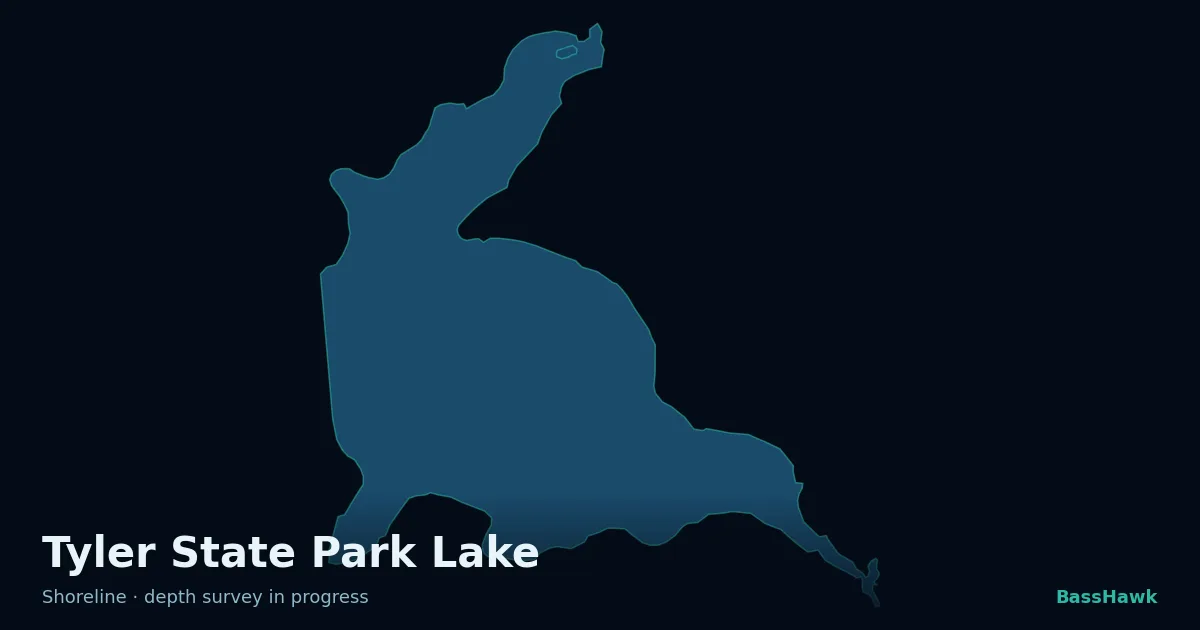
Tyler State Park Lake shoreline — depth survey in progress
The fishery
Tyler State Park Lake — Smith County, TX, Tyler State Park. 64 acres, 30 ft at its deepest. Known for Spring-Fed Park Lake — Electric Motors Only.
Species
largemouth · smallmouth · spotted · guadalupe
On BassHawk
Everything below points at one goal — finding the most, and the biggest, largemouth bass on Tyler State Park Lake.
Lake mapFull nautical-dark lake map with curated fishing spots and structure.
Daily guide reportA fresh report for Tyler State Park Lake every day — where the bite is, what's working, what changed.
Real-time conditionsLive water temp, pool level, weather, an hour-by-hour bite score — and the week ahead scored with the best window flagged.
Routed trip plansA timed, routed fishing plan built for the day you're going — launch to last cast.
Mud linesSatellite-tracked water clarity — see where the mud line sets up before you launch.
Spots & logSave your own spots, log catches, and carry them across devices.
Getting on the water
Tyler Boat Ramp 75706
What a guide report looks like
A complete, real report for Tyler State Park Lake — nothing held back, from a few weeks back. It ran on that day's conditions, and conditions have moved since. Today's is in the app.
SAMPLE GUIDE REPORT · WEDNESDAY, AUGUST 19, 2026
Deep water and shade all day, water's too hot for the shallows right now.
WATER 89°FAIR 80°FWIND 8 MPHSEASON SUMMERPOOL -1.1 FT
Mid-August means water temperatures are running hot and bass are survival-focused, holed up in the deepest, shadiest spots they can find. The lake is clear water, so bass can see well and they're picky about what they'll strike. Pressure is steady, which keeps patterns reliable. The sun is bright and intense all day, so any shade, any depth break, any bit of wood becomes critical. If a front rolls through or clouds build, the shallow patterns can improve, but today you're working deeper structure and being patient with finesse. The bass aren't lazy because they can't be, they're just uncomfortable in this heat and they'll only chase something that's right in front of them.
The day's game plan
EARLY MORNING · 6:47 AM to 8:30 AM
Cypress trees and submerged timber along the eastern shoreline in 6 to 12 feet of water, anywhere wood intersects deeper water access.
4-inch finesse worm in watermelon red or natural shad, Texas-rigged on a 1/16 oz jig head, dragged slow along the wood and through any shade line.
First light is your best window before the sun climbs high and pushes fish deeper. Wood is the only thing that matters on a clear lake in hot water, and these coves offer both shade and escape routes to deeper water. The solunar major at 6:33 AM helps, so fish hard the first 45 minutes.
MORNING · 8:30 AM to 11:00 AM
Channel edges and deeper points near the dam, 15 to 22 feet of water where structure drops into the main lake.
Lipless crankbait in white or chrome, cast long and burned back with twitches to trigger reaction strikes, or dragged slowly if the bass feel sluggish.
As the sun steepens, bass pull away from wood and deeper into the lake. These drop-offs and channel bends become the holding zone. The clear water and bright sun mean they're keyed on depth and proximity to deeper refuge. A reaction bait works better than waiting for them to come to you in shallow water they don't want to be in.
MIDDAY · 11:00 AM to 2:00 PM
Main-lake humps and ledges where the bottom transitions hard in 18 to 26 feet, or the deepest cypress tree pockets you can find.
Small shaky head with a 3-inch finesse worm, color choice watermelon or natural, fished vertically or with micro-drags along the structure. Work it slow, keep your drag tight enough to feel every tick.
Midday sun and peak heat push bass as deep as they can get while staying accessible. Shade no longer exists as a strategy, only depth matters. These deeper humps and hard-bottom transitions concentrate bass, and a shaky head allows you to cover vertical ground while keeping the bait alive with minimal movement. The solunar minor at 1:50 PM might give a small uptick, but it's secondary to depth.
LATE AFTERNOON · 2:00 PM to 5:00 PM
Timber and wood structure in 10 to 16 feet of water at the mouths of coves, any place where submerged trees or brush meet open water and deep access.
Small crankbait, green pumpkin or shad pattern, 2-inch profile, bumped through the wood with a medium retrieve speed, pausing briefly when you feel contact.
Water is still hot but the angle of the sun shifts slightly, and shade starts to matter again. Bass begin repositioning from deepest refuge back toward structure that offers both cover and quick access to deep water. These cove mouths are highways, and the wood gives them the cushion they need. A crankbait that deflects off wood triggers reaction bites better than a jig in the heat of afternoon.
EVENING · 5:00 PM to 7:15 PM
Eastern shoreline cypress trees and submerged timber in 6 to 12 feet, any cover that sits where sunlight breaks across the water from the west.
Small swimbait, 3 to 4 inches, in natural shad or ghost colors, swum slowly along wood with minimal vibration, letting the tail do the work.
As evening builds, the sun angle changes and those west-facing shady spots become prime again. Bass begin sliding from deep structure back toward wood and shallow cover where baitfish gather as light fades. A swimbait mimics the forage without aggressive action, and the slow swim is all they need to eat. The solunar major at 6:54 PM coincides with this bite window, which can dial up activity.
DUSK · 7:15 PM to 8:15 PM
Shallow coves and back-bay timber in 4 to 8 feet, anywhere wood offers overhead shade as the light gets low.
Texas-rigged 5-inch worm in darker colors like watermelon or junebug, fished slowly along the wood edge with pauses, letting it rest in any shadow.
Last light of the day is when bass relax their caution slightly and move shallowest. The timber and cypress at the heads of coves concentrate both bass and baitfish. Low light means color matters less than silhouette, and a dark worm creates profile against what little light penetrates. This is a short, powerful window before full dark.
NIGHT · 8:15 PM to 10:00 PM and beyond
Same shallow timber and coves, 3 to 10 feet, anywhere wood is thick and overhead cover is heaviest.
Dark-colored soft plastic, 4 to 6 inches, Texas-rigged or on a shaky head, fished with patience and slow, deliberate presentations. Let it sit between casts if the bass bite.
After sunset, bass lose their visual acuity and rely on lateral line feel and strike triggers based on displacement. Shade ceases to matter because there is no light. Thick wood near shallow flats becomes target number one. The solunar minor at 11:57 PM is late in the window, but night fishing extends your opportunity if you can stay out. Work the timber methodically and be ready for aggressive hits once bass feel safe in the dark.
Where to fish
Eastern shoreline cypress and timber — 4 to 12 feet in coves, 8 to 15 feet at deeper bends · Submerged cypress trees, standing deadwood, laydowns, and brush, plus shade lines where cover meets open water. This is where bass hold in a clear-water lake because shade and wood are the only refuge in hot water. Eastern exposure also provides shade earlier in the morning and again as evening sets in. Access to deeper water off these banks means bass have escape routes.
Channel edges and main-lake drop-offs near the dam — 15 to 26 feet · Hard-bottom transitions, channel bends, ledges, and anywhere the bottom steps down sharply into deeper water. As midday heat peaks, depth is the only strategy left. These structures funnel bass into tight zones where they wait out the hottest part of the day. Hard bottom and structure changes concentrate forage, so bass position to intercept easy meals.
Cove mouths and timber highways — 8 to 16 feet at the mouth, 4 to 8 feet back into the cove · Submerged wood, cypress, brush, and open-water transition zones where coves connect to main lake. These are the movement corridors. In heat, bass use them as highways from shallow resting cover to deeper water and back. Cove mouths funnel activity and create intercept opportunities. Wood here offers both shade and structure, making it prime real estate late afternoon and evening.
What to throw
4-inch Finesse Worm — 4 in · Watermelon red, natural shad · 1/16 oz jig head (Early morning when light is low, and anytime bass are tight to cover in the heat.) Texas-rig on light jig head, drag along wood and through shade lines with a slow, dragging retrieve and occasional twitches.
Lipless Crankbait — 2 to 2.5 in · White, chrome, or shad pattern · 1/2 oz (Morning and late afternoon when bass are on channel edges and deeper structure, or when you need to cover ground fast.) Cast long, burn back with twitches to trigger reaction strikes, or pause and drag slowly along drop-offs if bass feel sluggish.
Shaky Head — 3 in soft plastic body · Watermelon, natural · 1/8 to 3/16 oz jig head (Midday when the sun is hottest and bass are deepest, or anytime you need to pick apart vertical structure.) Fish vertically over deep humps or ledges, or with micro-drags and pauses, keeping constant contact with the bottom.
Small Crankbait — 2 in · Green pumpkin, shad pattern · 3/8 oz (Late afternoon on cove mouths and timber edges when bass are transitioning from deep to shallower structure.) Bump through timber with medium retrieve, pausing when you feel wood contact, then working through it with brief cranking bursts.
Small Swimbait — 3 to 4 in · Natural shad, ghost · 1/4 oz weighted hook or jig head (Evening as the sun angle shifts and bass move back to wood cover.) Swim slowly along wood and shade lines with minimal rod movement, letting the tail action create all the attraction.
How to work it
Drag and pause finesse presentation — Anytime the bite is tough and bass are tight to cover, especially in heat. · Along timber, cypress, and shade lines in 4 to 15 feet of water. Cast near wood or structure, let the bait settle, then drag it slowly 12 to 18 inches and pause. Feel for takes on the pause, repeat.
Vertical jigging on deep structure — Midday when bass are deepest and vertical presentations minimize your disturbance. · Main-lake humps, channel ledges, and hard-bottom transitions in 18 to 26 feet. Position your boat over a hump or ledge, lower the jig straight down, shake it gently while maintaining bottom contact, lift it 1 to 2 feet and let it fall.
Wood deflection and reaction trigger — Morning and late afternoon when you're covering ground and targeting transitional positions. · Cove mouths, timber lines, and any submerged wood structure. Cast your crankbait or lipless bait at timber or cypress, let it deflect naturally, then twitch it hard once or twice before retrieving through open water.
Pro tips
Keep a longer leader, 2 to 3 feet of fluorocarbon, especially on finesse presentations in this clear water. Bass can see your main line and it will cost you bites.
Work the deepest shade and wood you can find in the heat. Bass will abandon shallow cover that gets direct sun. Don't waste time in open water or sparse timber, focus on the thickest, deepest stuff available.
If clouds roll in or the pressure drops ahead of a front, the shallow and midwater patterns activate immediately. Swap to faster retrieves and work cove wood shallower and longer, as bass will push up and feed more aggressively.
If conditions change
If a front moves in and pressure rises after passing, water clarity might increase slightly and bass will tighten to the thickest cover for the next 24 to 36 hours. Downsize everything to 2 to 3-inch profiles, slow your presentation even more, and fish right on top of submerged wood with a shaky head or drop shot. If wind picks up from the south or west, the wind-blown timber on the eastern shore becomes even more productive due to oxygen and baitfish movement. Stay there longer. If a storm muddies the water inflow, shift to darker baits like black, junebug, or dark watermelon, upsize slightly to improve visibility for the bass, and increase vibration with lipless cranks and spinnerbaits. The clear-water finesse game changes fast in murky water, so adjust aggressively.