Summer heat has them tight to deep cover and in the grass at night, early morning and late light are your windows.
Water is hot at 86 degrees, which means largemouth are tucked deep or locked in heavy vegetation during the day to stay comfortable. The water is normally stained here, which keeps them a touch shallower than gin-clear lakes would push them, but on a bright bluebird day like this with no wind and no cloud cover, they are still dropping down and seeking shade and structure. The lake sits low, nearly two feet below pool, and with the steady pressure you have a stable pattern. Early morning, late afternoon, and all night are when bass will slide up to feed. Daytime is a grind unless you work the heaviest grass and deepest available timber. This is night bite country right now, and the reports back that up.
The day's game plan
Where to fish
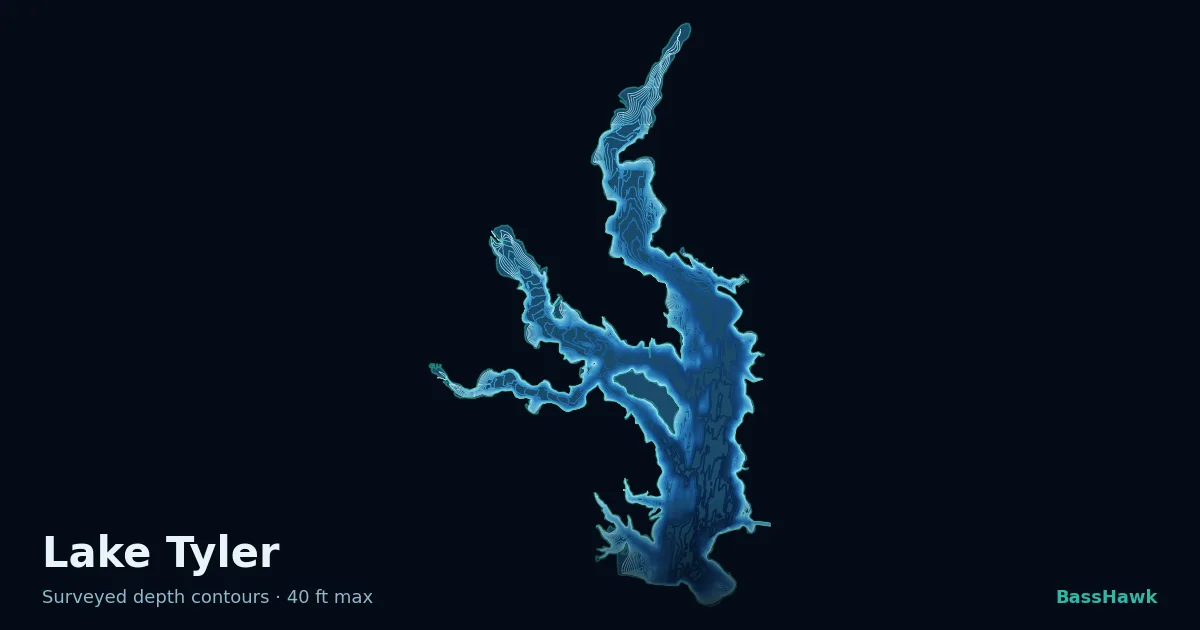
- Upper Creek Arms (East and West Basins) — 2 to 8 feet in grass flats and shallow water; 8 to 15 feet on channel transitions · dense hydrilla and native grass, hard-bottom pockets, shallow channel swings, timber and stumps in the creeks
Shallow grass holds shad and bluegill. Bass slide into these zones to feed early morning and all night. Upper creeks are where the heaviest vegetation concentrates and where night bite is most productive. The grass provides cover and the shallow water gives them speed to ambush. - Main Lake Channel Bends and Ledges — 15 to 25 feet, sometimes 8 to 15 feet on the edges · hard-bottom drop-offs, rock and clay ledges, channel swing bends where structure creates defined breaks and cover
Deep structure holds bass during heat stress and midday when they want to stay cool and hidden. Channel bends funnel movement and concentrate bass. Hard bottom and timber on ledges give them shade and a vantage point to hunt without moving far. This is daytime refuge. - Secondary Points and Hard-Bottom Transitions — 8 to 15 feet · points that slope to the channel, transitions from sand or clay to harder bottom, sparse timber on slopes
These staging zones connect shallow feeding areas to deep structure. Bass use them as travel corridors between day and night zones. Morning and late afternoon transitions are when these zones are most productive. They offer quick escape to deep water but proximity to shallow feeding areas. - Shallow Dock and Timber — 3 to 8 feet · dock pilings, fallen trees, brush piles and laydowns in shallow water, shade and overhanging cover
Docks and timber provide immediate shade and security. Bass retreat here during the day and use them as ambush points at night. Flipping these targets at dawn and dusk, and working them all night, is effective for quality fish seeking dense cover and temperature relief.
What to throw
- Lipless Crankbait — 2 to 2.5 in · chartreuse or white (early morning and late afternoon); black or junebug (midday); white or pearl (late afternoon) · 3/8 to 1/2 oz (early morning through transition into morning, midday deep structure, late afternoon shallows)
Steady moderate retrieve through and over grass, deflect off cover and timber, work edge breaks and channel transitions. In deeper water, cast to ledges and let it drop, working on the fall with hops. - Shakey Head with Soft Plastic — 3 to 4 in · watermelon, green pumpkin, or natural shad · 1/4 oz or 3/16 oz (morning transition zone, midday deep structure, late afternoon recovery)
Drag slowly along bottom structure with frequent pauses, 2 to 3 seconds per stop. Hop methodically off hard bottom. Drag along grass edges and timber slopes. - Soft Plastic Creature or Worm on Jig — 3 to 5 in · green pumpkin, blue/black, or dark junebug · 1/4 to 3/8 oz (early morning grass, dusk and night heavy cover, midday deep timber)
Flip directly into heavy grass mats, dock pilings, and timber. Work with hops and pauses. At night, slow roll through grass and vibrate baits to generate disturbance. Drag along bottom in deeper zones. - Spinnerbait — 1/2 in blade or larger · black or dark patterns with Colorado blade (dusk and night); standard chartreuse or white (morning and evening) · 3/8 to 1/2 oz (dusk transition, all night, early morning)
Slow roll through grass and along timber, keeping blade turning steadily for vibration. Cast and retrieve parallel to cover. At night use maximum vibration with slow retrieves. - Topwater — 2 to 2.5 in · white, chartreuse, or black silhouette · 1/2 to 3/4 oz (walking baits); 1/2 oz (poppers) (evening prime window, dusk, can work early morning with light overcast)
Walking-bait walk-the-dog cadence with pauses, twitch and stop, work pockets in grass. Popper worked with sharp pops and brief pauses to create disturbance and attract attention.
How to work it
- Flipping Heavy Grass and Timber — early morning into shallow water, dusk and night in the densest cover · upper creek arms, grass flats, docks, fallen timber in shallows
Cast into dense mats and pilings with a jig or creature bait. Strip line quickly to penetrate cover, set hook hard, and horse bass out of the thickest vegetation immediately. - Slow-Dragging Hard Bottom Structure — midday when fish are deep and lethargic, transition windows when bass move between zones · channel bends, main lake humps, ledges, hard-bottom transitions 12 to 25 feet
Cast along ledges and channel edges, let the bait drop to bottom, then drag it slowly with frequent pauses. Keep contact with the bottom and work methodically, covering 5 to 10 feet per retrieve. - Working Shade Lines and Timber Slopes — all periods but especially late morning and midday when fish are relating to structure for temperature comfort · timber on deep ledges, steep banks with shade, channel swing bends
Cast parallel to timber edges and shade boundaries, retrieving slowly along the contour. Use lipless cranks or shakey heads to hug the structure and fish the transition zone where open water meets cover.
Pro tips
- Night fishing is not just an option right now, it is the smart play. Water at 86 degrees keeps bass shallow and active after dark when most recreational traffic is gone. If you can fish 8 PM to midnight or even run a pre-dawn pattern 4 AM to sunrise, you will catch more and larger bass than grinding the midday bite.
- The pool is low and falling slowly, which compresses bass into defined structure. Shallow flats that normally hold bass may be slightly less productive, but the shallows that remain connected to deep water are holding more fish. Focus on access points: channels that drain from shallow creeks down to main-lake depth are concentrating bass.
- Pressure is steady and stable, which means bass are predictable and not spooked. You do not have to worry about a front or pressure swing affecting the bite. The pattern will be consistent all day. Commit to the periods and depths that match the water temperature comfort zone. Early and late light are premium, midday is survival fishing only.
If conditions change
If a front blows in and pressure rises, expect the bite to slow significantly. Pull back to the thickest, darkest cover available and fish even slower with smaller presentations. Finesse worms and drop shots become critical. If wind picks up from any direction, use it. A breeze will lower water temperature slightly and keep the shallows oxygenated longer, extending the early morning and evening bites into midday. If the water clears up beyond the normal stain, downsize everything and add fluorocarbon leader, and expect bass to pull deeper and become more skittish. If summer rain muddies the water temporarily, switch to chartreuse or black silhouettes and increase vibration with Colorado-blade spinnerbaits or rattling lipless cranks, giving bass a stronger signal to find the bait.
Find more fish. This is a real report from that day's conditions — open the app for today's · free account