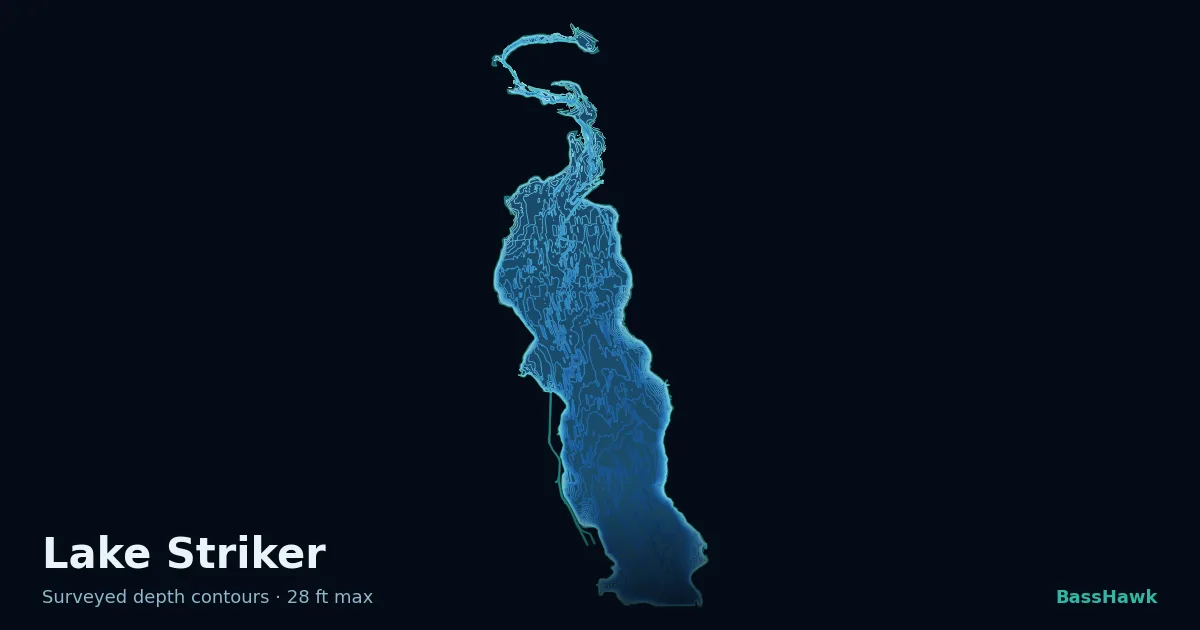
Stick the timber and docks early and late, deep to the thermocline at midday.
It's peak summer heat at 90 degrees, water is uncomfortable and bass have pulled into the deeper zones to stay cool and find oxygen. The lake's turbid water keeps them shallower than clearer lakes would, but they're still moving away from the warmest flats. Morning and evening windows are your shot at shallower timber and dock cover. Midday they slide to deeper ledges and channel structure where it's more stable. Pressure is steady right now, so patterns are predictable. With cloud cover running heavy and a light wind from the south, you've got some stretch to the shallow bite, but don't count on it lasting through the heat of the day.
The day's game plan
Where to fish
- Standing timber in shallow creekarms — 4 to 10 feet · standing dead trees and branch clusters
primary shallow-water cover where bass stage early and late when water is cooler; turbid water keeps them shallower than clearer lakes; dappled light through branches provides relief from intense sun - Main lake ledges and channel drops — 18 to 28 feet · hard bottom transitions, ledge edges, channel bends
deepest structure available; bass retreat here during midday heat to find cooler, more comfortable water and proximity to thermal relief; channel proximity provides an escape route to even deeper zones if needed - Boat docks and pilings — 2 to 8 feet · wooden and metal dock structures, pilings, shade lines
consistent shallow cover throughout the day; shade from dock decking provides relief from overhead sun; baitfish congregate under docks, concentrating bass; accessible to bass across all daylight periods
What to throw
- Spinnerbait — 3/8 to 1/2 oz · white or chartreuse blade · n/a (early morning into mid-morning, evening into dusk, and all night)
steady retrieve with pauses over timber edges and docks; slow roll ledges; can fish from 4 feet to 20 feet depending on the period - Crankbait — 2 to 4 inches · chartreuse, chartreuse-black, or sexy shad · tuned to dive 2 to 4 feet (early morning, morning transition, late afternoon, and evening)
medium-fast steady retrieve, can pause for 1 to 2 seconds, work down timber edges and around dock pilings - Soft plastic worm — 5 to 7 inches · green pumpkin, black, or watermelon · Texas rigged on 1/4 to 3/8 oz (morning transition through midday, late afternoon)
drag slowly along bottom structure, pause 2 to 3 seconds over timber, feel for bites through the rod tip - Blade bait — n/a · pearl or white · 1/2 to 1 oz (midday heat, deep structure)
drag vertically on main lake ledges and channel drops, lift slowly 1 to 2 feet then drop back on slack line - Lipless crankbait — n/a · black, black-blue, or white · 1 to 1.5 oz (midday into late afternoon on deep structure)
slow dragging along ledge edges, rattle on pause, work 2 to 3 feet off bottom
How to work it
- Shallow timber and dock work — early morning through mid-morning, late afternoon into dusk and night · standing timber in 4 to 10 feet, dock pilings, brush piles, creek-arm mouths
cast tight to wood pilings and branch clusters, drag soft plastics slowly through the cover, pause for 2 to 3 seconds; use spinnerbaits and crankbaits with steady retrieves and brief pauses - Ledge dragging — midday and early-to-mid afternoon when bass are deep · main lake ledges, channel drop-offs, channel swings at 18 to 28 feet
position boat on deep side of structure, cast uptide slightly, drag blade bait or lipless crankbait in contact with the bottom, feel the structure through the rod, pause when the bait hangs - Transition zone hunting — morning into early afternoon, late afternoon into evening · timber edges at 10 to 14 feet, points that drop into channels, creek-arm transitions
work the edge where shallow cover meets deeper structure, use both shallow and deep presentations, alternate between timber work and deeper bait dragging as you follow the break
Pro tips
- Summer on Striker means working transition zones hard: the line where shallow timber drops into deeper channel water is where bass move to feed and retreat. Fish the morning timber shift slowly, then follow those same features deeper as the sun climbs.
- Turbid water is your friend in this heat. It lets you fish shallower baits all day than you would on clearer lakes. Don't feel like you have to go super deep to score. Work the timber edges aggressively early and late, then shift deep only during the hardest midday hours.
- Blade baits and spinnerbaits with vibration dominate Striker because bass locate baits by feel in stained water. Don't skip the boring dragging and shaking work on ledges. That's where the bigger fish hang when it's hot.
If conditions change
If a strong cool front blows through and clears the sky, expect bass to tighten to the thickest timber and deepest available cover for 24 to 36 hours after it passes. Downsize to finesse worms and jigs, slow everything down, and fish denser cover with longer pauses. If rain moves in and muddies the water further, increase bait size and vibration, work spinnerbaits and blade baits with wider blade angles, and focus on cover edges where bass can easily find bait by lateral line. If the wind picks up and the water becomes rougher, the shallow bite stretches longer into midday because wind-blown banks push baitfish and oxygen; work the windward timber edges with crankbaits and spinnerbaits instead of pulling deep as early.
Find more fish. This is a real report from that day's conditions — open the app for today's · free account