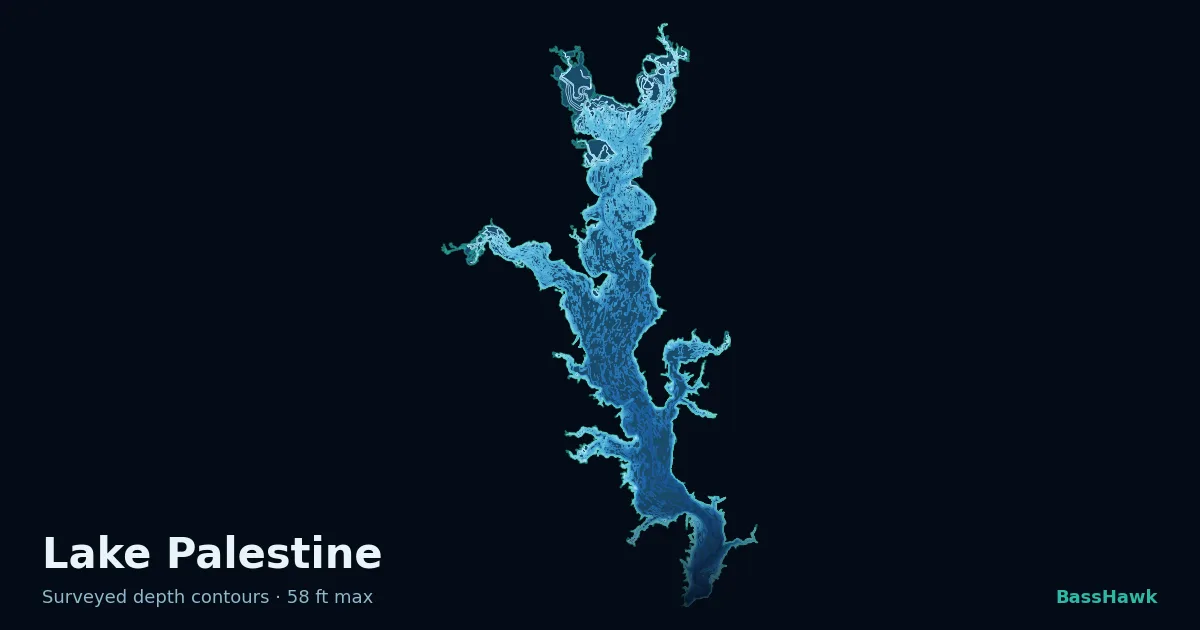
Summer heat keeps them deep and tight to shade, but the dropping pressure before the front will have them looking up around first light.
Water's running hot at 86 degrees and the sun is full bluebird all day, so bass are hunkered in their daytime sanctuaries on deeper ledges and timber. This time of year they're basically nocturnal, feeding hard at dawn and dusk and sitting deep in the shade through the middle hours. The pressure is falling heading into some weather, though, which actually fires them up a little, so you'll get some aggressive feeding early and late. The stained water keeps things consistent across the upper lake and the creeks. Hit the first couple hours hard, then be ready to grind the ledges and deep wood through the afternoon when the sun is cooking.
The day's game plan
Where to fish
- Saline Bay (Upper Lake) — 2 to 8 feet shallow flats, 8 to 15 feet secondary structure · Grass edges, timber, boathouses, dock pilings, vegetation transitions
The upper lake holds more vegetation and stained water. Bass funnel through this zone on their way shallow at dawn and evening, and hold on the vegetated flats all day. The creek connection to deeper water gives them an escape route to cool zones. - Cobb Creek and Stone Chimney Creek — 3 to 6 feet creek arms, 6 to 12 feet creek channels · Laydowns, standing timber, grass, overhanging timber, inside bends
Creeks offer shade and stained water year-round. In summer heat, bass use the timber and depth to hide through the day and move shallow to feed at dawn and dusk. The cooler water near the channel exit lets them access food without leaving their sanctuary. - Main Lake Secondary Points — 6 to 12 feet transition zones, 15 to 22 feet deep humps · Timber, hard bottom, channel bends, rock outcrops
Secondary points funnel bass between shallow creek zones and deep water. They're staging areas where bass balance heat relief and feeding opportunity. During the heat of the day, bass drop to 15-22 feet on these points but stay vertical and responsive to reaction baits because of proximity to structure.
What to throw
- ChatterBait — 3/8 oz · Black, White, or Chartreuse · 3/8 oz (Early morning through mid-morning as bass transition shallow. Also effective in evening as pressure drops and light fades.)
Snap and pause on grass and timber, dragged along structure edges. For dusk switch to slower retrieves with a 3.5-inch curly tail trailer. - Soft Plastic Texas Rig — 4 to 6 inches · Junebug, Green Pumpkin, Watermelon, Sexy Shad · 5/16 oz to 1/2 oz bullet sinker (Mid-morning through late afternoon as bass settle on ledges. Also effective evening around wood.)
Slow drag along ledges and channel breaks. Pause on the edge for 3 to 5 seconds, then continue. Vertical lift on midday humps. - Lipless Crankbait — 2.5 to 3 inches · Black, Black-Blue, or Natural Shad · 1/2 oz (Midday deep-water periods when reaction strikes are your best bet.)
Steady burn on the hump top, stop and drop to trigger strikes. Work the transition zones between depths. - Shaky Head — 3 to 4 inches · Green Pumpkin, Watermelon, Junebug · 3/16 oz to 1/4 oz (Late afternoon and evening when bass are vertical on deep timber and channel bends.)
Vertical jigging over channel structure. Short hops and pauses, dragging slowly along the bottom. - Soft Stick Weightless — 4 inches · Junebug, Black, Dark Green · n/a (Dusk and night in shallow cover when bass are using shade to hunt.)
Wacky rig or Texas rig without weight. Work with a drag-shake-pause cadence around docks and overhanging wood, especially dusk and night.
How to work it
- Shallow Cover Fishing — Early morning and evening when bass move shallow, and at night when they stay shallow because of heat. · Creek arms, boathouses, and shallow vegetation in Saline Bay and upper lake backwater.
Flip or pitch into docks, timber, and dense grass within 2 to 4 feet of the surface. Use short 20-foot casts and work the bait vertically or with a drag-shake action, keeping it in the zone for 3 to 5 seconds per spot. - Ledge Grinding — Mid-morning through late afternoon when bass have slid to their daytime sanctuary but are still responsive to the falling pressure. · Secondary points on the main lake and channel bends, drops from 6 to 12 feet and deeper.
Locate the edge where shallow structure drops to deeper water. Cast parallel to the break and work baits vertically or with a slow drag along the slope. Work the top 2 feet of the drop first, then expand deeper. - Deep Structure Vertical — Midday peak heat and late afternoon when bass are locked on their most comfortable zone and reaction baits are your only reliable trigger. · Main lake humps and deep timber in 15 to 22 feet, timber in creek channels in 12 to 18 feet.
Position your boat directly over timber or a hump. Drop the bait vertically and work it with short lifts and pauses, keeping it tight to the structure. Graph to find timber and adjust your depth as you work.
Pro tips
- The falling pressure is actually working in your favor today. Most anglers think summer heat is the only story, but bass respond to pressure changes at every temperature. You'll see a mini-feeding window this evening before the front fully moves in. Hit it hard.
- In stained water this warm, don't waste time on natural translucent colors. Junebug, black, and dark green stand out and create the silhouette bass use to hunt in limited visibility. Save the subtle stuff for clearer days in spring.
- The 3:42 PM solunar major is coming during peak heat when the bite is slowest. Use it as a cue to switch presentation style, not to expect a sudden magic window. Start vertical jigging or switch to a reaction bait if you've been dragging soft plastics. The timing won't save a bad spot, but the technique shift might.
If conditions change
If the front rolls in faster and the sky gets overcast or wind comes up, the shallow bite will stretch longer into midday. Spend more time on the creek arms and less time grinding deep ledges. If the wind shifts to a strong north component after the front passes, water clarity may improve slightly, so you can upsize baits and work faster retrieves. If the heat spikes even hotter than forecasted and the pressure stabilizes, pull back from the early-morning shallow work and focus on the deepest available timber in the creeks. Dusk will become your only reliable feeding window, so save your energy and focus every cast there.
Find more fish. This is a real report from that day's conditions — open the app for today's · free account