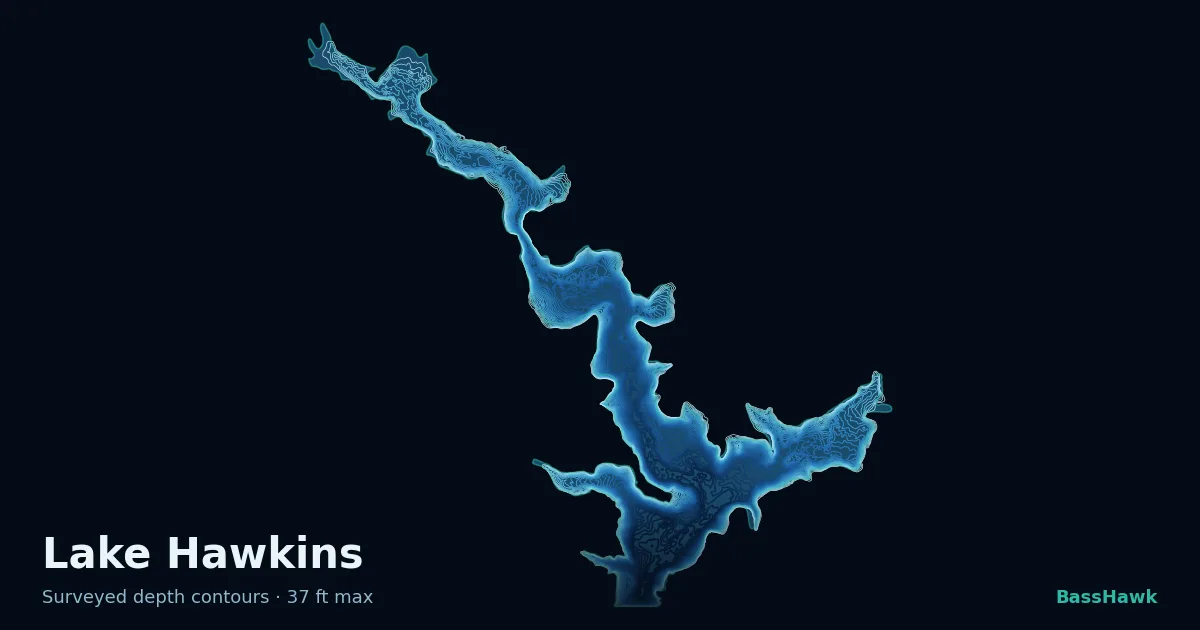
Brutal heat keeps the bass deep and tight. Fish tight to cover at dawn and dusk, or go deep after sunrise.
Water's at 101 degrees and the pressure is dropping ahead of some weather, so the bass will be willing. But this heat is no joke. They're packed against heavy structure and in shade right now, pulling out deep to stay comfortable. The lake is clear and weedy, so finesse and natural colors rule. You're looking at a bite window compressed to early morning and evening around cover, with a midday reset deep over the structure. Pool's down a touch, so those shallow weed edges and timber will be even more defined. Expect the pressure drop to fire up some aggressive feeding in the minutes before dawn and around dusk.
The day's game plan
Where to fish
- Creek arms and shallow flats near the upper lake — 2 to 6 feet · Dense vegetation, flooded timber, and lily pad clusters with hard bottom access nearby.
Bass stage here at dawn and dusk before retreating to deeper shade. The clear water and vegetation concentrate feeding fish early and late. Creek arms funnel bass and retain slightly cooler water. - Grass edges on main lake points — 4 to 8 feet · Outside edge of submergent and emergent vegetation with adjacent drop-offs to deeper structure.
This is the primary staging and feeding zone during the morning window before the sun heats the shallows. Bass hold on the edge where they can flee to deep water while still ambushing prey in shallow cover. - Main lake drop-offs and ledges — 15 to 22 feet · Rocky or hard bottom ledges with nearby timber, adjacent to channels and deep flats.
Midday refuge when heat drives bass deep. These spots provide cooler water, shade from structure, and access to deeper channels where they can survive the heat and still feed opportunistically. - Secondary channel swings near shallow flats — 8 to 12 feet · Inside bends of creek channels with adjacent shallow flats and grass transitions.
Late afternoon transition zone where bass begin moving shallow as light drops. These intermediate depths allow bass to stage and feed without committing to the hottest shallow water.
What to throw
- Small dark topwater popper — 2 to 3 inches · Black or junebug · n/a (Early morning and dusk around shallow grass and timber.)
Twitch and pause, with longer sits between moves as light drops. - Finesse Texas rig worm — 4 to 5 inches · Watermelon or smoke · 3/16 ounce bullet weight (Mid-morning around the grass line at 4 to 8 feet.)
Drag slowly along weed edges with a light leader, keeping contact with the bottom. - Lipless crankbait — 2.5 to 3 inches · Chartreuse or bright white · 1/2 ounce (Late afternoon on transition zones around 8 to 12 feet.)
Steady retrieve with occasional pauses, covering the depth band between deep and shallow structure. - Small swimbait or blade bait drop shot — 1.5 to 2 inches · White or chartreuse · 1/4 ounce jig head (Midday when bass have pulled into 15 to 22 feet over deep ledges and timber.)
Hold over deep structure and work vertically with short hops, letting the bait sit for several seconds at a time. - Small white natural topwater plug — 2 to 2.5 inches · White or natural shad · n/a (Evening around 5:30 to 7:30 PM in shallow cover.)
Steady twitch and pop with pauses, varying cadence as light drops.
How to work it
- Topwater around cover — Early morning 6:46 to 8:30 AM and evening 5:30 PM to 8:45 PM. Best when light is low or transitioning. · Shallow cover in 1 to 6 feet, especially around creek arms and protected coves.
Cast near downed timber, grass edges, and dock pilings. Twitch and pause, letting the popper sit for 2 to 5 seconds between moves. As light drops, slow the cadence and increase pauses. - Drop shot on deep ledges — Midday 11:00 AM to 3:00 PM when bass have retreated deep and are inactive. · Main lake drop-offs and ledges 15 to 22 feet, particularly near timber or hard structure.
Mark structure on the sounder, position the boat directly over it, and work the drop shot vertically with short 6 to 12 inch hops. Let it rest on the bottom for 3 to 5 seconds between moves. Use light leader and small baits. - Weed edge drag — Mid-morning 8:30 AM to 11:00 AM when fish are transitioning deeper as sun climbs. · Defined weed edges and timber pockets on secondary structure.
Work parallel to grass lines or timber edges at 4 to 8 feet. Keep the bait tight to the edge, dragging slowly with periodic pauses. Maintain a light touch on the line to feel strikes that may be subtle in cool areas.
Pro tips
- On a clear lake at this heat, never fish a full-sized bait when a downsized finesse option will work. The bass can see the line in shallow water, so 8 to 10 pound fluorocarbon on a thin-diameter braid keeps your presentation invisible and your detection sharp.
- The falling pressure before weather is a window, not a guarantee. You'll get fed-up bites at dawn and dusk, but the midday deep bite is actually more reliable this time of year. Mark your deep structure with the sounder and camp on it during 11 AM to 3 PM rather than chasing shallows.
- When evening topwater fishing, let the popper sit longer than you think necessary as the light drops. In low light, bass react to silence and stillness followed by sudden movement. A five-second pause followed by a sharp pop catches more fish than constant twitching.
If conditions change
If the pressure stays elevated and rising instead of falling, expect a tougher midday bite and shorter morning and evening windows. Shift more time to deep drop shots and work the thickest available cover, skipping baits under timber and around docks. If wind picks up from any direction, the wind-blown bank will show more aggressive morning activity and may push the shallow bite longer because wind oxygenates water and pushes baitfish. If clouds build ahead of that front, the shallow and intermediate bite will stay productive longer through midday, so adjust your game plan to fish the 8 to 12 foot zone more aggressively. If water clarity drops from heavy summer run-off, shift to darker lures and wider-thumping blades to create stronger vibration and silhouette.
Find more fish. This is a real report from that day's conditions — open the app for today's · free account