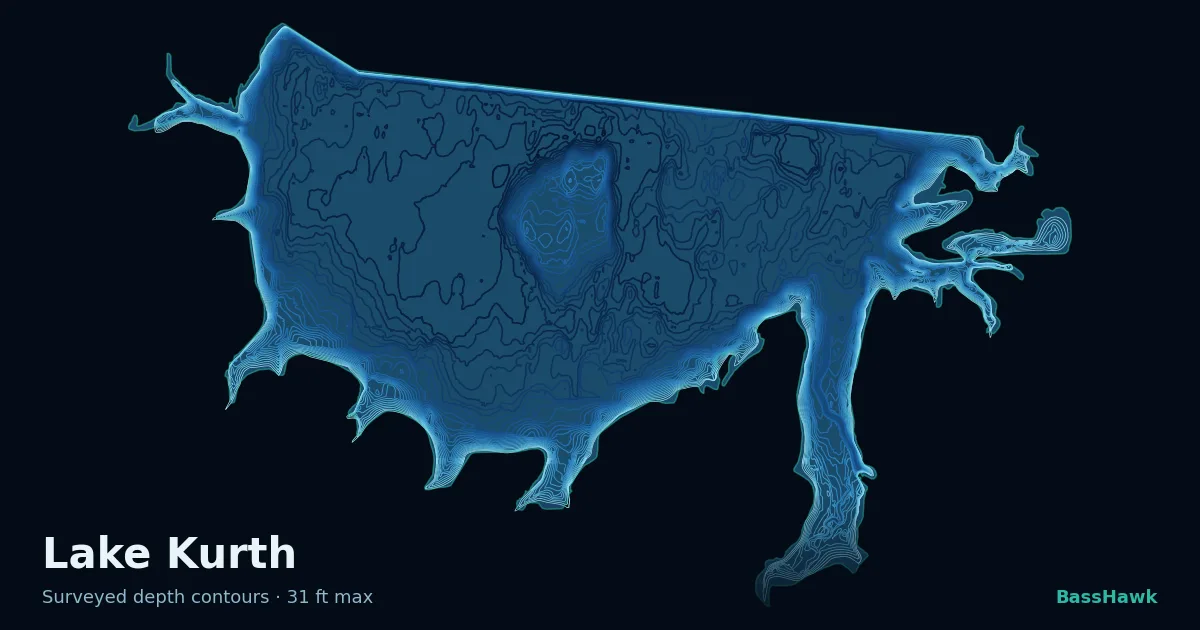
Summer heat shuts down the day bite; hunt first light and dusk in the hydrilla, then flip the thick mats when the sun gets mean.
Water's sitting at 92 degrees, which is flat-out too warm for active feeding during midday. Bass are locked in survival mode, holding tight in deep shade and the densest hydrilla they can find. You're looking at a dawn-and-dusk bite with topwater, then a flip-and-skip game into the vegetation once the sun climbs and the fish burrow in. Clear water and bluebird sun all day pushes them deep and tight. The pressure's rising after dropping yesterday, so they're not as aggressive as they were, but low-light windows at first and last light will still produce. Forget the middle of the day unless you're working the coolest, thickest cover available.
The day's game plan
Where to fish
- Hydrilla Flats and Mats — 4 to 10 feet · Dense submerged grass with open lanes, pockets, and edges transitioning to deeper water
Hydrilla is the primary cover on Kurth. Bass relate to it year-round. In summer heat, the grass provides shade and oxygen. Thick mats hold bass during the day, edges produce in low light. - Creek Channels — 8 to 18 feet, with 4 to 6 feet in the channel itself · Hydrilla-bordered channels with hard bottom and deeper bends
Channels funnel bass movement and create current breaks. The deeper water nearby gives bass escape routes. Grass along the banks provides ambush points. - Grass Edges and Transitions — 4 to 12 feet · Where hydrilla meets open water, sand, or deeper bottom
Edges are where bass stage to hunt. They don't have to commit far to the open water to feed. First light and dusk bites concentrate here. - Deep Holes and Pockets Within the Grass — 12 to 16 feet · Open water pockets surrounded by dense hydrilla
Refuge during peak heat. Bass stack in cooler water surrounded by shade. Vertical jigs and shakey heads reach them without excessive cover navigation.
What to throw
- Topwater Walker — 4 to 5 in · Shad pattern · n/a (First light and dusk, low light conditions)
Walk it side to side with rod pops, pausing between movements. Keep the pace slow and deliberate, letting the water ripple settle between twitches. - Finesse Worm — 4 to 5 in · Green pumpkin or watermelon seed · 3/16 oz or 1/4 oz (Morning and late afternoon, transition periods)
Texas rig with a light tungsten weight. Drag it slow through grass lanes and over edges. Let it fall on slack line in open pockets. - Jig with Craw Trailer — 3/8 oz · Black or dark green pumpkin · 3/8 oz (Midday, thick cover, peak heat)
Flip or skip into thick hydrilla. Work it with short hops. Let it rest between movements. Keep it tight to the thickest mats. - Hollow-Body Frog — 3 to 4 in · Black or shad pattern · n/a (First light, dusk, any low-light window)
Cast and walk it across open lanes and the edge of the hydrilla. Pause and let ripples settle. Work it weedless so it rides over the mat. - Shakey Head with Weedless Trailer — 4 in · Shad pattern or green pumpkin · 1/4 oz or 3/8 oz (Midday and early afternoon when other baits slow down)
Drag it across grass mat edges and through open lanes. Keep the rod tip low and the bait just off the bottom. Work it steady and slow.
How to work it
- Flipping into Thick Hydrilla — Midday when bass are tucked in the thickest cover · Any dense hydrilla mat in 6 to 10 feet
Use a pitching rod with 20-lb braided line. Hold the bait in your hand, flip it underhand into the densest mat within your reach. Drop the bait vertically with slight jigging action. Set the hook hard when you feel pressure. - Skipping Under Cover — Anytime, especially midday when bass are hiding tight · Hydrilla mats with open pockets, dock pilings, laydowns near grass
Sidearm cast a compact bait so it skips along the water like a stone. Let it bounce into pockets under downed wood, dock overhangs, or dense grass. Keep the rod low and let the bait do the work. - Working Grass Edges and Lanes — Morning, late afternoon, and dusk when bass are willing to chase short distances · Hydrilla flats and creek channels in 4 to 10 feet
Cast parallel to the hydrilla edge and drag the bait back slowly toward you. Hit every open lane within the mat. Pause and let the bait fall on slack line. Cover 10 to 15 feet per cast, moving along the perimeter. - Topwater Walking in Low Light — First light and dusk only, when the light is dim · Shallow hydrilla edges and open water near vegetation
Cast ahead and pop the rod tip, letting the bait walk side to side. Pause between pops so the ripples settle. Keep the rhythm steady and deliberate. Set hard on any bulge or wake.
Pro tips
- On a day this hot, your best chance for a trophy comes in the first 90 minutes after sunrise. Bass feed hardest in cool water, and the shallow topwater bite at first light pulls bigger fish to the surface than the midday flipping game does. Spend your time then.
- Water clarity is exceptional today with full sun and no wind to stir silt. In clear water at this depth, bass rely on vibration and silhouette more than exact color. Black stands out harder than green pumpkin in midday sun, so flip black jigs in the thickest mats. Save the natural finesse colors for low-light periods when they matter more.
- Kurth's hydrilla is thick and healthy at 26 to 45 percent coverage. Bass thrive in it. Don't view grass as an obstacle, view it as your best ally. The fish that avoid the mats get caught first. The ones that burrow deep in the vegetation are the ones you'll get to later with flipping. Trust the grass and spend your flipping time in the densest spots you can find.
If conditions change
If a front rolls in and pressure drops, the bite improves immediately and bass move shallower and more aggressive. Work the topwater longer into the morning and hunt grass edges instead of thick flipping cover. If the wind picks up and stirs the water, the shallow bite extends and cloud cover helps you fish later into the day; shift to the same edges and transitions but cover more water with walking baits. If water clarity drops from an algae bloom or turn, switch to black and dark green colors exclusively, upsize your baits by 25 percent, and lean on vibration-heavy lures like spinnerbaits with Colorado blades worked across the grass edges. If pressure climbs after the front and the sky stays clear and blue, the bite gets harder; downsize everything to finesse worms and drop shots, fish slower, and hide in the thickest hydrilla you can reach. The basic pattern holds: first light and dusk topwater, midday flipping and dragging. The details adjust with the pressure and light.
Find more fish. This is a real report from that day's conditions — open the app for today's · free account