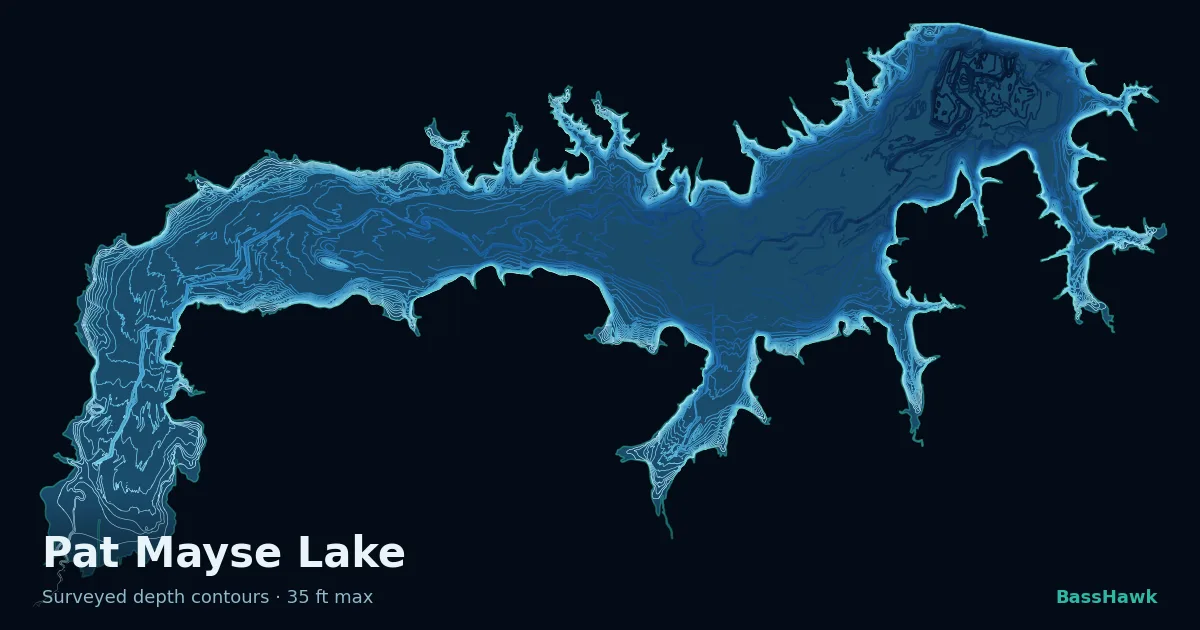
Summer heat bite: skip the midday dead zone, stack striped bass patterns on open-water shad schools early and late, work standing timber for bass tucked in the shade.
Water's at 83 degrees and we're deep into summer pattern. This is the toughest part of the year for largemouth on shallow structure because the heat pushes them into deeper water and tighter cover during the day. The bass are still around, but they're not looking up much in bright sun. Your window is early morning before the sun climbs, and again when it drops in the evening. Midday is a dead zone unless you're working deep timber edges and channel structure. The lake is slightly low and the standing timber in the upper end is your best bet for shade and security. Pressure is steady, so the bass aren't fired up on instinct like they would be before a front, but they'll still eat if you find them where they're positioned to hunt baitfish early and late.
The day's game plan
Where to fish
- Upper lake timber clusters and coves — 8 to 25 feet, with shade pockets in 10 to 15 feet · Standing cypress, deadfall, and brush in protected coves and creek arms; dense canopy cover overhead
The timbered upper end is the consistent holding area for largemouth in summer. The shade and cover keep fish safe from predators and heat stress. Bass use the timber as a base and hunt baitfish that gather in the coves, especially early and late. - Main creek channel and channel swings — 12 to 25 feet at the channel, with breaks and transitions from 10 to 20 feet · Hard bottom transitions, inside bends of the channel, drop-offs where the channel wall is steep
Channels funnel baitfish migration and concentrate bass at ambush points. The deep water access gives bass a quick retreat when stressed, and the channel breaks are migration highways where bass consistently position to hunt. - Dam riprap and open-water flats — 6 to 18 feet, shallower near riprap, dropping quickly to 20+ feet at the dam face · Hard riprap, rock transitions to sand and silt, open water with baitfish schools in 10 to 15 feet
The dam is a convergence zone where baitfish stack and bass school in summer. The riprap provides structure and current interaction. Early morning topwater and evening retrieves here can connect with aggressive fish feeding on shad concentrations. - Secondary points and creek mouths — 8 to 18 feet on the point slopes, with deep water access beyond 20 feet · Point slope with scattered timber, creek mouth transitions, hard-to-soft bottom changes
Secondary points funnel bass movement between shallow coves and deep water. In late afternoon and evening when bass start to feed, these staging areas hold fish transitioning from deep cover to shallow hunting zones.
What to throw
- Shad-colored crankbait — 5 in · White or pearl belly · 3/8 oz (Early morning before sun heats the water)
Steady retrieve at 8 to 10 feet deep, working channel breaks and points - Lipless crankbait — 2.5 in · Chartreuse or white · 1/2 oz (Late afternoon into evening as sun angle drops and dusk approaches)
Fast to medium steady retrieve around transition zones and shallow structure - Green pumpkin soft plastic worm — 5 to 6 in · Green pumpkin · Pegged 3/16 oz weight (Morning into early midday when sun climbs and bass tighten to cover)
Dragged slowly along timber trunks or worked vertically, pausing to let it sit in the shade - Dark blade bait — n/a · Black or black/blue body with silver or nickel blade · 1/2 oz (Midday heat when bass retreat deep)
Vertical shaking or dragging along ledge faces, working the deepest zones - Black soft plastic jerkbait — 4 to 5 in · Black or junebug · n/a (Dusk and night when low light favors dark silhouettes)
6-inch pulls with 2 to 4 second pauses, worked around timber and heavy cover
How to work it
- Channel edge fishing — Early morning and late afternoon when bass move to channel structure to intercept baitfish migrations · Upper lake basin and main creek channel entry zones
Locate the main creek channel and work the transition zone where 10-foot flats drop to 18-20 feet. Fan cast along the break with crankbaits and lipless cranks, then probe deeper with blade baits. - Timber flipping and pitching — Morning through early afternoon when bass are shade-locked in wood, and evening through night when they hunt shallow cover · Timbered coves and creek arms in the upper lake, especially around standing cypress and deadfall
Use a 7-foot flipping stick with 20-pound braid. Flip jigs and soft plastics directly into tree clusters and tight cover. Keep the rod tip high, set the hook hard, and control the fish through the timber. - Topwater popping — Early evening into dusk when bass move shallow and aggression peaks; also immediately after sunrise if clouds or overcast conditions cool the water · Shallow flats, creek entry points, dam riprap, and bulrush edges where baitfish gather
Work a popper or walk-the-dog stick with short, rhythmic pops followed by brief pauses. Let it sit 2 to 3 seconds between actions to create an injured-baitfish profile.
Pro tips
- Early morning is gold in summer heat. The major solunar at 6:35 AM plus low-light conditions plus cooler water create a 45-minute window where you can cover a lot of ground with crankbaits on channel structure. Fish it hard and move fast, then shift to shade and timber once the sun clears the treeline.
- The standing timber in the upper lake is your refuge during midday dead zones. While other anglers leave the water, you can flip jigs and worms tight to the wood and catch fish that are resting but still reactive. Green pumpkin and small profiles work because they don't trigger flight instinct in heat-stressed fish.
- Night fishing under minimal moon light can be overlooked gold. Black jigs and worms worked slowly in heavy timber coves and overhanging cover will produce trophy fish when daytime patterns slow. The water is cooler, oxygen is better, and bass feed throughout the night if you stay in the thickest cover.
If conditions change
If a front blows through and pressure rises sharply with cooler air and clearing skies, expect a shutdown for 12 to 24 hours. The fish will bury in the deepest available timber and the tightest cover. Downsize to 3-inch worms on shakey heads, fish slow and right on the wood, and target the densest shade pockets. If the wind shifts to strong north and the water cools, move to south-facing banks and shallower cover to find warmer water and more active fish. If water clarity drops from run-off or algae bloom, shift to chartreuse, orange, and bright white baits with maximum vibration. If a cloud deck rolls in and cuts the sun's intensity, the shallow bite can extend all day, so stay on topwater and crankbaits longer and don't abandon the flats as quickly as you would in clear, bright sun.
Find more fish. This is a real report from that day's conditions — open the app for today's · free account